CM Yogi Slams SP Over Ayodhya Parikrama Curbs
Synopsis
Uttar Pradesh Chief Minister Yogi Adityanath publicly accused the Samajwadi Party of having blocked three sacred Ayodhya parikramas, contrasting it with the BJP's 'double-engine' government which he said actively defends such pilgrimages. The remarks sharpen the BJP-SP fault line over Hindu religious access in UP.
Key Takeaways
CM Yogi Adityanath posted on 10 July 2026 accusing the Samajwadi Party of having blocked the Chaurasi Kosi , Chaudah Kosi and Panchkosi Parikramas around Ayodhya .
He credited the BJP's 'double-engine' government — in power at both the Centre and in Uttar Pradesh since 2017 — with checking those who attempt to obstruct these pilgrimages.
The three parikramas are traditional circumambulation rituals significant to Lord Ram devotees and draw pilgrims numbering in the lakhs annually to Ayodhya .
The BJP has used the parikrama issue as a political differentiator against the SP since the 2017 Uttar Pradesh assembly elections .
The Yogi Adityanath government has expanded the Ramayana Circuit and facilitated large-scale religious events in Ayodhya following the Supreme Court's 2019 Ram Janmabhoomi verdict .
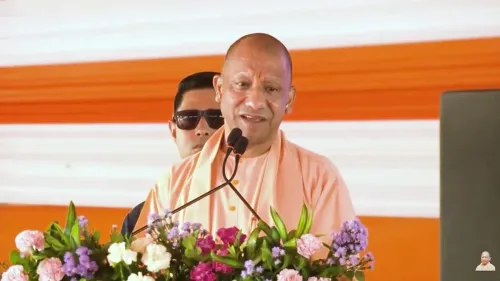
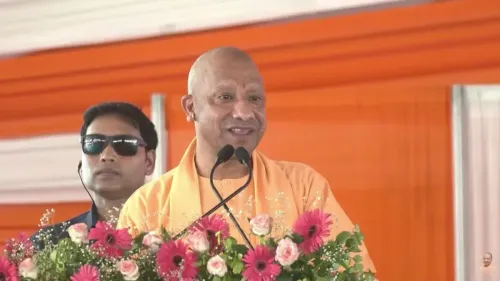
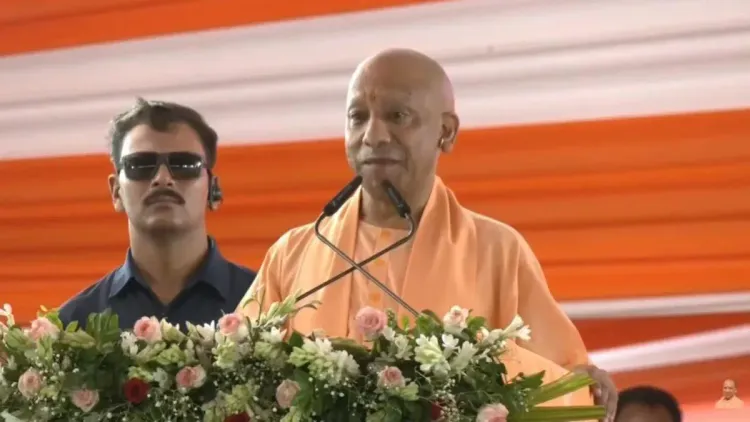
Uttar Pradesh Chief Minister Yogi Adityanath on Friday, 10 July 2026 sharply attacked the Samajwadi Party, accusing it of having blocked the sacred Chaurasi Kosi, Chaudah Kosi and Panchkosi Parikramas around Ayodhya, and contrasting that record with what he described as the BJP government's firm stance in defence of Hindu pilgrimage traditions.
Context
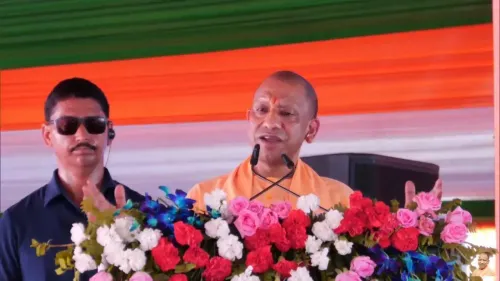
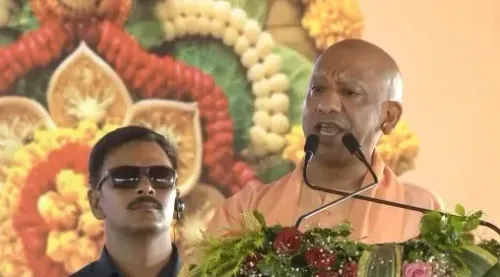
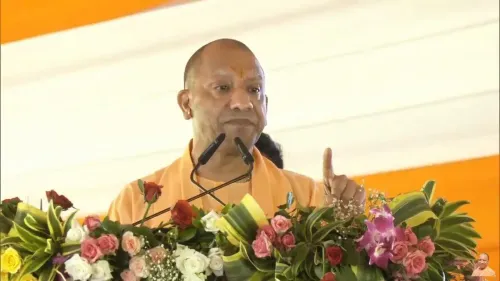
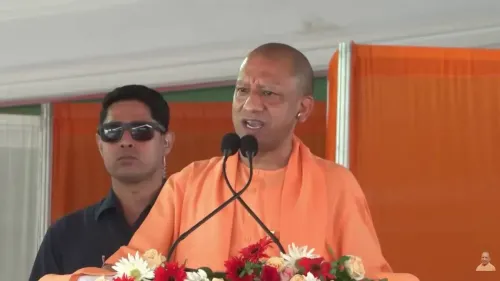
Posting in Hindi on X, CM Yogi wrote: 'Samajwadi Party chaurasi kosi, chaudah kosi aur panchkosi parikrama ko rokti thi. Lekin, ab double engine ki BJP sarkar hai, yeh rokne walon ko tokti hai' — meaning, 'The Samajwadi Party used to stop the Chaurasi Kosi, Chaudah Kosi and Panchkosi Parikramas. But now there is the double-engine BJP government, and it checks those who try to stop them.' The post was accompanied by a video, which the Chief Minister's office shared alongside the statement.
The three parikramas — circumambulation pilgrimages of 84 kos, 14 kos and 5 kos respectively — are among the most revered annual rituals for devotees of Lord Ram in and around Ayodhya. They draw large numbers of pilgrims each year and carry deep religious significance in the Vaishnava tradition of eastern Uttar Pradesh.
Policy Backdrop
During the Samajwadi Party government's tenure from 2012 to 2017 under Akhilesh Yadav, the BJP repeatedly alleged that restrictions were placed on certain Hindu processions and pilgrimages, citing law-and-order grounds. The BJP made the restoration of these religious traditions a central campaign promise ahead of the 2017 Uttar Pradesh assembly elections.
Since Yogi Adityanath took office in 2017, the state administration has systematically facilitated large-scale religious events in Ayodhya and expanded the Ramayana Circuit — a tourism and pilgrimage infrastructure project — particularly after the Supreme Court's 2019 verdict on the Ram Janmabhoomi title dispute cleared the path for the Ram Mandir construction. Permissions for the traditional parikramas have been granted without reported obstruction during this period.
The phrase 'double engine government' refers to the BJP's argument that having the same party in power at both the Centre and in Uttar Pradesh enables faster, more coordinated delivery on both development and cultural priorities.
Stakeholders and Impact
The statement directly concerns Hindu pilgrims — numbering in the lakhs annually — who undertake the parikramas, as well as residents and traders of Ayodhya whose livelihoods are tied to the pilgrimage economy. Smooth conduct of the parikramas has visible economic and civic consequences for the city.
For the Samajwadi Party, the charge revives a long-running political vulnerability on the question of religious sentiment in Uttar Pradesh, where the BJP has consistently sought to frame its rival as hostile to majority Hindu practices. The SP has historically contested such characterisations, arguing its restrictions were administrative rather than communal.
What's Next
Political observers will watch whether CM Yogi's remarks precede any formal administrative announcement regarding the next scheduled cycle of the Chaurasi Kosi Parikrama — including logistics, route permissions and crowd-management plans — or whether the post is primarily a signal ahead of upcoming local or state-level political mobilisation in the Ayodhya region.
With Ayodhya remaining the most symbolically charged constituency in Uttar Pradesh politics, statements linking governance to religious access are likely to resonate well beyond the pilgrim community and into the broader electoral conversation in the state.
Point of View
Using the parikrama issue to draw a sharp contrast with the SP ahead of what is likely a period of political mobilisation in the Ayodhya belt. The 'double-engine' framing does double duty: it defends the party's governance record while implying that any return of the SP would mean a return to restrictions on religious practice. For the SP, the charge is politically costly because it is difficult to rebut without appearing to validate the BJP's framing. The broader arc here is the steady consolidation of Ayodhya as the BJP's most potent symbolic terrain in Uttar Pradesh — a project that has only deepened since the Ram Mandir consecration.
NationPress
9 Oct 2026
Frequently Asked Questions
What is the Chaurasi Kosi Parikrama in Ayodhya?
The Chaurasi Kosi Parikrama is a traditional Hindu pilgrimage that involves circumambulating a circuit of 84 kos (roughly 252 kilometres) around Ayodhya , the birthplace of Lord Ram . It is one of the most sacred annual rituals for Vaishnava devotees in eastern Uttar Pradesh and draws pilgrims numbering in the lakhs.
Why did CM Yogi attack the Samajwadi Party over the parikrama?
CM Yogi Adityanath alleged that the Samajwadi Party , which governed Uttar Pradesh from 2012 to 2017 , imposed restrictions that blocked the Chaurasi Kosi , Chaudah Kosi and Panchkosi Parikramas . He used the post to contrast that record with the current BJP government's support for these pilgrimages.
What does 'double engine government' mean in Indian politics?
The phrase 'double engine government' is a BJP slogan used to describe a situation where the same party is in power at both the central government and a state government. The argument is that this alignment speeds up policy implementation and removes friction between the two levels of administration.
Has the BJP government in UP changed rules around Ayodhya pilgrimages since 2017?
Since Yogi Adityanath became Chief Minister in 2017 , the Uttar Pradesh government has facilitated the traditional Ayodhya parikramas without reported obstruction and has invested in the Ramayana Circuit to develop pilgrimage infrastructure. These steps accelerated after the Supreme Court's 2019 Ram Janmabhoomi verdict .
What is the political significance of Ayodhya for the BJP in Uttar Pradesh?
Ayodhya is the most symbolically significant city for the BJP in Uttar Pradesh , anchoring the party's identity as a defender of Hindu cultural and religious heritage. The Ram Mandir consecration and the promotion of Ayodhya's pilgrimage economy have been central to the party's governance narrative in the state.