CM Yogi Holds Janata Darshan at Gorakhnath Mandir, Hears Public Grievances
Synopsis
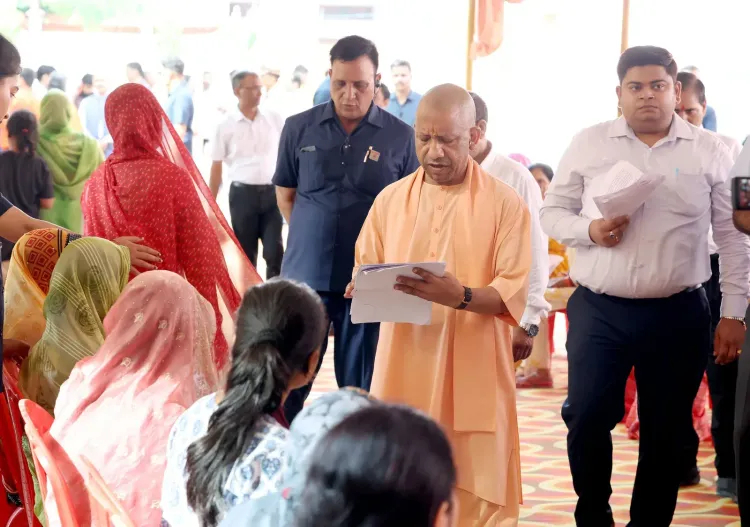
Chief Minister Yogi Adityanath held a Janata Darshan session at Gorakhnath Mandir in Gorakhpur on July 29, 2026, personally hearing complaints from citizens across Uttar Pradesh and directing officials to resolve them swiftly and effectively.
Key Takeaways
CM Yogi Adityanath conducted a Janata Darshan at the Gorakhnath Mandir complex in Gorakhpur on July 29, 2026 .
Citizens from multiple districts of Uttar Pradesh attended to present their grievances directly to the Chief Minister.
CM Yogi directed concerned officials to resolve complaints 'swiftly, effectively, and with quality.' The Gorakhnath Mandir has served as a regular venue for these sessions since 2017 , when Yogi Adityanath took office.
The programme is designed to give citizens direct access to the Chief Minister, bypassing normal bureaucratic channels.
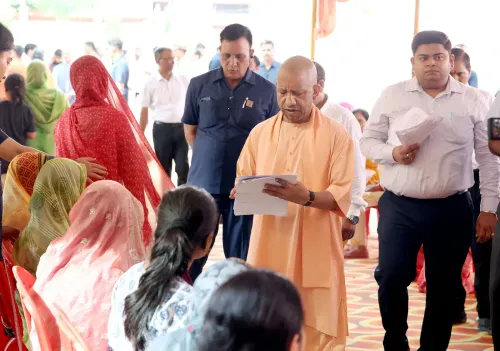
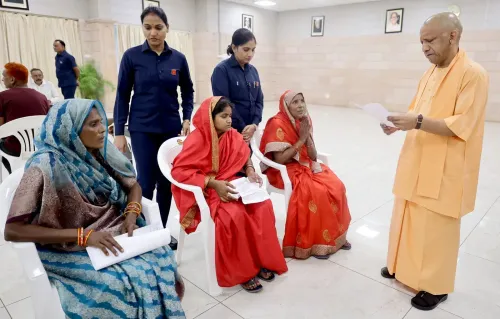
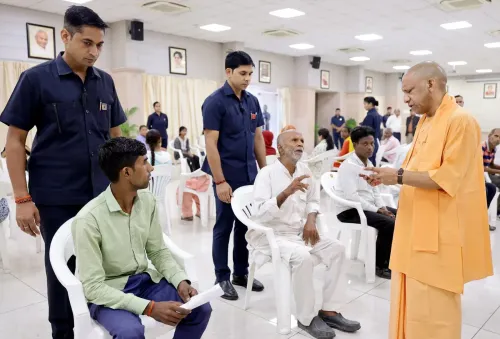
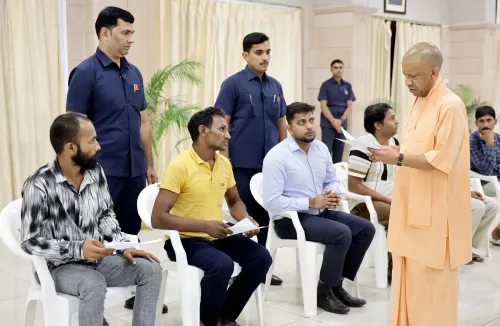
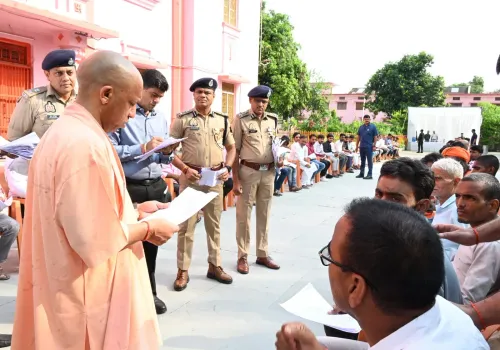
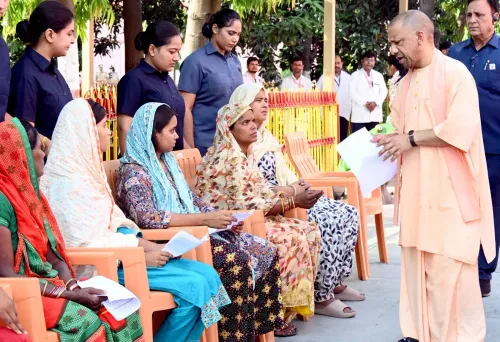
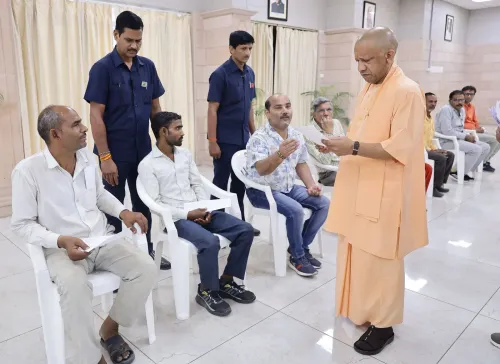
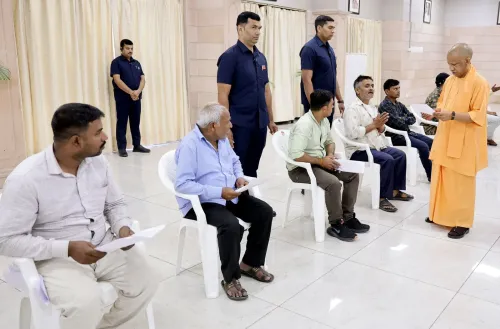
Doors open, complaints heard, orders issued — Chief Minister Yogi Adityanath sat face-to-face with citizens from across Uttar Pradesh at the Gorakhnath Mandir complex in Gorakhpur on Wednesday, July 29, 2026, in another round of his signature Janata Darshan public hearing programme.
The Chief Minister's Office of Uttar Pradesh posted on X that people from 'various districts' brought their problems directly to CM Yogi, who in turn directed the concerned officials to resolve each matter 'swiftly, effectively, and with quality' — the phrase the CMO used verbatim. The session was held under the motto 'Janhit Sarvopari, Janseva Sarvochch Prathamikta' ('Public interest is paramount, public service is the highest priority').
Gorakhnath Mandir as Governance Theatre
The choice of venue is deliberate and loaded with symbolism. Gorakhnath Mandir in Gorakhpur is not just a temple — it is the seat of the Gorakhnath Math, the religious institution Yogi Adityanath heads as its mahant. Since taking office in 2017, he has used the temple complex as a recurring site for these public hearings, blurring the line between spiritual authority and administrative power in a way that is distinctive to his style of governance.
The format is straightforward but politically potent: citizens bypass the district collector, the tehsildar, the block office — the entire layered bureaucracy — and land their grievance directly at the Chief Minister's table. Officials are then put on notice in real time.
A Practice Older Than the Current Government
Janata Darshan as a concept has deep roots in Uttar Pradesh administration. Successive governments have used CM-level public hearings to project responsiveness, though the frequency, regularity, and visibility of the programme have shifted with each leadership. Under the current dispensation, it has been institutionalised as a core plank of what the government brands 'citizen-centric governance' — a direct counter to the perception of an inaccessible, file-bound bureaucracy.
What gives the sessions their edge is the public nature of the directive: officials are instructed on the spot, with the complainant present, creating an accountability loop that a written petition to a district office rarely achieves.
Whether grievance disposal rates from these hearings are tracked and published remains an open question — and the answer to that would tell voters far more than the optics of the session itself.
Point of View
A fusion that has defined his political brand since 2017. The broader question for analysts is whether the programme has evolved beyond optics: without published grievance-disposal data, it is difficult to assess whether the real-time directives translate into systemic relief or remain largely performative. As UP heads toward future electoral cycles, the regularity and visibility of such sessions will likely intensify as a proof-of-governance signal.
NationPress
29 Jul 2026
Frequently Asked Questions
What is Janata Darshan in Uttar Pradesh?
Janata Darshan is a public grievance hearing format in which the Chief Minister of Uttar Pradesh directly meets citizens from across the state, listens to their problems, and directs officials to resolve them. The programme has been held regularly at Gorakhnath Mandir in Gorakhpur under CM Yogi Adityanath since 2017.
Where does CM Yogi hold Janata Darshan?
CM Yogi Adityanath holds Janata Darshan sessions at the Gorakhnath Mandir complex in Gorakhpur, the temple institution he heads as mahant. The venue has been used consistently for these public hearings since he assumed office.
What happens at a Janata Darshan session?
Citizens from various districts of Uttar Pradesh attend the session and present their grievances directly to the Chief Minister. CM Yogi then issues on-the-spot directives to the relevant district or departmental officials to resolve the complaints swiftly and effectively.
How often does CM Yogi hold Janata Darshan?
The Yogi Adityanath government has conducted Janata Darshan sessions periodically since 2017, positioning them as a regular feature of its governance model. The exact frequency is not officially published in a fixed schedule.
What is the purpose of Janata Darshan in UP governance?
The programme allows citizens to bypass the regular bureaucratic hierarchy and access the Chief Minister directly. It is presented by the government as a citizen-centric governance tool, and also serves as a real-time accountability mechanism for district administration officials.