CM Yogi pays tribute to Shiv Sena founder Balasaheb Thackeray
Synopsis
Uttar Pradesh CM Yogi Adityanath marked Balasaheb Thackeray's death anniversary on November 17, 2026, honouring the Shiv Sena founder as a firm nationalist and an enduring inspiration, reinforcing the ideological bond between BJP and the Thackeray legacy.
Key Takeaways
UP CM Yogi Adityanath posted a tribute to Shiv Sena founder Balasaheb Thackeray on his death anniversary, November 17, 2026 .
Yogi described Thackeray as 'firm in his convictions' and 'a true supporter of national values,' calling his nationalist personality an inspiration.
Balasaheb Thackeray founded Shiv Sena in 1966 and later aligned the party with BJP under the National Democratic Alliance in the late 1990s.
BJP leaders have made annual tributes to Thackeray on November 17 a recurring tradition, underscoring shared nationalist ideology.
The tribute comes against the backdrop of Shiv Sena's 2019–2022 split , which fragmented the party Thackeray built.
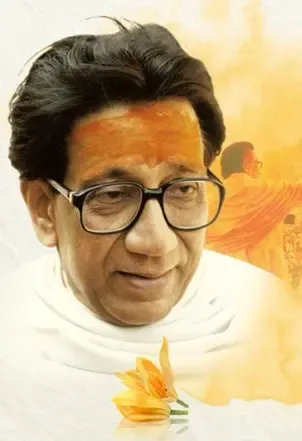
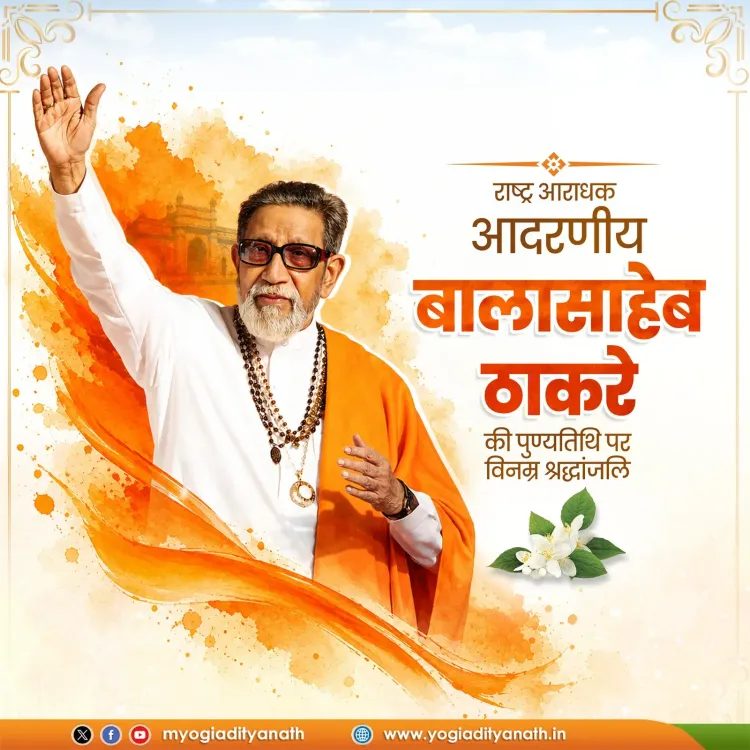
On the death anniversary of Shiv Sena founder Balasaheb Thackeray, Uttar Pradesh Chief Minister Yogi Adityanath offered a solemn tribute on Tuesday, November 17, 2026, calling the late Maharashtra leader a steadfast champion of national values whose nationalist spirit remains an enduring inspiration.
In his post, CM Yogi wrote: 'शिवसेना के संस्थापक आदरणीय बालासाहेब ठाकरे की पुण्यतिथि पर विनम्र श्रद्धांजलि' — 'Humble tribute on the death anniversary of revered Balasaheb Thackeray, founder of Shiv Sena' — adding that Thackeray was 'firm in his convictions and a true supporter of national values,' and that his nationalist personality 'is an inspiration for all of us.'
Thackeray's legacy: from Marathi pride to national Hindutva stage
Balasaheb Thackeray founded Shiv Sena in 1966, initially as a vehicle for asserting Marathi regional identity in Mumbai. Over subsequent decades, the party pivoted toward a broader Hindutva-aligned nationalism, bringing it into natural alignment with the BJP. That convergence solidified when Shiv Sena joined the National Democratic Alliance in the late 1990s, sharing a platform on issues of cultural nationalism and governance.
Thackeray died in November 2012, leaving behind one of Maharashtra's most consequential political organisations. His influence over Maharashtra's political and cultural life was such that his death anniversary, observed each November 17, draws tributes from across the ideological spectrum — and particularly from BJP leaders who shared the NDA platform with him.
BJP's annual tribute ritual and Maharashtra's shifting ground
CM Yogi's message follows a well-established pattern among BJP leaders, who have consistently used Thackeray's death anniversary to invoke shared nationalist themes and reinforce the ideological kinship between the two parties. The gesture carries particular weight given the turbulence Shiv Sena underwent between 2019 and 2022, when the party split into rival factions, reshaping Maharashtra's coalition arithmetic.
By invoking Thackeray's 'nationalist personality' and his identity as a 'true supporter of national values,' CM Yogi frames the tribute within a larger ideological continuity — one that transcends the organisational fractures that followed the founder's passing and speaks directly to the original Thackeray base.
Balasaheb Thackeray built something rare in Indian politics: a regional movement that grew into a national ideological force. How that force is claimed, honoured, and mobilised in Maharashtra today is a question his anniversary keeps putting back on the table.
Point of View
He aligns the Shiv Sena founder's legacy with the BJP's broader Hindutva narrative. The gesture is especially resonant given that Shiv Sena's post-2019 split has left Thackeray's political inheritance contested, giving BJP leaders an incentive to claim custodianship of the original vision. Annual tributes of this kind serve a dual function — honouring a genuine ideological ally while signalling to the Thackeray loyalist base that the BJP remains the natural home for his politics.
NationPress
17 Nov 2026
Frequently Asked Questions
Who was Balasaheb Thackeray?
Balasaheb Thackeray was the founder of Shiv Sena, a Maharashtra-based political party he established in 1966 . He championed Marathi regional identity and later adopted a Hindutva-aligned nationalist stance, making Shiv Sena a major force in Maharashtra and an ally of the BJP under the National Democratic Alliance.
When did Balasaheb Thackeray die?
Balasaheb Thackeray passed away in November 2012 . His death anniversary falls on November 17 and is observed annually with tributes from political leaders across the country.
Why did CM Yogi Adityanath pay tribute to Balasaheb Thackeray?
CM Yogi paid tribute on Thackeray's death anniversary, November 17 , calling him a steadfast supporter of national values and a nationalist inspiration. BJP leaders have a tradition of honouring Thackeray on this day, reflecting the ideological alignment between BJP and Shiv Sena under the NDA.
What happened to Shiv Sena after Balasaheb Thackeray's death?
After Thackeray's death, Shiv Sena underwent a significant split between 2019 and 2022 , dividing into rival factions. The fracture reshaped Maharashtra's coalition politics and left Thackeray's original political legacy contested among different groups.
What was the BJP-Shiv Sena political relationship?
BJP and Shiv Sena were long-standing allies, with Shiv Sena joining the National Democratic Alliance in the late 1990s under Balasaheb Thackeray. The two parties shared a platform on nationalism and governance, though their alliance faced turbulence after Thackeray's death.