CM Yogi invokes Mahant Digvijaynath's freedom vision
Synopsis
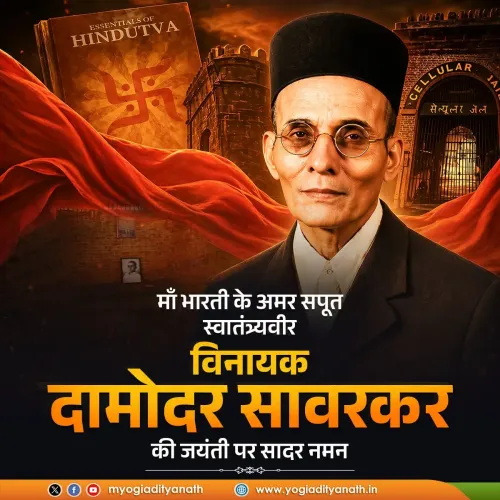
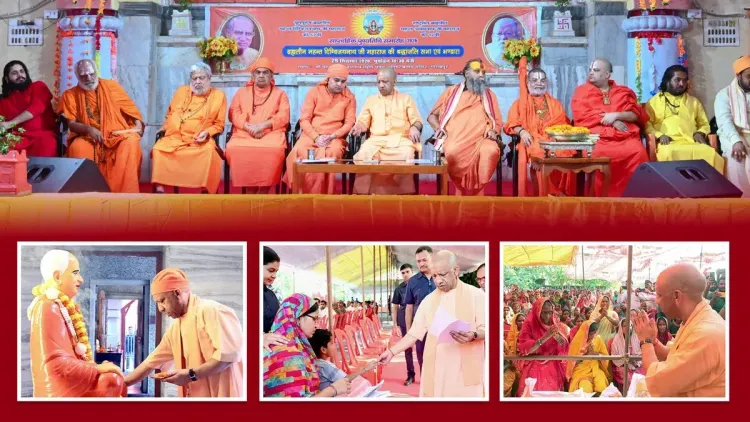
Uttar Pradesh Chief Minister Yogi Adityanath paid tribute to his predecessor Mahant Digvijaynath on 29 September 2026, quoting the former Gorakhnath Math head's conviction that India's freedom must be built on its own civilisational heritage.
Key Takeaways
CM Yogi Adityanath posted the tribute on 29 September 2026 , quoting Mahant Digvijaynath's declaration that India's chains of slavery would break.
Mahant Digvijaynath led the Gorakhnath Math from 1934 to 1969 and was active in India's independence movement.
CM Yogi cited Digvijaynath's resolve to advance India 'in accordance with its own heritage and tradition.' The tribute fits a recurring pattern in CM Yogi's communication of linking his governance to the Gorakhnath Math's historical legacy.
Invoking pre-independence religious figures to anchor contemporary political messaging is a broader trend among BJP leaders.
The chains of subjugation will break, India will be free — those were the words of a monk who led a monastery and a movement simultaneously. Uttar Pradesh Chief Minister Yogi Adityanath on Tuesday, 29 September 2026, invoked the memory of Mahant Digvijaynath, the revered former head of the Gorakhnath Math, quoting the sage's conviction that India's independence was inevitable and must be grounded in its own civilisational traditions.
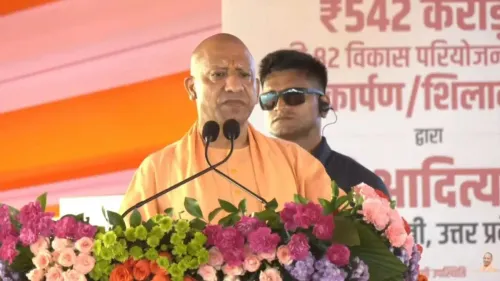
Sharing the tribute on X, CM Yogi quoted the late mahant in Hindi: 'गुलामी की बेड़ियां टूटेंगी, भारत स्वाधीन होगा' — 'The chains of slavery will break, India will be free.' He added that Digvijaynath carried an abiding resolve: to advance India in accordance with its own heritage and tradition.
Who was Mahant Digvijaynath?
Mahant Digvijaynath served as the head of the Gorakhnath Math in Gorakhpur, Uttar Pradesh, from 1934 to 1969. A figure at the intersection of religious leadership and nationalist politics, he was associated with the independence movement and with Hindu nationalist organisations during the 1940s. His public statements of that era repeatedly linked the goal of political freedom to the preservation of India's civilisational identity — a thread that his successors at the Math have continued to pull across decades.
The Gorakhnath lineage in modern politics
The Gorakhnath Math is no ordinary monastery. Its successive mahants have historically combined spiritual authority with direct engagement in public affairs — and Yogi Adityanath, the Math's current head and Uttar Pradesh's Chief Minister, embodies that dual role most visibly today. By citing Digvijaynath's vision, CM Yogi places his own governance within a longer arc: one that began not in electoral politics but in the ashrams and agitations of colonial India.
This is a pattern well established in CM Yogi's public communication. References to the Gorakhnath Math's mahant lineage recur in his speeches and posts as a way of connecting present-day policy priorities — particularly those touching on cultural identity and national self-assertion — to a pre-independence moral authority. The implicit argument is continuity: what the monks dreamed of, the government is now building.
Tradition as a political vocabulary
Among BJP leaders broadly, invoking pre-independence religious figures has become a recognisable rhetorical device — a way of grounding contemporary political messaging in a civilisational legitimacy that predates the party itself. CM Yogi's tribute to Digvijaynath fits that wider pattern, but carries the added weight of institutional lineage: he is not simply quoting a historical figure, he is quoting his own predecessor in the seat he now occupies.
What the Chief Minister will say next — whether at a formal commemoration at the Math or a state event tied to anniversaries connected to past mahants — will be worth watching for how explicitly governance goals are woven into this narrative of cultural continuity.
A monk said India would be free. His successor now governs the state that houses the Math — and the message, seven decades on, is still travelling.
Point of View
Lending Yogi Adityanath's policies a legitimacy rooted outside electoral cycles. It mirrors a wider BJP strategy of anchoring contemporary Hindu-nationalist governance in a civilisational continuity narrative. The key question is whether this framing translates into concrete policy signals at upcoming Math or state commemorations.
NationPress
30 Sept 2026
Frequently Asked Questions
Who was Mahant Digvijaynath?
Mahant Digvijaynath was the head of the Gorakhnath Math in Gorakhpur from 1934 to 1969. He participated in India's independence movement and publicly linked India's political freedom to the preservation of its civilisational traditions.
What did CM Yogi say about Mahant Digvijaynath?
CM Yogi Adityanath quoted Mahant Digvijaynath's conviction that 'the chains of slavery will break, India will be free,' and recalled the mahant's resolve to advance India in accordance with its own heritage and tradition.
What is the Gorakhnath Math?
The Gorakhnath Math is a historic Nath monastery in Gorakhpur, Uttar Pradesh. Its successive mahants have combined religious leadership with social and political engagement; CM Yogi Adityanath is its current head.
Why does CM Yogi frequently reference past Gorakhnath Math mahants?
CM Yogi routinely invokes the legacy of past mahants to connect his governance to themes of cultural continuity and national self-assertion, framing present-day policy as the fulfilment of a longer civilisational vision rooted in the Math's history.
What is the significance of citing pre-independence religious figures in BJP politics?
Invoking pre-independence religious figures is a recognisable pattern among BJP leaders, used to ground contemporary political messaging in a moral and civilisational authority that predates the party itself and appeals to voters who identify with India's Hindu heritage.