CM Yogi invokes Bhagat Singh to rally UP youth against caste, drugs

Synopsis
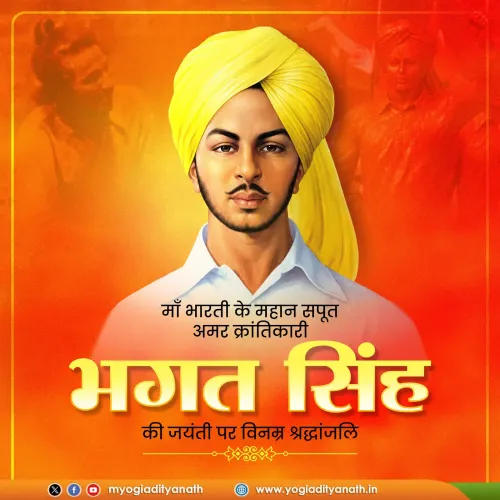
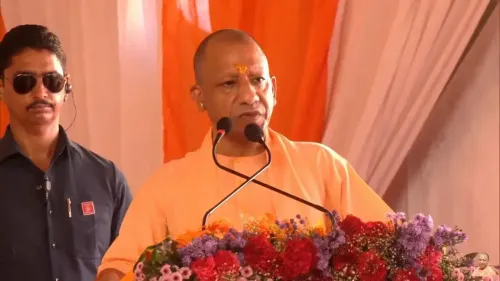
On Bhagat Singh's birth anniversary, UP Chief Minister Yogi Adityanath called on the state's youth to draw inspiration from the martyr's courage to fight caste prejudice and drug abuse, and to link knowledge with skill and action for UP's development.
Key Takeaways
Bhagat Singh's birth anniversary on 28 September prompted the post; the revolutionary was executed at age 23 in 1931 in the Lahore Conspiracy Case.
CM Yogi named three specific targets for reform: caste discrimination, drug abuse , and other social ills.
He prescribed a four-step chain for youth: knowledge → skill → resolve → action .
The CM's vision for UP is captured in three words: gyanvaan (wise), sanskaarvaan (values-driven), samarthyavaan (capable).
The message fits a broader BJP pattern of invoking nationalist icons to lend moral authority to contemporary social and economic policy goals.
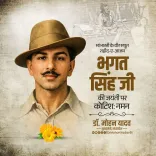
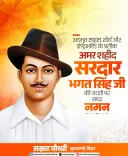
At just 23 years old, Bhagat Singh walked to the gallows without flinching — and on the revolutionary's birth anniversary, Uttar Pradesh Chief Minister Yogi Adityanath is asking the state's youth to summon that same defiance, not against a colonial power, but against caste prejudice, substance abuse, and the squandering of potential.
In a post addressed directly to the people of Uttar Pradesh on Monday, 28 September 2026, the Chief Minister framed Bhagat Singh's jayanti as a moment of collective rededication. 'Rashtradharm ko sarvopari rakhte hue apne sankalp ko nayi urja dene ka avsar hai' — 'an opportunity to renew our resolve by placing the nation's duty above all else,' he wrote, before drawing a direct line from the martyr's courage to the battles UP's citizens must still fight today.
The three chains CM Yogi wants broken
The post names three specific social evils that Yogi Adityanath argues continue to hold the state back: caste discrimination, drug abuse, and what he calls 'other social ills.' The framing is deliberate — invoking a figure revered across the political spectrum to make social-reform arguments that might otherwise land as partisan.
Bhagat Singh, who was executed on 23 March 1931 in the Lahore Conspiracy Case, was himself a fierce critic of caste hierarchy and religious division among Indians, writing extensively about how those fractures served colonial interests. Yogi Adityanath's appeal to his legacy on exactly these points is historically coherent, even if the political packaging is unmistakably BJP.
Knowledge, skill, resolve, action — a four-step formula for UP
The Chief Minister lays out a deliberate progression for how the state's youth should channel Bhagat Singh's inspiration: turn knowledge into skill, skill into resolve, and resolve into action. 'When the youth link knowledge with skill, skill with resolve, and resolve with action,' he writes, 'the state's development journey will find new momentum alongside their dreams.'
This education-to-employment chain echoes the Yogi administration's ongoing push to position Uttar Pradesh — India's most populous state — as a destination for investment and a supplier of skilled labour. The rhetoric slots neatly into a pattern seen across BJP-governed states: nationalist icons are regularly invoked to give contemporary policy goals a deeper moral authority.
A closing call to build a 'wise, values-driven, capable UP'
The CM closes with a rallying call: 'Aaiye, hum sab milkar gyanvaan, sanskaarvaan evam samarthyavaan Uttar Pradesh ke nirmaan mein apni bhumika nibhaayein' — 'Come, let us all together play our part in building a wise, values-driven, and capable Uttar Pradesh.' It is a three-word vision statement — gyanvaan, sanskaarvaan, samarthyavaan — that the Chief Minister clearly intends as a shorthand for the state's aspirational identity.
Bhagat Singh gave everything at an age when most people are still finding themselves. If UP's political leadership can convert that moral weight into measurable change — in classrooms, rehabilitation centres, and skilling programmes — the tribute will mean something beyond the calendar.
Point of View
Anti-drugs — that the party wants identified with its governance record in UP. The 'knowledge-skill-resolve-action' chain is not incidental; it mirrors the state's official economic pitch to investors who need a trained workforce. Using a martyr's anniversary to rehearse that pitch softens the transactional framing. The real test is whether the jayanti rhetoric translates into budget allocations and programme outcomes that UP's youth can actually point to.
NationPress
28 Sept 2026
Frequently Asked Questions
Why is Bhagat Singh's birthday celebrated on 28 September?
Bhagat Singh was born on 28 September 1907 in the Lyallpur district of undivided Punjab (present-day Pakistan). His birth anniversary is observed annually as Shaheed Diwas or Bhagat Singh Jayanti across India.
What did CM Yogi Adityanath say on Bhagat Singh Jayanti 2026?
CM Yogi called on UP's youth to draw inspiration from Bhagat Singh's courage to fight caste discrimination , drug abuse , and other social ills, and urged them to link knowledge with skill and action to drive the state's development.
How old was Bhagat Singh when he was executed?
Bhagat Singh was 23 years old when he was executed on 23 March 1931 by British colonial authorities in the Lahore Conspiracy Case, along with Rajguru and Sukhdev.
What does CM Yogi mean by 'gyanvaan, sanskaarvaan, samarthyavaan UP'?
The phrase translates as a wise, values-driven, and capable Uttar Pradesh — a three-part vision the Chief Minister uses to describe the kind of state he wants to build, emphasising education, cultural values, and practical capability.
How long has Yogi Adityanath been Chief Minister of Uttar Pradesh?
Yogi Adityanath first became Chief Minister of Uttar Pradesh in 2017 and has continued in the role, making him one of the longest-serving CMs in the state's recent history.