CM Yogi Launches ₹475 Crore Projects in Sant Kabir Nagar, Gorakhpur
Synopsis
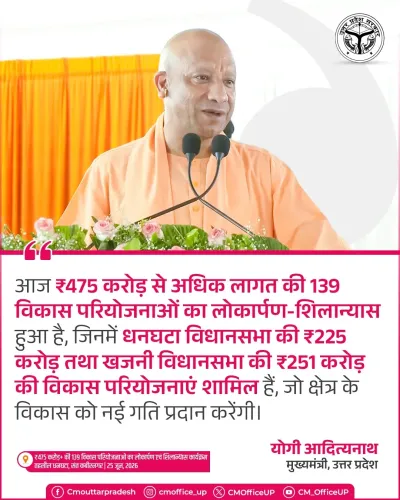
Chief Minister Yogi Adityanath on 25 June 2026 inaugurated and laid foundations for 139 development projects worth over ₹475 crore across the Dhanghata constituency in Sant Kabir Nagar and Khajni constituency in Gorakhpur, distributing welfare-scheme certificates to beneficiaries at the same event.
Key Takeaways
139 development projects worth over ₹475 crore were inaugurated and foundation-laid across two constituencies on 25 June 2026 .
The event spanned Dhanghata (Sant Kabir Nagar) and Khajni (Gorakhpur) assembly constituencies in eastern Uttar Pradesh.
The programme was held at the sacred site of Baba Tameshwar Nath in Sant Kabir Nagar.
Beneficiaries of various public welfare schemes received distribution certificates at the event.
CM Yogi Adityanath reiterated the 'double engine government' model of simultaneous central-state coordination for infrastructure delivery.
The administration stated that schemes are reaching society's last person without discrimination , furthering the goal of a self-reliant Uttar Pradesh.
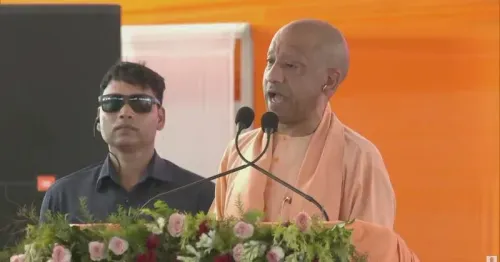
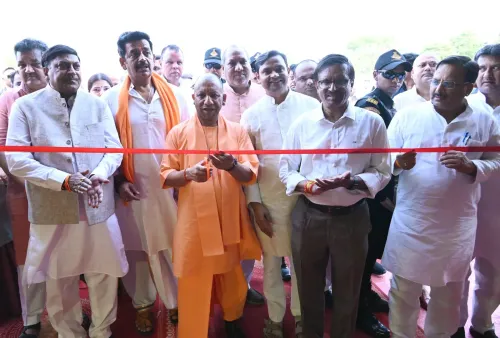
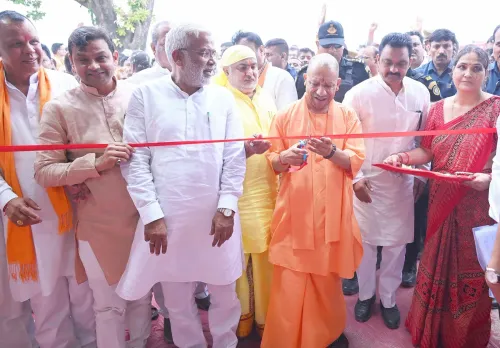
The Chief Minister's Office of Uttar Pradesh announced on Thursday, 25 June 2026 that Chief Minister Yogi Adityanath participated in a lokarpan and shilanyas (inauguration and foundation-laying) programme covering 139 development projects worth over ₹475 crore across the Dhanghata assembly constituency in Sant Kabir Nagar and the Khajni assembly constituency in Gorakhpur.
The event was held on the sacred grounds associated with Baba Tameshwar Nath, a revered religious site in Sant Kabir Nagar. During the programme, beneficiaries of various public welfare schemes were also handed distribution certificates (praman-patra) in recognition of their enrolment under state-sponsored initiatives.
Context
The Chief Minister's Office described the occasion under the banner 'Virasat ko Samman, Samridhi ka Abhiyan' — 'Honouring Heritage, Campaign for Prosperity' — signalling the administration's intent to link cultural identity with economic development in the Purvanchal belt of eastern Uttar Pradesh. The twin constituencies of Dhanghata and Khajni, situated in districts that border each other, have been included in successive rounds of state-funded infrastructure drives since 2017.
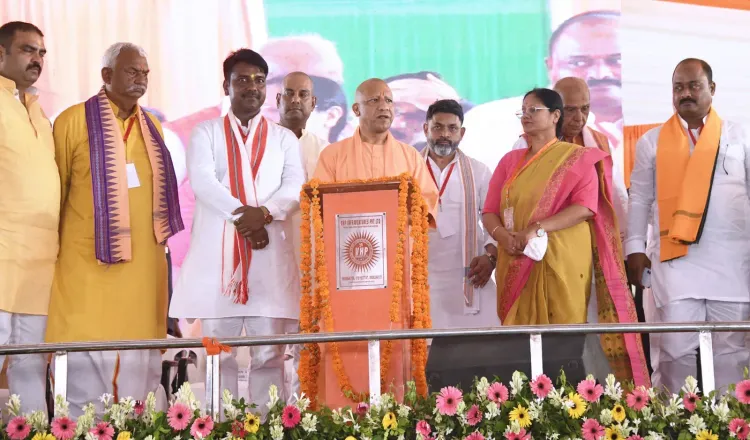
Addressing the gathering, CM Yogi Adityanath stated that the 'double engine government' — a reference to aligned BJP administrations at the state and central levels — is connecting every district of the state to the development mainstream, establishing new benchmarks in basic infrastructure, employment, education, health, and public welfare.
Policy Backdrop
The Uttar Pradesh government has organised recurring lokarpan-shilanyas events in eastern districts as a structured mechanism to accelerate delivery of roads, drainage systems, schools and health facilities. The 2022-23 state budget and subsequent supplementary allocations earmarked significant outlays for Purvanchal districts under the 'double engine' coordination framework between state and central governments.
The bundling of infrastructure inaugurations with beneficiary certificate distribution is a deliberate administrative model: it allows the government to simultaneously demonstrate capital investment and last-mile welfare delivery in a single public event, reinforcing the stated goal of an 'Atmanirbhar aur Vikasit Uttar Pradesh' — 'Self-reliant and Developed Uttar Pradesh'.
Stakeholders and Impact
The primary beneficiaries are rural and semi-urban households across Sant Kabir Nagar and Gorakhpur districts — two of the more densely populated districts in the Purvanchal region. The 139 projects, spanning sectors such as roads, civic amenities, education and health, are intended to address long-standing infrastructure deficits in constituencies that have historically lagged behind western Uttar Pradesh in per-capita public investment.
Welfare-scheme certificate recipients at the event represent another layer of stakeholders: individuals enrolled in centrally and state-sponsored programmes who received formal documentation of their entitlements, a step that is critical for accessing downstream benefits. The Chief Minister emphasised that government schemes are reaching the last person in society without discrimination — 'bina bhedbhav samaj ke antim vyakti tak'.
What's Next
Attention will now shift to the physical execution and timely completion of the 139 sanctioned projects across both constituencies. The administration's track record in Purvanchal suggests that similar multi-project events are likely to be scheduled in other eastern districts through the remainder of 2026, as the state government maintains momentum on its infrastructure outreach calendar. Utilisation certificates and third-party audit reports for the ₹475-crore outlay will be the key accountability markers going forward.
Point of View
Multi-project inauguration events in Purvanchal — a region that doubles as the Chief Minister's political home turf. By combining capital-expenditure announcements with on-the-spot welfare certificate distribution, the government creates a layered public narrative: fiscal commitment plus tangible individual benefit in a single sitting. The 'double engine' framing continues to serve as the administration's primary political shorthand for BJP alignment between Lucknow and New Delhi, positioning state infrastructure spending as inseparable from central government support. Whether the ₹475-crore outlay translates into completed, utilised assets will be the real test of this governance model.
NationPress
24 Sept 2026
Frequently Asked Questions
What projects did CM Yogi inaugurate in Sant Kabir Nagar and Gorakhpur on 25 June 2026?
CM Yogi Adityanath inaugurated and laid foundations for 139 development projects worth over ₹475 crore covering infrastructure, roads, civic amenities, education and health across the Dhanghata constituency in Sant Kabir Nagar and the Khajni constituency in Gorakhpur.
What is the 'double engine government' that CM Yogi referred to?
The 'double engine government' is a phrase used by the BJP to describe aligned administrations at both the state (Uttar Pradesh) and central (Union) levels, arguing that this coordination accelerates infrastructure funding and welfare delivery more effectively than split mandates.
Where is Baba Tameshwar Nath and why was the event held there?
Baba Tameshwar Nath is a revered religious site in Sant Kabir Nagar district in eastern Uttar Pradesh. The event was held on its grounds to combine the cultural and spiritual significance of the location with the government's development outreach in the region.
What is Dhanghata and which district does it fall in?
Dhanghata is an assembly constituency located within Sant Kabir Nagar district in the Purvanchal region of eastern Uttar Pradesh. It has been a recurring site for state-funded infrastructure project announcements in recent years.
Who benefited from the certificate distribution at the CM Yogi event in Gorakhpur?
Beneficiaries enrolled under various centrally and state-sponsored public welfare schemes received formal distribution certificates ( praman-patra ) at the event, giving them documented proof of entitlement needed to access downstream scheme benefits.