CM Yogi launches Ghumantu Vikas Board for UP's nomadic communities
Synopsis
Uttar Pradesh Chief Minister Yogi Adityanath has announced the Ghumantu Vikas Board, a dedicated state body for the development of nomadic communities, framing it as a direct expression of PM Modi's 'Sabka Saath, Sabka Vikas' principle of non-discriminatory welfare delivery.
Key Takeaways
The Ghumantu Vikas Board is a new state-level body announced by CM Yogi Adityanath in Uttar Pradesh specifically for nomadic communities.
The announcement was made on 6 August 2026 via the official Chief Minister's Office account on X.
CM Yogi grounded the move in PM Narendra Modi 's 'Sabka Saath, Sabka Vikas' commitment to scheme benefits reaching every section without caste, regional, or linguistic discrimination.
Nomadic and denotified communities have historically struggled to access welfare due to their mobile lifestyles and lack of fixed addresses.
The board continues UP's pattern of creating dedicated institutional structures for historically marginalised groups rather than routing them through generic channels.
Specifics of the board's structure, budget, and scheme rollout are yet to be officially detailed and will be watched in upcoming cabinet and budget sessions.
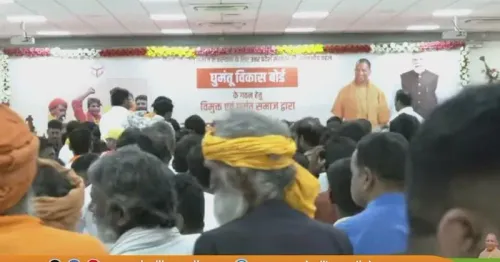
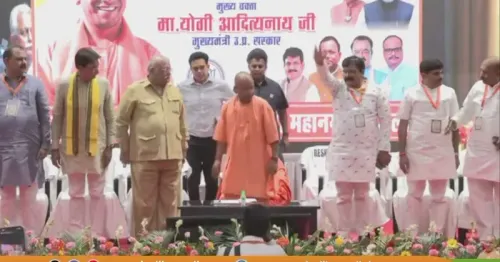
For generations, India's nomadic communities have moved through the margins — counted in census columns but rarely in welfare ledgers. That changes in Uttar Pradesh, where Chief Minister Yogi Adityanath has announced the creation of the Ghumantu Vikas Board, a dedicated state-level body for the development of nomadic and wandering communities, anchoring the move in Prime Minister Narendra Modi's foundational promise of inclusion.
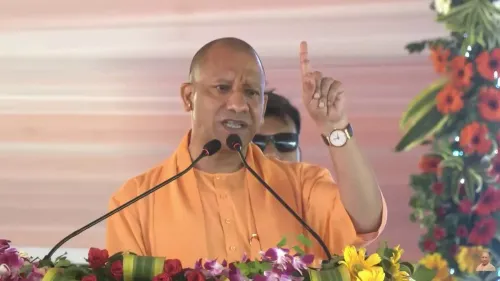
Speaking through the Chief Minister's Office of Uttar Pradesh on 6 August 2026, CM Yogi invoked PM Modi's pledge that government scheme benefits would reach 'every section of society without any discrimination on the basis of caste, region or language.' The Ghumantu Vikas Board, the post declared, is the newest link in that chain — 'उत्थान की इसी यात्रा की नई कड़ी' ('a new chapter in this very journey of upliftment').
'Sabka Saath, Sabka Vikas' meets the nomadic question
The 'Sabka Saath, Sabka Vikas' ('Together with all, development for all') doctrine was first articulated by the NDA government in 2014 as a governing compact: no community, however small or historically overlooked, would be bypassed by state welfare. Nomadic and denotified tribes — communities that were criminalised under a colonial-era law and have since struggled to access land rights, housing, education, and formal identity documents — have long been among the hardest groups to reach through conventional scheme architecture. By creating a dedicated board, the Yogi Adityanath government signals that a one-size-fits-all delivery model is insufficient for communities whose very mobility has historically put them outside the reach of fixed-address welfare systems.A board built for the margins
The Ghumantu Vikas Board follows a pattern the Uttar Pradesh government has established in recent years: carving out targeted institutional structures for historically marginalised groups rather than routing them through generic social-welfare channels. Nomadic communities in UP span a wide range of occupational and ethnic identities — from traditional performers and artisans to pastoral groups — and a dedicated board is designed to address the specificity of their needs. The precise structure, budget allocation, and leadership of the board have not yet been detailed in official communications, and the rollout of its first schemes will be closely watched in the state's upcoming cabinet and budget sessions. For India's nomadic communities, the Ghumantu Vikas Board is more than an administrative creation — it is, at minimum, a formal acknowledgement that the state sees them. Whether that visibility translates into durable upliftment is the test that now begins.Point of View
Dispersed, and historically unorganised as a vote bloc. By explicitly tying the board to PM Modi's 'Sabka Saath, Sabka Vikas' framing, CM Yogi reinforces the vertical link between state governance and central political branding ahead of the next electoral cycle. The deeper policy question is whether a dedicated board produces substantive outcomes — land rights, identity documents, housing, education access — or remains a symbolic gesture; the answer will depend entirely on budget allocation and administrative teeth. If the board is resourced seriously, it could mark a genuine shift in how UP's welfare architecture treats mobility as a category of vulnerability rather than an administrative inconvenience.
NationPress
6 Aug 2026
Frequently Asked Questions
What is the Ghumantu Vikas Board in Uttar Pradesh?
The Ghumantu Vikas Board is a newly announced state-level body in Uttar Pradesh dedicated to the welfare and development of nomadic communities. It was announced by Chief Minister Yogi Adityanath on 6 August 2026.
Who are the nomadic communities targeted by the Ghumantu Vikas Board?
The board targets nomadic and wandering communities in Uttar Pradesh — groups that include traditional performers, artisans, and pastoral communities whose mobile lifestyles have historically kept them outside the reach of fixed-address welfare systems.
What is 'Sabka Saath, Sabka Vikas' and how does it relate to this board?
'Sabka Saath, Sabka Vikas' — 'Together with all, development for all' — is the inclusive development doctrine articulated by the NDA government under PM Narendra Modi since 2014. CM Yogi cited it as the ideological foundation for creating the Ghumantu Vikas Board.
When was the Ghumantu Vikas Board announced?
The announcement was made on 6 August 2026 through the official Chief Minister's Office of Uttar Pradesh account on X.
What schemes will the Ghumantu Vikas Board run?
The specific schemes, budget allocations, and structure of the Ghumantu Vikas Board have not yet been officially detailed. These are expected to be clarified in upcoming state cabinet meetings or budget sessions.