CCPA penalises 9 platforms including IndiGo, Zepto for dark patterns
Synopsis
India's consumer protection regulator has fined nine major digital platforms — including IndiGo, Zepto, and Physics Wallah — a combined ₹20 lakh for dark patterns ranging from drip pricing to confirm shaming. The action, disclosed in Parliament, signals the CCPA is moving from guidelines to real enforcement, with Zepto drawing the largest single penalty of ₹7 lakh.
Key Takeaways
The CCPA has penalised nine digital platforms for using dark patterns, collecting approximately ₹20 lakh in total fines.
Zepto Marketplace received the highest penalty of ₹7 lakh for drip pricing and basket sneaking during checkout.
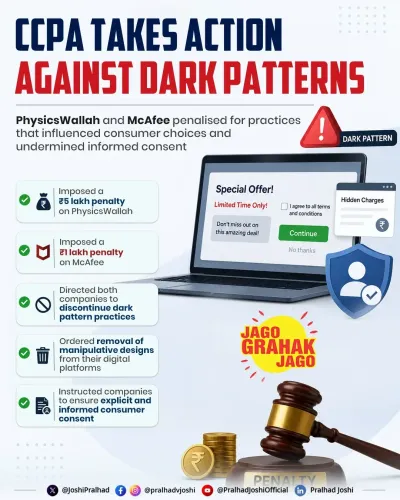
Physics Wallah was fined ₹5 lakh for a pre-selected ₹10 donation and requiring personal data before free course access.
IndiGo was pulled up for confirm shaming; the airline has since replaced the offending opt-out text on its app.
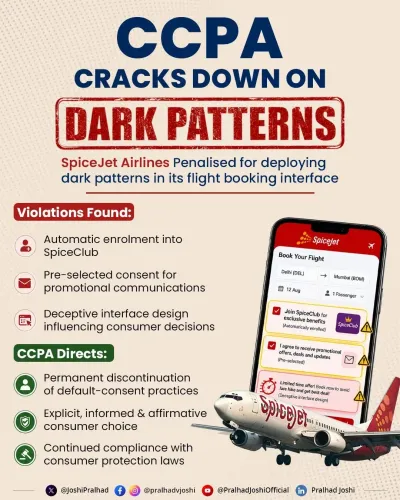
FirstCry (₹2 lakh), Anuj Jindal (₹3 lakh), PharmaEasy , McAfee , and SpiceJet (₹1 lakh each) also faced penalties.
The action follows a June 2025 CCPA directive asking e-commerce platforms to self-audit and remove dark patterns.
The Central Consumer Protection Authority (CCPA) has levied penalties on nine digital platforms — including IndiGo, Zepto, Physics Wallah, BookMyShow, FirstCry, and SpiceJet — for deploying deceptive online design tactics known as dark patterns that allegedly manipulated consumers during purchases and subscription flows. The enforcement action was disclosed by the Ministry of Consumer Affairs in a written reply to the Rajya Sabha on 6 August.
What Are Dark Patterns
Dark patterns are manipulative interface designs engineered to nudge users into decisions they would not otherwise make. The CCPA's enforcement covered a range of such tactics, including drip pricing, basket sneaking, confirm shaming, subscription traps, and misleading prompts. The regulator has so far collected approximately ₹20 lakh in total penalties from the companies found in violation of its guidelines.
Key Cases and Penalties
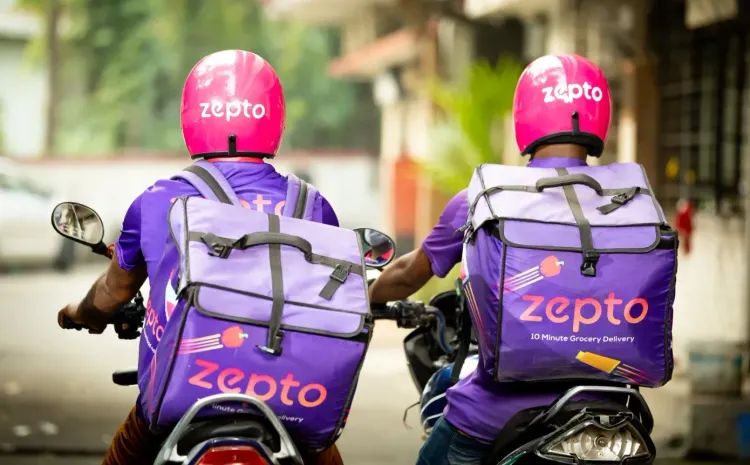
Zepto Marketplace received the steepest fine of ₹7 lakh. The CCPA found that the quick-commerce platform introduced additional handling charges and membership fees during checkout — after users had already seen an initial price — a practice classified as drip pricing and basket sneaking. Zepto has since discontinued the identified practices following the regulator's intervention.
Physics Wallah was fined ₹5 lakh after the CCPA took suo motu cognisance of a pre-selected ₹10 donation option linked to its PW Foundation. The regulator observed that users were shown emotionally persuasive messages encouraging them to retain the donation. The platform was also pulled up for requiring users to share personal information before accessing free courses. Physics Wallah has paid the penalty and removed the practices.
IndiGo was found using confirm shaming on its mobile application — specifically, an opt-out button labelled 'No I will take risk.' Following the CCPA's objection, the airline replaced the wording with the neutral statement 'No, I will not add to the trip.'
BookMyShow was directed to remove a pre-selected ₹1 donation to its BookASmile initiative, which the regulator classified as basket sneaking. FirstCry was fined ₹2 lakh, coaching platform Anuj Jindal received a penalty of ₹3 lakh, while PharmaEasy, McAfee, and SpiceJet each faced penalties of ₹1 lakh.
Regulatory Context
This crackdown builds on a directive issued in June 2025, when the CCPA instructed e-commerce platforms to conduct self-audits and remove dark patterns from their digital services. The Ministry of Consumer Affairs told the Rajya Sabha that the regulator has been stepping up enforcement to shield consumers from manipulative online interfaces designed to influence purchasing decisions. Notably, this is among the most sweeping multi-platform actions the CCPA has taken since its guidelines on dark patterns came into force.
What Comes Next
With the CCPA signalling continued vigilance, digital platforms across sectors — from travel and edtech to quick commerce and healthcare — face heightened compliance pressure. Industry observers expect the regulator to widen its audit scope, particularly as app-based consumer journeys grow more complex and pre-selected options become harder for users to detect.
Point of View
Which carries reputational cost beyond the fine itself. The real test is whether penalties scale with company size in future rounds, and whether the self-audit mandate from June 2025 is followed with independent verification. Dark patterns are not a fringe problem — they are baked into conversion-optimisation playbooks across the industry, and a ₹1 lakh fine is unlikely to change that calculus without credible deterrence.
NationPress
6 Aug 2026
Frequently Asked Questions
What are dark patterns and why is CCPA acting against them?
Dark patterns are deceptive design tactics embedded in apps and websites that manipulate users into unintended actions — such as hidden charges, pre-ticked donation boxes, or emotionally coercive opt-out buttons. The CCPA has been enforcing guidelines against these practices to protect consumers from manipulative online interfaces, disclosing its latest action in a written reply to the Rajya Sabha on 6 August.
Which platforms were penalised by the CCPA and how much?
Nine platforms were penalised: Zepto (₹7 lakh), Physics Wallah (₹5 lakh), Anuj Jindal (₹3 lakh), FirstCry (₹2 lakh), and PharmaEasy, McAfee, SpiceJet, IndiGo, and BookMyShow — the last five at ₹1 lakh each or directed to discontinue practices. Total penalties collected stand at approximately ₹20 lakh.
What specific dark pattern did IndiGo use?
IndiGo was found using confirm shaming on its mobile app, where the opt-out button read 'No I will take risk.' The CCPA objected to the emotionally coercive framing, and the airline replaced it with the neutral text 'No, I will not add to the trip.'
What action did the CCPA take against Physics Wallah?
The CCPA took suo motu cognisance of a pre-selected ₹10 donation to Physics Wallah's PW Foundation and emotionally persuasive messages urging users to retain it. The platform was also penalised for requiring personal data before granting access to free courses. Physics Wallah paid the ₹5 lakh fine and removed the practices.
What had the CCPA directed platforms to do before these penalties?
In June 2025, the CCPA had directed e-commerce platforms to conduct self-audits and proactively identify and remove dark patterns from their digital services. The penalties disclosed in August represent enforcement action against platforms found to have violated the regulator's guidelines despite that directive.