Nadda visits flood-hit Keyi Panyor, pledges Centre's full support
Synopsis
Union Health Minister J. P. Nadda visited cloudburst and flash flood-hit Keyi Panyor district in Arunachal Pradesh on 6 August 2026, offered condolences to bereaved families, and assured full central government support for relief, rehabilitation, and reconstruction under PM Modi's leadership.
Key Takeaways
Nadda visited Keyi Panyor district, Arunachal Pradesh on 6 August 2026 to assess damage from a flash flood and cloudburst.
The minister offered condolences to families who lost loved ones and pledged prayers for the speedy recovery of those affected.
Nadda assured that the Government of India will leave no stone unturned in relief, rehabilitation, and reconstruction efforts.
The visit reflects the Centre's role under the Disaster Management Act, 2005 , which mandates central support to states via the SDRF and NDRF .
Arunachal Pradesh experiences recurring monsoon-related disasters annually due to its high-rainfall, mountainous topography.
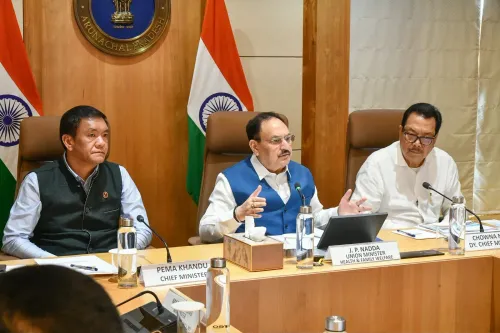
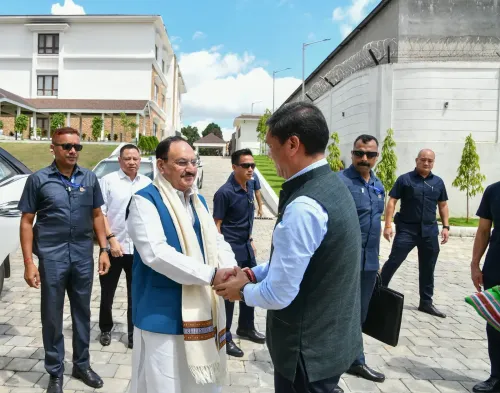
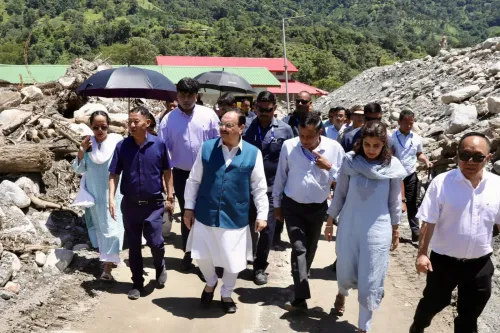
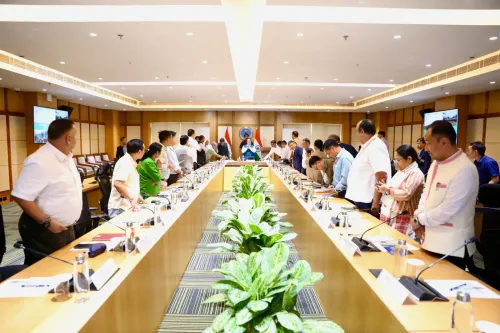
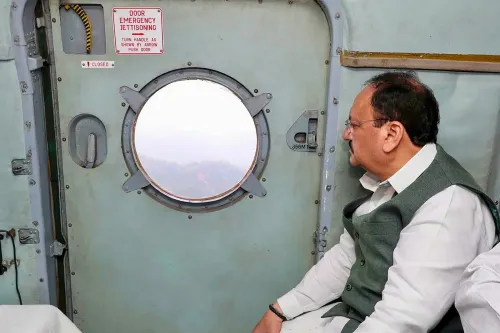
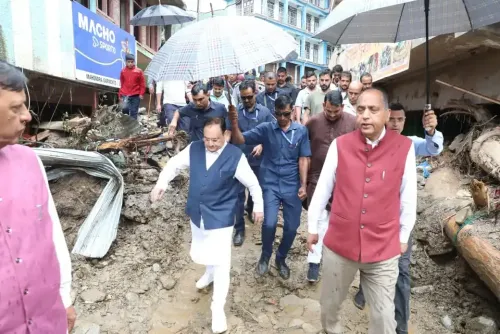
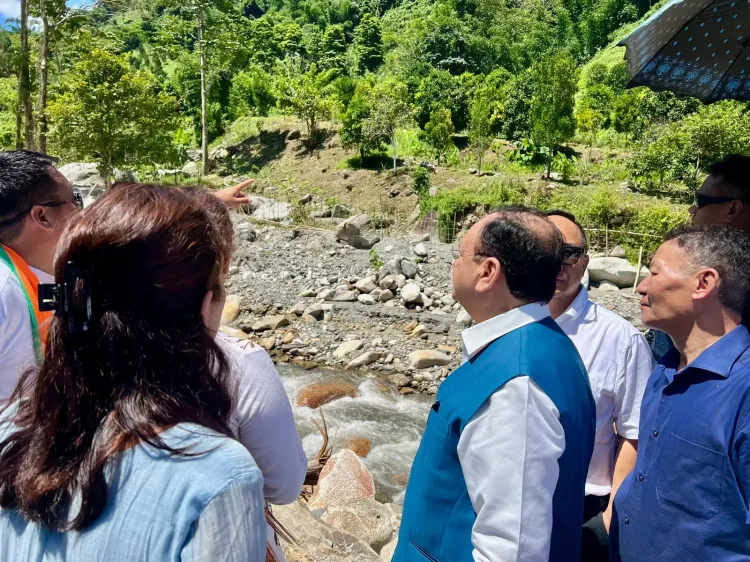
A flash flood and cloudburst have carved a trail of grief through Keyi Panyor district, Arunachal Pradesh — and on Thursday, 6 August 2026, Union Health Minister J. P. Nadda walked its damaged ground himself, meeting affected families and taking stock of the destruction firsthand.
Nadda, who also serves as BJP national president, posted images from the visit on X, stating: 'My heartfelt condolences to the families who have lost their loved ones in this tragic disaster. In this hour of grief, my thoughts and prayers are with them, and I pray for the speedy recovery of all those affected.'
Why a senior Union minister flew to Keyi Panyor
Arunachal Pradesh sits at the confluence of some of India's most punishing monsoon geography — high ridgelines, fast-draining river valleys, and annual rainfall that routinely triggers cloudbursts and landslides. The state shares borders with China and Myanmar, adding a strategic dimension that makes central attention to its stability both a welfare and a national-interest matter. Under the Disaster Management Act, 2005, the Centre supplements state capacity through the State Disaster Response Fund (SDRF) and the National Disaster Response Force (NDRF). A senior minister's on-ground visit is rarely just symbolic — it typically precedes the formal release of additional central funds and signals to state administrators that relief pipelines are open.Modi government's assurance to affected families
Nadda invoked Prime Minister Narendra Modi directly in his assurance, saying the government 'will leave no stone unturned in its relief, rehabilitation, and reconstruction efforts.' The framing — relief, rehabilitation, reconstruction — mirrors the three-phase framework the Centre uses when committing resources after a major natural disaster, suggesting a structured response is being mobilised rather than a one-time gesture. The visit puts the onus on the state administration and central agencies to follow through with measurable timelines on debris clearance, housing support, and ex-gratia payments to bereaved families — the metrics by which such assurances are ultimately judged.A recurring crisis in India's Northeast
This is not an isolated incident. Arunachal Pradesh, along with Assam, Manipur, and Sikkim, faces monsoon-season emergencies almost every year. The pattern — cloudburst, flash flood, central visit, fund release — has become familiar enough that civil society groups in the region have pushed for permanent early-warning infrastructure and climate-resilient construction standards rather than reactive relief alone. The question the Keyi Panyor visit implicitly raises: when does the Centre move from condolence visits to structural investment that breaks the annual cycle of disaster and recovery? The families of Keyi Panyor are counting on the answer being soon.Point of View
The visit also exposes a structural tension: Arunachal Pradesh's annual flood cycle demands long-term infrastructure investment, not just reactive relief, and the Centre's repeated assurances have yet to translate into a visible reduction in disaster-season casualties. The real test of this visit will be whether it accelerates permanent early-warning systems and climate-resilient construction — or remains another entry in a long ledger of condolence visits.
NationPress
20 Sept 2026
Frequently Asked Questions
What happened in Keyi Panyor district Arunachal Pradesh?
A flash flood and cloudburst struck Keyi Panyor district in Arunachal Pradesh, causing loss of life and significant damage. Union Health Minister J. P. Nadda visited the area on 6 August 2026 to assess the extent of destruction.
Why did J. P. Nadda visit Arunachal Pradesh?
Nadda visited to conduct a ground-level damage assessment of the cloudburst and flash flood-affected areas in Keyi Panyor district and to assure affected families of the central government's full support for relief, rehabilitation, and reconstruction.
What relief has the central government promised for Arunachal Pradesh floods?
Nadda stated that the government 'will leave no stone unturned' in relief, rehabilitation, and reconstruction efforts. Specific fund amounts had not been publicly announced at the time of the visit.
How does the Centre provide disaster relief to states like Arunachal Pradesh?
Under the Disaster Management Act, 2005 , the Centre supplements state capacity through the State Disaster Response Fund (SDRF) and deploys the National Disaster Response Force (NDRF) for rescue and relief operations.
Is Arunachal Pradesh prone to flash floods?
Yes. Arunachal Pradesh experiences annual monsoon-related disasters — including flash floods, cloudbursts, and landslides — due to its mountainous terrain, heavy seasonal rainfall, and fast-draining river valleys.