CM Yogi: Lucknow Is Realising Atal Ji's Dream
Synopsis
CM Yogi Adityanath says Lucknow is realising Atal Bihari Vajpayee's development dream through BrahMos missile manufacturing, airport modernisation, and metro expansion under Defence Minister Rajnath Singh's leadership.
Key Takeaways
CM Yogi Adityanath credited Atal Bihari Vajpayee's vision and Rajnath Singh's central leadership for Lucknow's infrastructure growth.
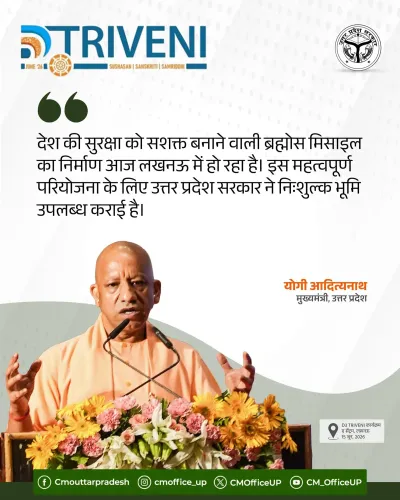
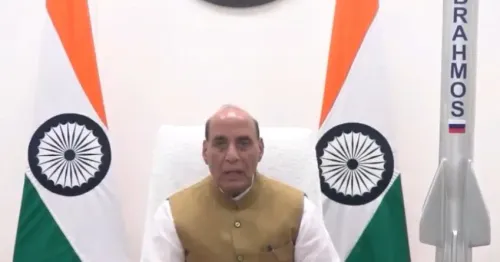
The BrahMos supersonic cruise missile — launched as an Indo-Russian joint venture in 1998 — is being manufactured in Lucknow.
CM Yogi said enemies of India 'tremble' when the BrahMos is deployed, underlining the missile's strategic deterrence value.
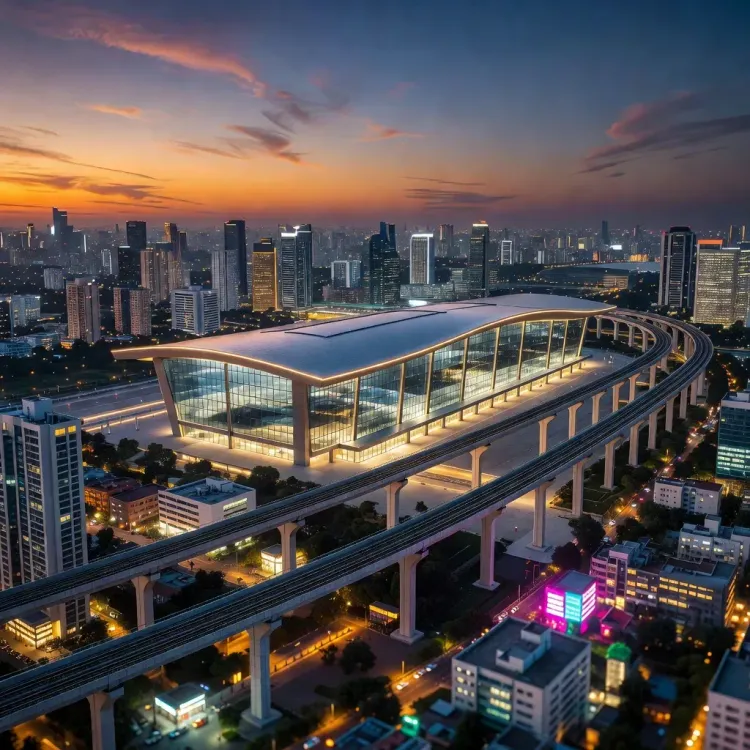
Lucknow's airport has been modernised and the city's Metro network is undergoing active expansion.
The remarks frame Uttar Pradesh as both an urban development leader and a defence manufacturing hub under the Atmanirbhar Bharat push.
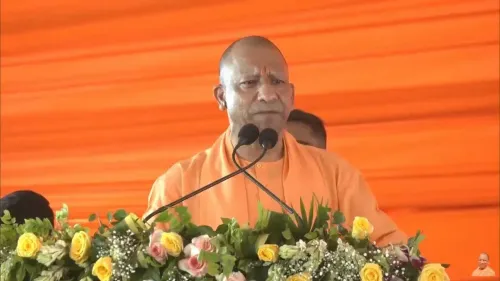
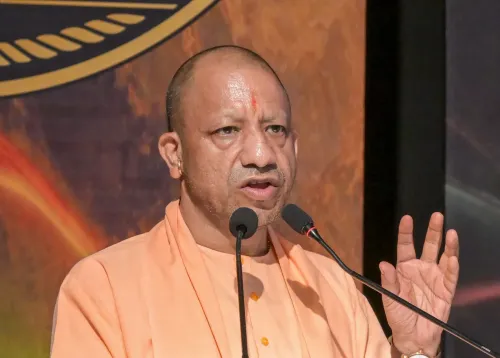
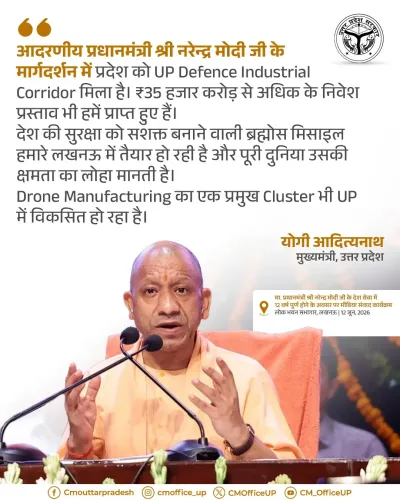
Lucknow is no longer just Uttar Pradesh's capital — it is becoming a city where supersonic missiles are forged and metro lines are being extended, all in one generation. On Thursday, 24 September 2026, the Chief Minister's Office of Uttar Pradesh shared remarks by Chief Minister Yogi Adityanath crediting the city's transformation to the vision of former Prime Minister Atal Bihari Vajpayee and the central leadership of Union Defence Minister Rajnath Singh.
Speaking on Lucknow's growth, CM Yogi said: 'Aaj hamara Lucknow shraddhey Atal ji ke sapnon ka Lucknow bankar vikas ki nayi bulandiyon ko chhu raha hai' — 'Today our Lucknow, shaped by the revered Atal ji's dreams, is touching new heights of development.' He pointed to three pillars driving the city forward: airport modernisation, metro expansion, and — most strikingly — the manufacture of BrahMos missiles right inside Lucknow.From Atal Ji's Blueprint to Rajnath Singh's Runway
Atal Bihari Vajpayee, Prime Minister from 1998 to 2004 and a son of Uttar Pradesh, made national infrastructure a centrepiece of his government. Roads, urban upgrades, and strategic investment — his tenure set a template that BJP governments at the centre and in Lucknow have since invoked as a founding charter. CM Yogi's remarks keep that lineage alive, framing today's projects as the fulfilment of a promise made nearly three decades ago.
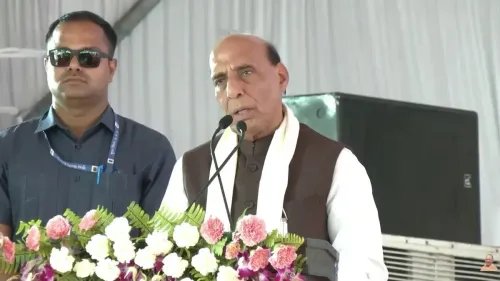
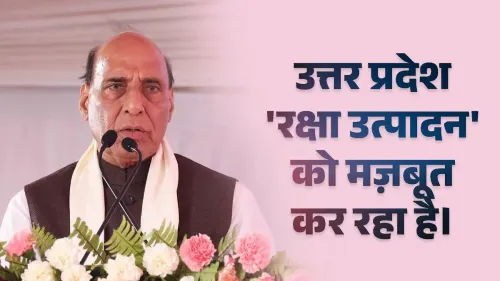
Rajnath Singh, who represents Lucknow in the Lok Sabha and serves as Union Defence Minister, occupies a unique dual role in this narrative: the capital of his constituency is simultaneously the seat of a cutting-edge defence production ecosystem. The airport modernisation and metro expansion are the visible, everyday face of that investment; the BrahMos manufacturing facility is its strategic spine.
BrahMos in Lucknow — A Missile That Makes Enemies 'Tremble'
The BrahMos supersonic cruise missile programme was born in 1998 as an Indo-Russian joint venture — the same year Vajpayee's government came to power. Today it is among the world's fastest cruise missiles in operational service. CM Yogi's words were direct and deliberately muscular: 'Jab Bharat iska istemal karta hai, toh desh ke dushman tharra uthte hain' — 'When India uses it, the enemies of the nation tremble.'
The fact that this weapon system is being assembled in Lucknow is not incidental — it is a statement about Uttar Pradesh's ambition to be a defence manufacturing hub, not merely a consumer of central largesse. The broader 'Make in India' and Atmanirbhar Bharat frameworks have pushed states to compete for defence production mandates, and UP has positioned itself aggressively.
Metro Lines, Airport Gates, and a City Betting on Both Ends
Beyond the strategic, the civic transformation is equally tangible. Lucknow's airport has undergone modernisation to handle increased passenger and cargo traffic. The Lucknow Metro is in active expansion, extending connectivity across a city that has grown far beyond its historic core. Together, these projects signal that Lucknow is being rebuilt for scale — as a regional economic anchor, not just an administrative capital.
What makes CM Yogi's framing politically potent is the deliberate stitching together of the civilian and the strategic: the metro passenger and the missile engineer inhabit the same city, and both are evidence of a development model that links quality of life with national security. Watch for further metro phases and any new defence production announcements from Uttar Pradesh in the months ahead — the state has signalled it wants more of both.
Point of View
The BJP ties its current governance to a cross-generational legacy, insulating the Lucknow story from being seen as purely partisan. The mention of BrahMos in the same breath as airport terminals is a deliberate escalation of the 'development plus security' messaging that has become the party's core electoral grammar ahead of any future state or national contest.
NationPress
24 Sept 2026
Frequently Asked Questions
Is BrahMos missile really being made in Lucknow?
Yes. A BrahMos manufacturing facility is operational in Lucknow, part of the broader push to establish Uttar Pradesh as a defence production hub under the Atmanirbhar Bharat initiative.
What is the BrahMos missile programme?
BrahMos is a supersonic cruise missile developed as a joint venture between India and Russia, launched in 1998 . It is one of the fastest operational cruise missiles in the world and is used by all three branches of the Indian armed forces.
What infrastructure projects are underway in Lucknow?
Lucknow is seeing airport modernisation and ongoing expansion of its Metro rail network, alongside the BrahMos missile production facility — projects cited by CM Yogi as evidence of the city's transformation.
Why does CM Yogi keep referencing Atal Bihari Vajpayee for Lucknow's development?
Vajpayee, Prime Minister from 1998 to 2004, prioritised national infrastructure and is widely respected across political lines. Invoking his vision lets the BJP government frame current projects as the continuation of a long-standing, patriotic development mission.
What is Rajnath Singh's role in Lucknow's growth?
Rajnath Singh represents Lucknow in Parliament and serves as Union Defence Minister. In both capacities he has been associated with defence manufacturing investment and central funding for urban infrastructure in the city.