CM Yogi marks 12th International Yoga Day, hails India's ancient legacy
Synopsis
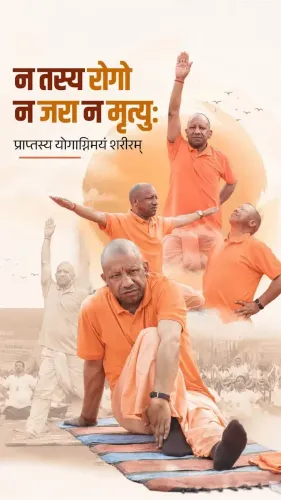
Chief Minister Yogi Adityanath marked the 12th International Yoga Day on 21 June 2026, calling yoga a gift of India's sage tradition and asserting that the global observance powerfully reinforces India's civilisational identity on the world stage.
Key Takeaways
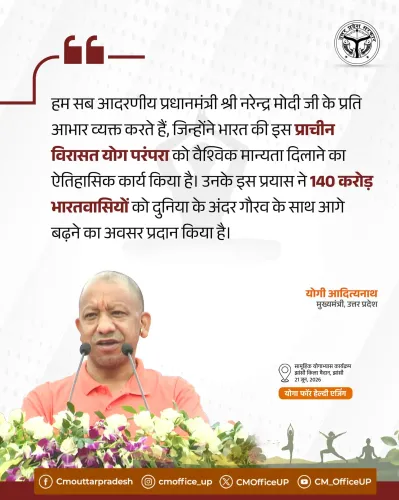
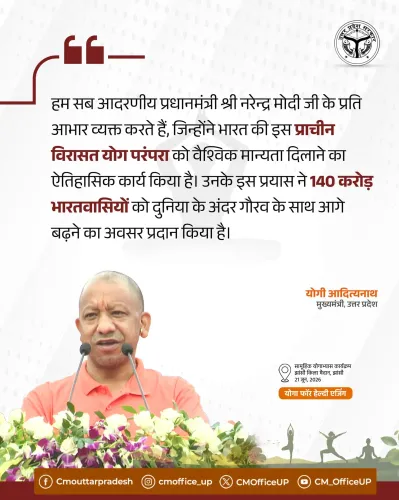
The Chief Minister's Office of Uttar Pradesh shared CM Yogi Adityanath's statement on 21 June 2026 for the 12th International Yoga Day .
CM Yogi described yoga as a gift of India's rishi parampara (sage tradition) and credited ancient luminaries for giving it global recognition.
International Yoga Day was established by the UN General Assembly in December 2014 through resolution 69/131 , following a proposal by PM Narendra Modi .
The first International Yoga Day was observed on 21 June 2015 ; 2026 marks its twelfth edition.
India and its state governments use the day as a platform for cultural diplomacy, framing yoga as a contribution of ancient Indian knowledge to global wellness.
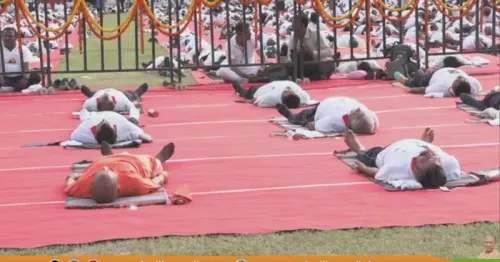
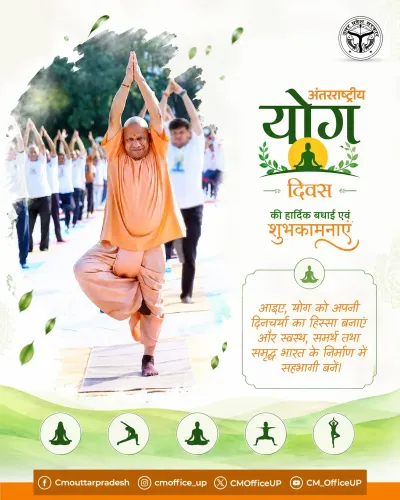
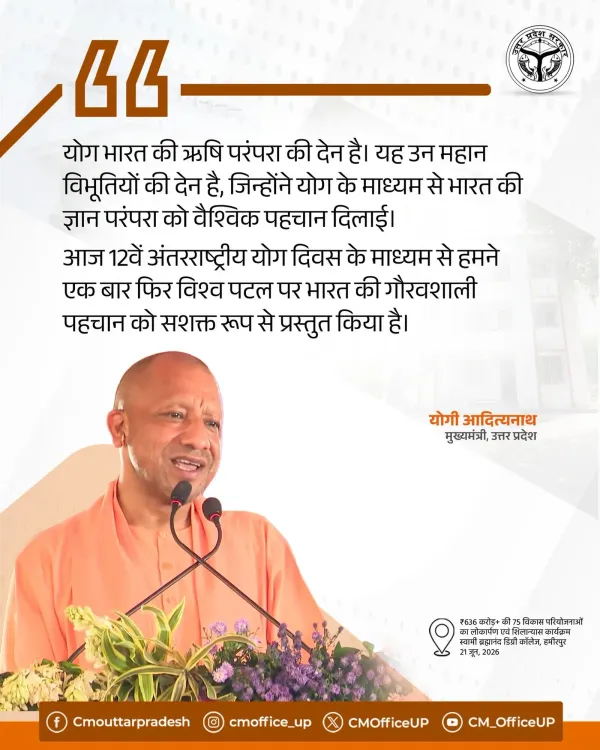
The Chief Minister's Office of Uttar Pradesh shared a statement by Chief Minister Yogi Adityanath on Sunday, 21 June 2026, marking the 12th International Yoga Day and reaffirming yoga's roots in India's ancient knowledge traditions.
In his statement, CM Yogi said: 'Yog Bharat ki rishi parampara ki den hai' ('Yoga is a gift of India's sage tradition'). He credited the great luminaries who, through yoga, gave India's knowledge heritage a global identity, and declared that through this year's observance, India had 'once again powerfully presented its glorious identity on the world stage.'
Context
International Yoga Day is observed every year on 21 June, a date established by the United Nations General Assembly through resolution 69/131 in December 2014, following a proposal by Prime Minister Narendra Modi at the UN General Assembly. The first global observance took place on 21 June 2015, making 2026 its twelfth edition. The day was conceived to highlight yoga's universal benefits for health and its origins in India's civilisational heritage.
Policy Backdrop
India has consistently used International Yoga Day as a vehicle for cultural diplomacy, framing the practice as a gift of its ancient rishi parampara (sage tradition) to global wellness. State governments, including Uttar Pradesh, align their local observances with this central messaging, reinforcing the narrative of India as a source of timeless knowledge systems. CM Yogi Adityanath, who has served as Chief Minister of Uttar Pradesh since 2017, has regularly incorporated yoga and traditional Indian knowledge into official state communications and public programs.
Stakeholders and Impact
The statement resonates most directly with yoga practitioners, cultural organisations, and the Indian diaspora worldwide, for whom the day carries both wellness and identity significance. By invoking the rishi parampara, the messaging situates contemporary yoga practice within a long lineage of Indian philosophical thought, strengthening the cultural case for its global relevance. Uttar Pradesh, as India's most populous state, holds particular symbolic weight in projecting this narrative domestically and internationally.
What's Next
Attention will now turn to any announcements from the Uttar Pradesh government on integrating yoga more formally into public health or education programmes in the state. At the national level, themes and participation frameworks for the 13th International Yoga Day in 2027 are expected to be shaped by the diplomatic and cultural momentum built through successive annual observances. The broader question is how state governments translate ceremonial messaging into sustained policy action on yoga promotion.
Point of View
Linking the Indian state's identity to its civilisational heritage. The invocation of rishi parampara is deliberate — it positions yoga not merely as a wellness practice but as philosophical and cultural inheritance, strengthening the ideological framing that has accompanied the day since its UN adoption in 2014. For Uttar Pradesh specifically, a state that holds deep religious and cultural significance in the Hindu tradition, such messaging carries domestic resonance beyond the diplomatic. The real test for the Yogi government will be whether ceremonial affirmations translate into concrete policy — such as integrating yoga into public health infrastructure or school curricula — that outlasts the annual cycle of observance.
NationPress
21 Jun 2026
Frequently Asked Questions
What is the 12th International Yoga Day?
The 12th International Yoga Day falls on 21 June 2026 . It marks the twelfth annual global observance of the day, which was established by the UN General Assembly in December 2014 and first celebrated on 21 June 2015.
What did CM Yogi Adityanath say on International Yoga Day 2026?
CM Yogi Adityanath said yoga is a gift of India's sage tradition ( rishi parampara ) and that through the 12th International Yoga Day, India had once again powerfully presented its glorious identity on the world stage.
Who proposed International Yoga Day at the United Nations?
Prime Minister Narendra Modi proposed International Yoga Day at the UN General Assembly in 2014. The General Assembly adopted resolution 69/131 in December 2014, declaring 21 June as the International Day of Yoga.
Why is 21 June chosen for International Yoga Day?
21 June is the summer solstice in the Northern Hemisphere, the longest day of the year in terms of daylight. It holds significance in many cultures and was chosen as a meaningful date to anchor the global observance.
How does Uttar Pradesh observe International Yoga Day?
Uttar Pradesh aligns its local observances with national messaging on yoga as cultural heritage. The state government, under CM Yogi Adityanath , regularly highlights yoga events and frames them within India's ancient knowledge traditions.