CM Yogi Marks Yoga Day With Sanskrit Verse on Body and Wellness
Synopsis
On International Yoga Day 2026, the Chief Minister's Office of Uttar Pradesh shared a classical Sanskrit verse declaring that one whose body is filled with the fire of yoga is freed from disease, old age, and death — continuing the state's tradition of anchoring the global observance in India's scriptural heritage.
Key Takeaways
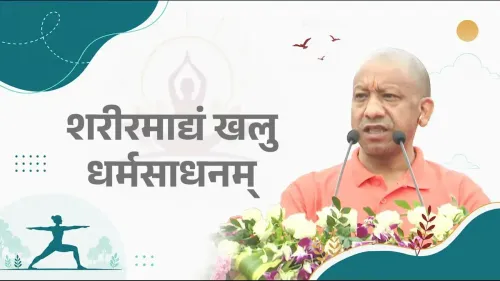
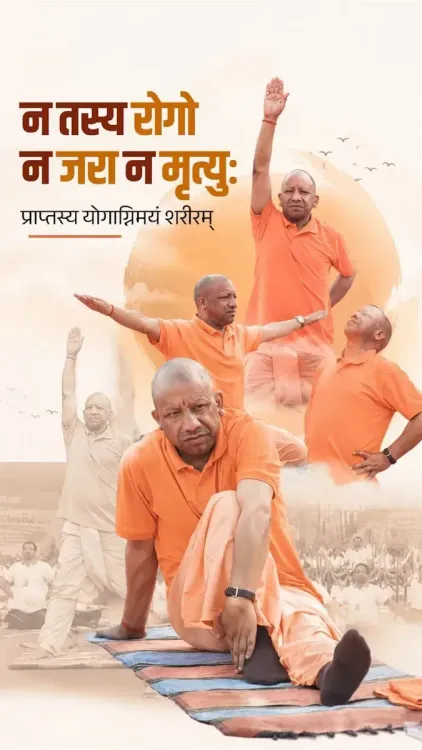
The Chief Minister's Office of Uttar Pradesh posted a Sanskrit shloka on 21 June 2026 to mark International Yoga Day .
The verse translates as: 'One whose body is filled with the fire of yoga is free from disease, old age, and death.' International Yoga Day has been observed annually on 21 June since the UN adopted the resolution in 2014 on PM Narendra Modi 's proposal.
Uttar Pradesh under CM Yogi Adityanath has consistently used classical Sanskrit references on this day to link governance with traditional wellness culture.
The messaging is part of a broader national pattern of positioning yoga as both public-health policy and cultural soft power across BJP-governed states.
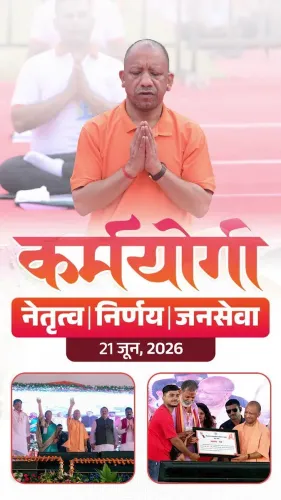
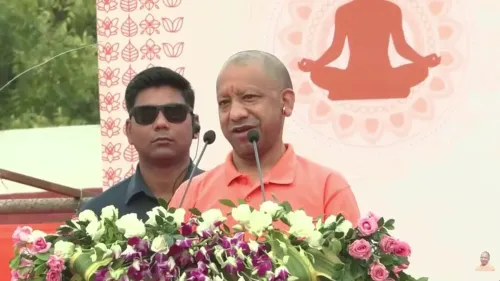
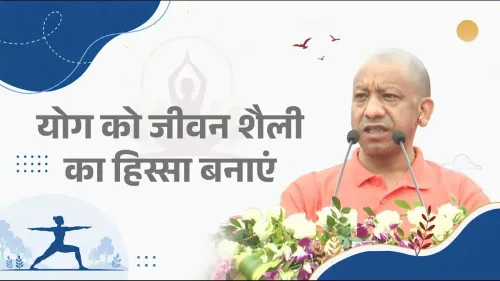
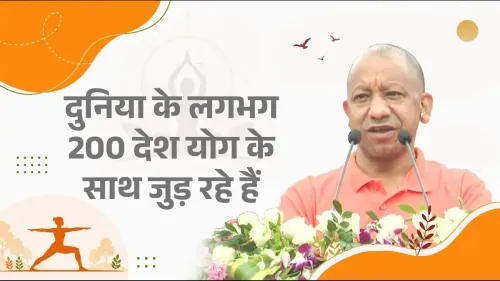
The Chief Minister's Office of Uttar Pradesh marked International Yoga Day on Sunday, 21 June 2026 by sharing a classical Sanskrit verse that speaks to the transformative power of yoga on the human body, underscoring the state government's continued emphasis on traditional wellness practices.
Context
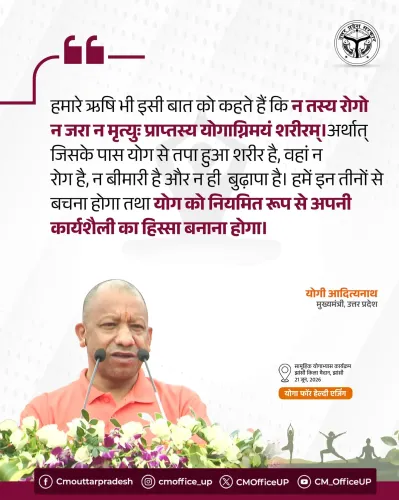
The post carried the Sanskrit shloka: 'न तस्य रोगो न जरा न मृत्युः प्राप्तस्य योगाग्निमयं शरीरम्' — meaning, 'One whose body is filled with the fire of yoga is free from disease, old age, and death.' The verse, drawn from classical Indian scriptural tradition, was shared alongside the hashtag #InternationalYogaDay, situating the message within a global observance now entering its twelfth year.
International Yoga Day is observed every year on 21 June, the summer solstice. The occasion was formally established by the United Nations following a proposal by Prime Minister Narendra Modi at the UN General Assembly in 2014.
Policy Backdrop
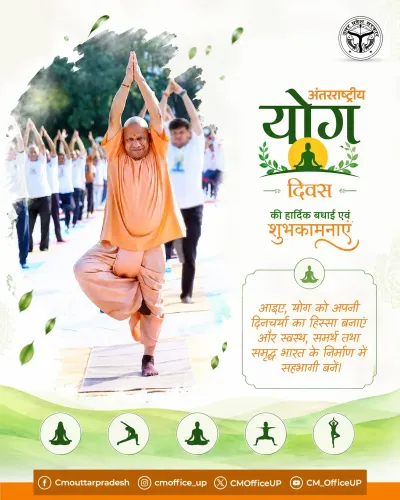
Since 2014, successive Indian governments — particularly those led by the Bharatiya Janata Party — have used 21 June to reinforce yoga as both a public-health instrument and a pillar of India's cultural soft power. Uttar Pradesh, under Chief Minister Yogi Adityanath, has been among the most active states in this effort, organising mass yoga sessions and invoking classical Sanskrit texts to anchor governance in a wellness tradition.
The use of a Sanskrit shloka rather than a policy announcement reflects a deliberate communicative choice: linking the modern global observance to ancient Indian philosophical and medical thought. This pattern is consistent with how BJP-governed states have framed yoga — not merely as exercise, but as a civilisational inheritance.
Stakeholders and Impact
The message is aimed primarily at Uttar Pradesh's large population of yoga practitioners, students, and residents who participate in state-organised events on this day. More broadly, it speaks to the millions of Indians who observe International Yoga Day through public gatherings, school programmes, and community sessions.
The Sanskrit verse's emphasis on freedom from disease, ageing, and death also carries a preventive-health dimension, aligning with national priorities around reducing the burden of non-communicable diseases through lifestyle interventions. Yoga has been increasingly integrated into government wellness schemes and school curricula across several states.
What's Next
Attention will now turn to whether the Uttar Pradesh government follows up with announcements on district-level yoga camps, integration of yoga modules into school timetables, or wellness infrastructure linked to the observance. With each successive International Yoga Day, state governments have tended to escalate the scale of programming, making this year's messaging a likely precursor to further institutional action in the months ahead.
Point of View
Invoking scriptural authority on wellness serves a dual purpose: reinforcing cultural identity among the state's electorate while aligning with the Centre's decade-long project of making yoga a cornerstone of India's global image. This approach also sidesteps the need to enumerate specific achievements, letting ancient verse carry the weight of legitimacy. Across BJP-ruled states, this template has become so consistent that the absence of such messaging would itself be notable.
NationPress
19 Sept 2026
Frequently Asked Questions
What is the Sanskrit shloka shared by the UP CM Office on Yoga Day 2026?
The shloka is 'न तस्य रोगो न जरा न मृत्युः प्राप्तस्य योगाग्निमयं शरीरम्', which translates to: 'One whose body is filled with the fire of yoga is free from disease, old age, and death.' It is a classical Sanskrit verse from Indian scriptural tradition.
When is International Yoga Day celebrated and who proposed it?
International Yoga Day is celebrated every year on 21 June. It was proposed by Prime Minister Narendra Modi at the UN General Assembly in 2014 and formally adopted by the United Nations, with the first observance held in 2015.
How does Uttar Pradesh observe International Yoga Day?
The Uttar Pradesh government, led by Chief Minister Yogi Adityanath, typically organises mass yoga sessions across the state and uses the occasion to invoke classical Sanskrit texts, linking the global observance to India's traditional wellness and cultural heritage.
What does 'yogaagni' mean in the Sanskrit verse shared by the UP CMO?
'Yogaagni' literally means 'the fire of yoga' — a classical metaphor for the intense transformative energy that sustained yoga practice generates within the body, believed in ancient Indian thought to purify and strengthen the practitioner.
Why do Indian state governments share Sanskrit shlokas on Yoga Day?
Indian state governments, particularly those led by the BJP, share Sanskrit verses on Yoga Day to anchor the modern global observance in India's ancient philosophical and medical traditions, reinforcing cultural identity and positioning yoga as a civilisational inheritance rather than just a fitness practice.