CM Yogi Invokes Ancient Verse on Yoga Day 2026
Synopsis
On International Yoga Day 2026, CM Yogi Adityanath quoted a Sanskrit verse — 'free from disease, old age, and death through yoga' — urging Uttar Pradesh citizens to make yoga a regular part of daily life, continuing the state's annual wellness outreach tradition.
Key Takeaways
CM Yogi Adityanath posted a yoga day message on 21 June 2026 via the official Chief Minister's Office account on X.
He quoted a Sanskrit verse meaning: 'One whose body is tempered by the fire of yoga is free from disease, old age, and death.' International Yoga Day has been observed globally on 21 June every year since 2014 , following a UN General Assembly resolution.
The Uttar Pradesh government has held state-wide yoga camps and outreach programmes on this day every year since 2017 .
The messaging aligns with India's central AYUSH policy positioning yoga as a low-cost public-health intervention.
Future focus will be on state budget allocations for yoga infrastructure in schools and primary health centres across Uttar Pradesh .
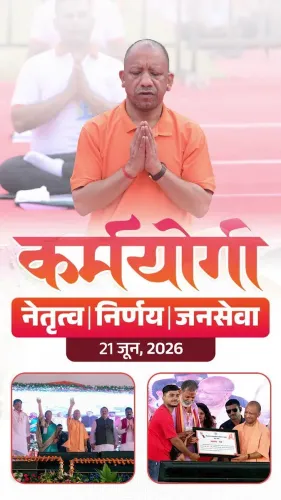
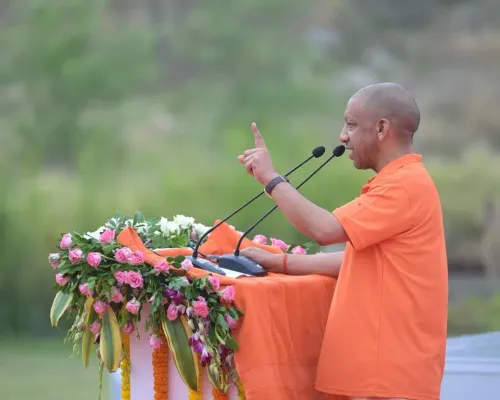
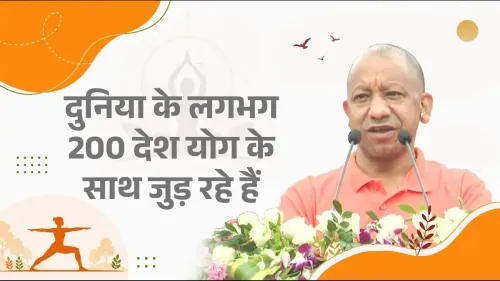
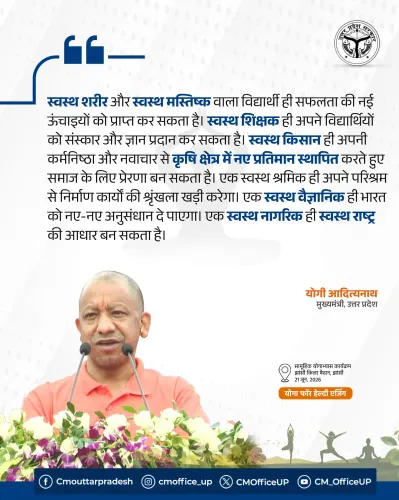
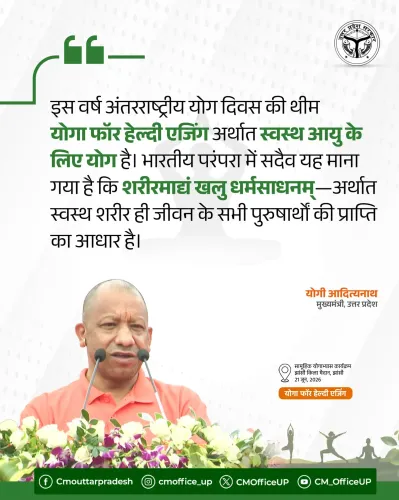
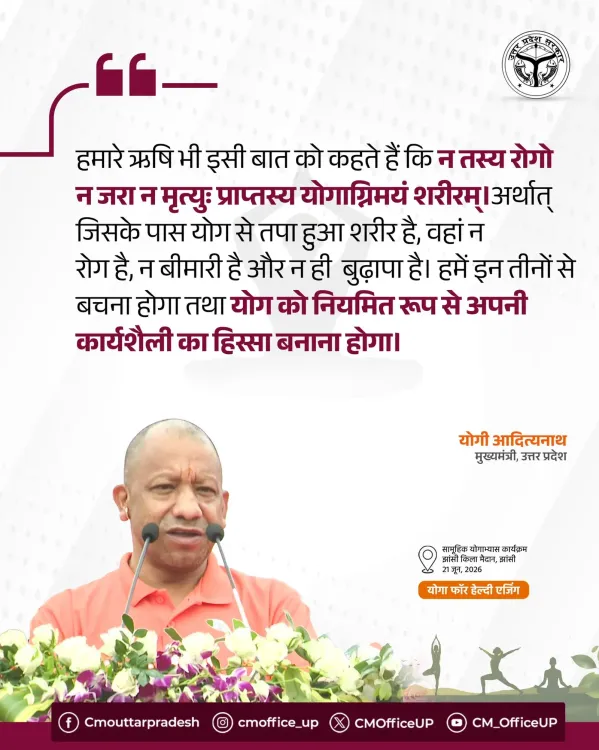
The Chief Minister's Office of Uttar Pradesh, on behalf of Chief Minister Yogi Adityanath, shared a message on International Yoga Day, 21 June 2026, invoking a Sanskrit verse from ancient Indian texts to call on citizens to make yoga a regular part of their daily lives.
Context
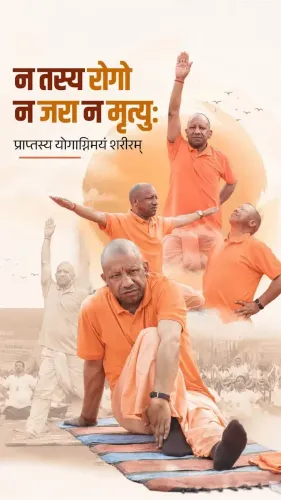
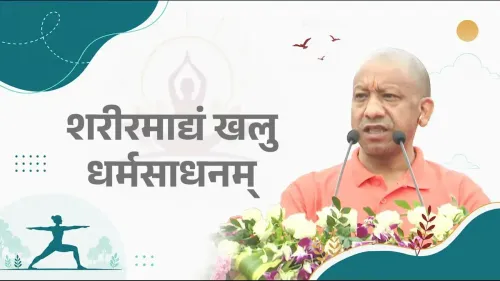
In the post, CM Yogi Adityanath quoted the Sanskrit verse: 'न तस्य रोगो न जरा न मृत्युः, प्राप्तस्य योगाग्निमयं शरीरम्' — meaning, 'One whose body has been tempered by the fire of yoga is free from disease, old age, and death.' He attributed the wisdom to India's ancient sages and urged citizens to protect themselves from all three afflictions by integrating yoga into their daily routine.
The message was posted at 9:01 AM IST on 21 June 2026, coinciding with the global observance of International Yoga Day.
Policy Backdrop
International Yoga Day is observed every year on 21 June, following a United Nations General Assembly resolution (69/131) passed in 2014 at India's initiative. The day has since become one of the most widely observed wellness observances globally.
Since 2017, when Yogi Adityanath assumed charge as Chief Minister, the Uttar Pradesh government has organised state-wide yoga sessions, district-level camps, and public-health outreach programmes every year on this date. These efforts align with the central government's AYUSH policy framework, which positions traditional practices such as yoga alongside modern medicine as low-cost interventions for non-communicable and lifestyle diseases.
Stakeholders and Impact
The message is directed at the general public across Uttar Pradesh — India's most populous state — as well as yoga practitioners and wellness communities nationwide. By anchoring the call to action in a verse from classical Indian scripture, the Chief Minister's Office frames yoga not merely as exercise but as a time-tested prescription for holistic health.
Public-health advocates have long argued that accessible, cost-free practices like yoga can reduce the burden of lifestyle disorders — including diabetes, hypertension, and obesity — which are rising sharply across India. State-level messaging of this kind reinforces that broader policy intent at the grassroots level.
What's Next
Attention will now turn to whether the Uttar Pradesh government follows the annual messaging with concrete budgetary commitments — including allocations for yoga infrastructure in government schools, primary health centres, and community wellness facilities. Any new directives integrating yoga into primary health-care protocols in the state would mark a significant policy step beyond ceremonial observance.
As India continues to champion yoga on the world stage, state governments like Uttar Pradesh remain central to translating the global observance into measurable public-health outcomes at the local level.
Point of View
Signalling policy alignment ahead of potential budget decisions on wellness infrastructure. Whether this annual ritual translates into measurable health outcomes will depend on the follow-through in school and primary health-care programmes.
NationPress
20 Sept 2026
Frequently Asked Questions
What did CM Yogi Adityanath say on International Yoga Day 2026?
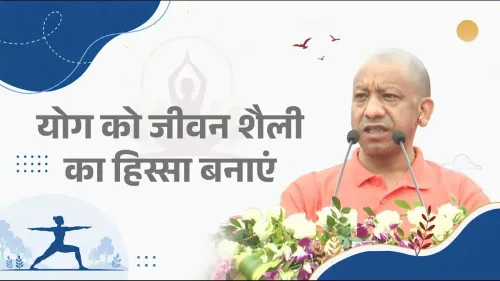
CM Yogi Adityanath quoted a Sanskrit verse from ancient Indian texts meaning 'one whose body is tempered by the fire of yoga is free from disease, old age, and death,' and urged citizens to make yoga a regular part of their daily routine.
What is the Sanskrit verse CM Yogi quoted on Yoga Day?
The verse is 'न तस्य रोगो न जरा न मृत्युः, प्राप्तस्य योगाग्निमयं शरीरम्,' which translates to: 'One who has attained a body purified by the fire of yoga is free from disease, old age, and death.'
When is International Yoga Day and who started it?
International Yoga Day is observed every year on 21 June . It was established by a UN General Assembly resolution in 2014 following a proposal by India.
How does Uttar Pradesh observe International Yoga Day?
Since 2017, the Uttar Pradesh government has organised state-wide yoga sessions, district-level camps, and public-health outreach programmes on 21 June each year.
What is India's AYUSH policy on yoga?
India's AYUSH policy positions traditional practices like yoga alongside modern medicine as accessible, low-cost interventions for non-communicable and lifestyle diseases such as diabetes and hypertension.