CM Yogi Credits Modi Govt for Halting Farmer Suicides Post-2014
Synopsis
Uttar Pradesh CM Yogi Adityanath has claimed that the Modi government put a halt to mass farmer suicides that plagued India between 2004 and 2014 under the UPA, pointing to post-2014 welfare schemes as the turning point for India's agrarian crisis.
Key Takeaways
CM Yogi Adityanath posted on 18 June 2026 claiming that lakhs of farmers died by suicide between 2004 and 2014 under the UPA government.
He credited the Narendra Modi -led central government with halting farmer suicides after 2014 .
The Pradhan Mantri Fasal Bima Yojana (2016) and PM-KISAN (2019, providing Rs 6,000/year ) are among the key post-2014 farm-welfare interventions.
The National Crime Records Bureau (NCRB) is the official body that tracks farmer suicide data and is the standard empirical reference for such claims.
Uttar Pradesh is one of India's largest agrarian states and has aligned state schemes with central farm-welfare programmes under Adityanath .
The next NCRB annual report will be a key data point to assess the trajectory of farmer suicides in India.
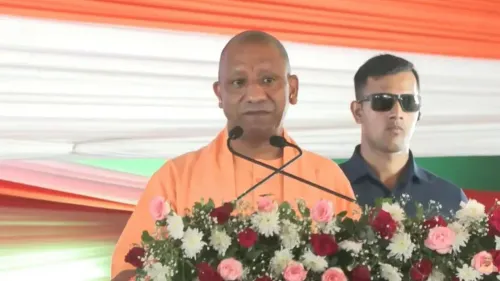
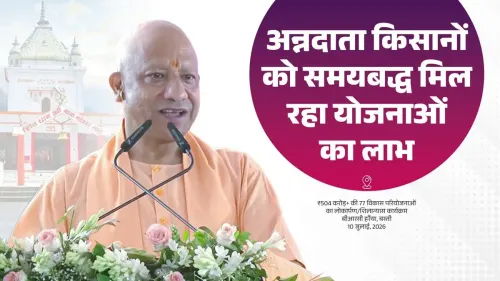
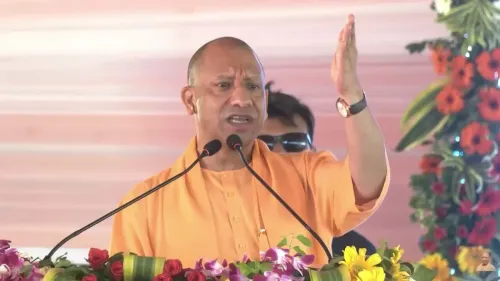
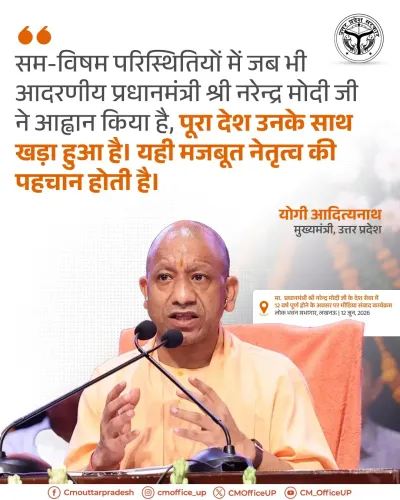
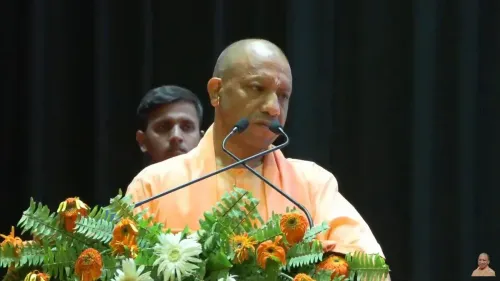
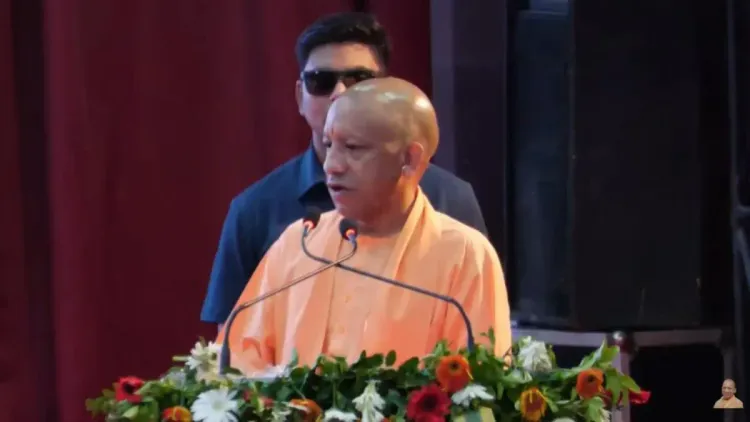
Uttar Pradesh Chief Minister Yogi Adityanath on Thursday, 18 June 2026, invoked the agrarian crisis of the 2004–2014 period to argue that the Narendra Modi-led central government had reversed a decade of farmer distress, stating that the wave of suicides that claimed lakhs of farmers during that era was brought to a halt after 2014.
Context
In his post, Adityanath wrote: 'Varsh 2004 se lekar 2014 ke beech mein jis desh mein laakhon kisaanon ne aatmhatya ki, varsh 2014 ke baad us par viraam laga...' — translating to: 'In the country where lakhs of farmers committed suicide between 2004 and 2014, a full stop was put on that after 2014.' The statement is a pointed political contrast between the United Progressive Alliance (UPA) government's tenure and the BJP-led administration that followed.
The UPA government, a Congress-led coalition, held power at the centre from 2004 to 2014. Farmer suicides remained a persistent and widely reported crisis throughout that period, with the National Crime Records Bureau (NCRB) — the central agency that compiles annual suicide statistics — documenting tens of thousands of such deaths annually across several states.
Policy Backdrop
The Modi government, since taking office in 2014, has introduced a series of schemes aimed at reducing agrarian distress. The Pradhan Mantri Fasal Bima Yojana, launched in 2016, expanded crop insurance coverage to shield farmers from weather-related losses. The Pradhan Mantri Kisan Samman Nidhi (PM-KISAN) scheme, introduced in 2019, provides direct income support of Rs 6,000 per year to eligible landholding farmer families.
The UPA era was not without its own interventions — the Mahatma Gandhi National Rural Employment Guarantee Act (MGNREGA), enacted in 2005, was designed to provide rural employment and cushion agrarian households against income shocks. BJP leaders have, however, consistently argued that these measures were insufficient to stem the tide of farmer deaths during that decade.
Stakeholders and Impact
Uttar Pradesh, India's most populous state and one of its largest agrarian economies, has a direct stake in national farm-welfare policy. Under Adityanath, the state government has aligned its programmes with central schemes, frequently citing NCRB data in public communications to underscore improvements in farmer welfare.
The post is directed at a broad audience of farmers and rural voters, a constituency that remains decisive in Uttar Pradesh elections. By anchoring the narrative in the 2004–2014 versus post-2014 frame, the messaging reinforces the BJP's long-standing electoral argument that governance under Congress-led coalitions was marked by rural neglect.
What's Next
The next release of the NCRB's annual report on accidental deaths and suicides will be closely watched for the latest data on farmer suicides, which remains the empirical reference point for such political claims. Any forthcoming Uttar Pradesh state budget announcements on agricultural schemes are also expected to build on this narrative. The BJP's framing of the 2004–2014 period as a benchmark of failure — and post-2014 policy as a corrective — is likely to remain a central theme in the party's outreach to farming communities ahead of future electoral cycles.
Point of View
Timed to reinforce the party's farmer-welfare credentials at a moment when agrarian sentiment remains politically sensitive in Uttar Pradesh. By invoking the 2004–2014 period as a decade of mass farmer deaths, he frames the Modi government's income-support and insurance schemes as a historic corrective rather than incremental policy. The claim, however, rests on NCRB data trends that analysts have long debated for methodology and classification consistency, meaning the political assertion outpaces the empirical consensus. The post signals that farm welfare will remain a front-line BJP talking point in Uttar Pradesh's political communication cycle.
NationPress
18 Sept 2026
Frequently Asked Questions
What did CM Yogi Adityanath say about farmer suicides?
CM Yogi Adityanath stated that lakhs of farmers committed suicide between 2004 and 2014, and that the Modi government brought this to a halt after 2014.
How many farmers committed suicide between 2004 and 2014 in India?
CM Yogi's post refers to 'lakhs' of farmer suicides during the 2004–2014 UPA period; the National Crime Records Bureau (NCRB) is the official body that tracks these figures, and exact numbers from the post cannot be independently verified.
What schemes did the Modi government launch for farmer welfare after 2014?
Key post-2014 farmer welfare schemes include the Pradhan Mantri Fasal Bima Yojana (crop insurance, 2016) and PM-KISAN (direct income support of Rs 6,000 per year, 2019).
What is PM-KISAN and who benefits from it?
PM-KISAN, or Pradhan Mantri Kisan Samman Nidhi, is a central government scheme launched in 2019 that provides Rs 6,000 per year in direct income support to eligible landholding farmer families across India.
Why does the BJP compare farmer welfare under UPA and NDA governments?
The BJP regularly contrasts the 2004–2014 UPA era with the post-2014 Modi government to argue that new income-support, insurance and credit schemes have improved conditions for Indian farmers, making it a key electoral argument in agrarian states like Uttar Pradesh.