CM Yogi Offers Prayers at Kaal Bhairav and Kashi Vishwanath
Synopsis
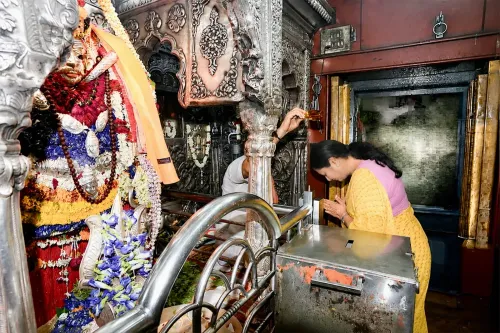
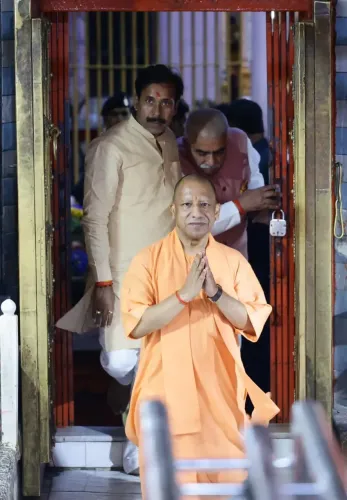
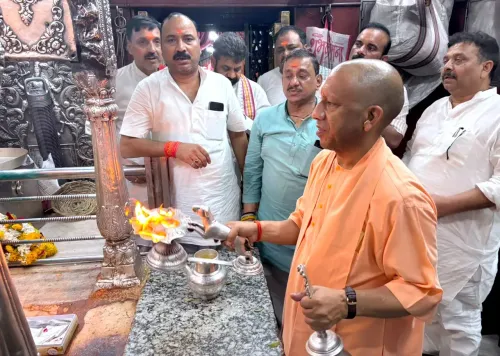
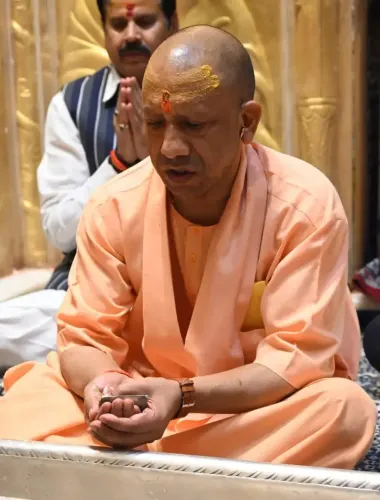
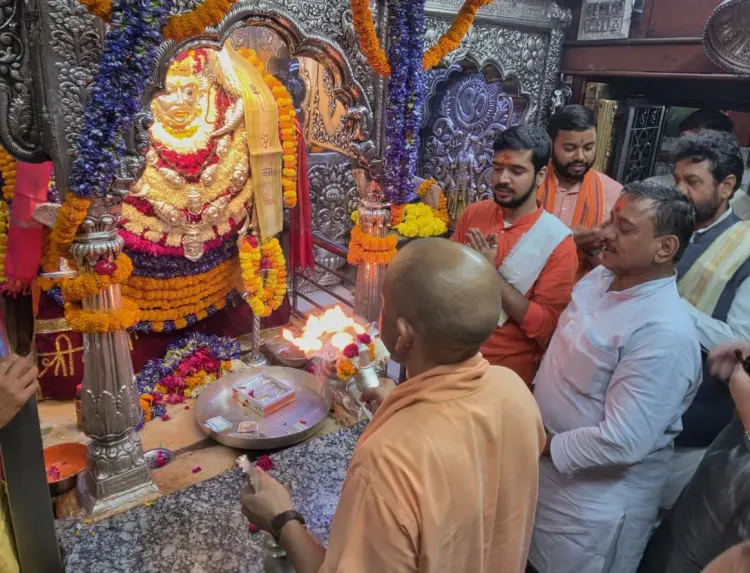
Chief Minister Yogi Adityanath visited the Kaal Bhairav and Kashi Vishwanath temples in Varanasi on 31 October, offering prayers for the happiness, peace, and prosperity of all Uttar Pradesh residents, continuing his consistent pattern of temple visits in the holy city.
Key Takeaways
CM Yogi Adityanath visited Varanasi on 31 October for prayers at two major temples.
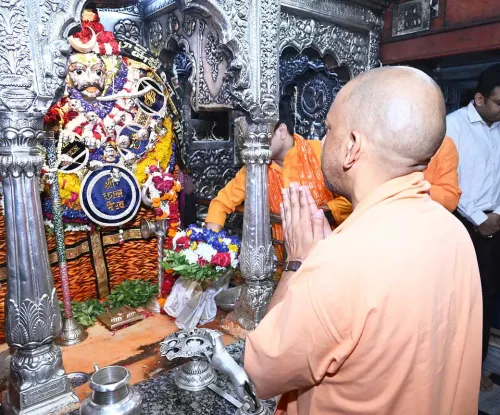
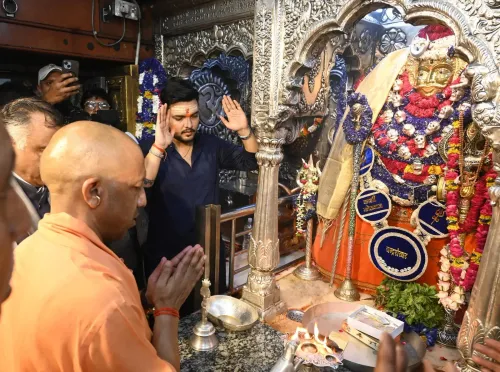
He offered darshan-pujan at the Kaal Bhairav Temple , regarded as the guardian deity — or Kotwal — of Kashi.
He also prayed at the Kashi Vishwanath Temple , the principal Shiva shrine of Varanasi.
The CM prayed for the happiness, peace, prosperity, and welfare of all residents of Uttar Pradesh.
The visit aligns with a consistent pattern of Yogi Adityanath's temple visits since becoming CM in 2017 .
The Kashi Vishwanath Corridor , inaugurated in 2021 , has made the temple complex a centrepiece of UP's religious tourism push.
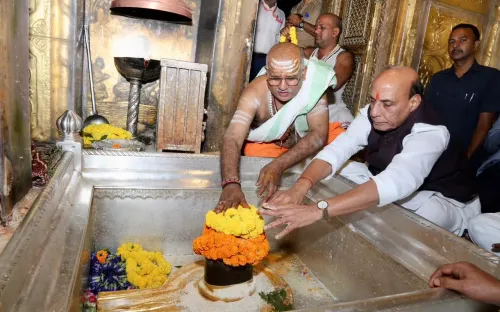
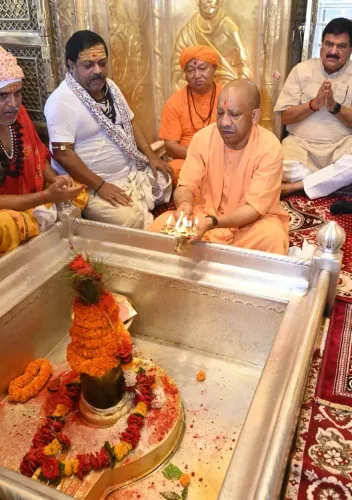
In the ancient lanes of Varanasi, Chief Minister Yogi Adityanath paused politics and turned to prayer — visiting the shrines of Kaal Bhairav, revered as the guardian of Kashi, and Baba Vishwanath on Saturday, 31 October, seeking blessings for the welfare of every resident of Uttar Pradesh.
The Chief Minister's Office of Uttar Pradesh shared the visit on X, stating that Mukhyamantri Yogi Adityanath ji ne aaj Varanasi mein 'Kashi ke Kotwal' Shri Kaal Bhairav ji evam Baba Vishwanath ji ke darshan-pujan kar samast pradeshvasiyon ke sukh, shanti, samridhi evam kalyan ki kamna ki — 'Chief Minister Yogi Adityanath today performed darshan and worship at Kaal Bhairav, the 'Kotwal of Kashi', and Baba Vishwanath in Varanasi, praying for the happiness, peace, prosperity and welfare of all residents of the state.'
Kaal Bhairav — Kashi's Eternal Guardian
The Kaal Bhairav Temple holds a singular place in Varanasi's spiritual geography. Devotees regard the deity as the Kotwal — literally the city's chief of police — a protector whose blessing is considered essential before any major undertaking in Kashi. The temple predates most recorded history of the city and draws pilgrims who believe no visit to Varanasi is complete without first seeking the Kotwal's permission.
Baba Vishwanath and the Corridor That Remade Kashi
The Kashi Vishwanath Temple, the principal Shiva shrine of Varanasi, sits at the centre of a sweeping urban transformation. The Kashi Vishwanath Corridor, inaugurated in 2021, cleared centuries of encroachment around the temple, widened access lanes, and created a direct visual axis from the Ganges ghats to the temple's golden spire. The project positioned Varanasi as a flagship destination for religious tourism in Uttar Pradesh.
A Pattern of Pilgrimage in Public Life
Yogi Adityanath has made documented visits to Varanasi's temples a consistent feature of his tenure as Chief Minister since 2017. These visits serve a dual function: personal devotion for a leader who is also a Hindu monk, and a visible state-level endorsement of Uttar Pradesh's identity as a centre of living Hindu heritage. The state has leaned heavily into religious tourism as an economic driver, with Varanasi, Ayodhya, and Mathura forming the triangle of that strategy.
Point of View
Publicly documented temple visits in Varanasi are not incidental — they are a deliberate cultural signal embedded in the BJP-led UP government's broader strategy of positioning the state as the heartland of Hindu civilisation. Each visit reinforces the chief minister's dual identity as a monk-politician, lending personal authenticity to what is also a calculated governance narrative around religious tourism. With Varanasi, Ayodhya, and Mathura collectively receiving massive infrastructure investment, these moments of public devotion function as soft branding for the state's economic pitch to pilgrims and tourists alike. The consistency of the pattern suggests it will remain a fixture of Yogi Adityanath's political communication regardless of electoral cycles.
NationPress
1 Nov 2026
Frequently Asked Questions
Why did CM Yogi Adityanath visit Varanasi on 31 October?
Chief Minister Yogi Adityanath visited Varanasi on 31 October to offer prayers at the Kaal Bhairav and Kashi Vishwanath temples, seeking blessings for the happiness, peace, prosperity, and welfare of all Uttar Pradesh residents.
Who is Kaal Bhairav and why is he called the Kotwal of Kashi?
Kaal Bhairav is an ancient deity worshipped in Varanasi as the guardian or protector of Kashi. The title 'Kotwal' — meaning chief of police or city guardian — reflects the belief that Kaal Bhairav oversees and protects the sacred city.
What is the Kashi Vishwanath Corridor?
The Kashi Vishwanath Corridor is a major redevelopment project inaugurated in 2021 that cleared encroachments around the Kashi Vishwanath Temple, widened access routes, and created a direct connection between the Ganges ghats and the temple complex to improve the pilgrim experience.
How often does CM Yogi Adityanath visit Varanasi temples?
Yogi Adityanath has made multiple documented visits to Varanasi temples since becoming Chief Minister in 2017, making it a consistent part of his public schedule and cultural outreach.
What is Uttar Pradesh's religious tourism strategy?
Uttar Pradesh has invested heavily in religious tourism infrastructure across Varanasi, Ayodhya, and Mathura, with projects like the Kashi Vishwanath Corridor aimed at attracting Hindu pilgrims and positioning the state as a leading destination for faith-based travel.