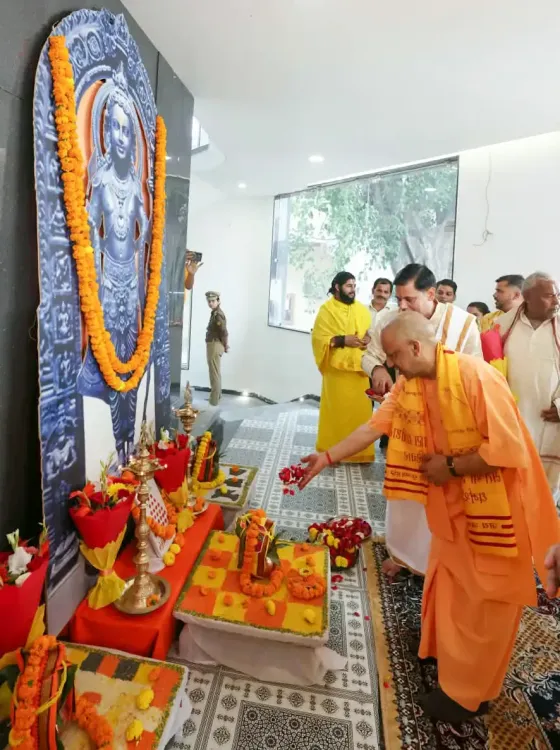
Yogi Adityanath offers prayers at Ram Temple in Ayodhya on Diwali 2026
Synopsis
On the second Diwali since its consecration, the Ram Temple in Ayodhya drew Uttar Pradesh CM Yogi Adityanath for morning prayers and aarti before Ram Lalla. His attendance at the 10th Deepawali Milan Mahotsav and tribute to VHP leader Ashok Singhal reinforced Ayodhya's emergence as the symbolic heart of BJP's cultural politics.
Key Takeaways
CM Yogi Adityanath visited the Shri Ram Janmabhoomi Temple in Ayodhya on 8 November 2026 for Diwali prayers.
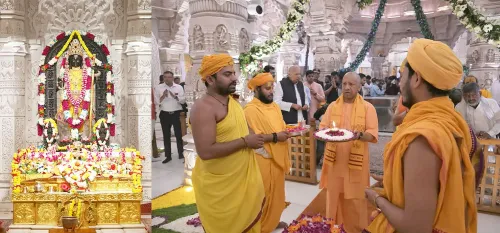
He arrived at approximately 8 am , performed aarti, and lit a traditional earthen lamp before Ram Lalla .
He was received by Swami Govind Dev Giri Maharaj of the Shri Ram Janmabhoomi Teerth Kshetra Trust .
He attended the 10th Deepawali Milan Mahotsav at Karsevakpuram , honouring the legacy of Ashok Singhal and the Ram Janmabhoomi movement.
Yogi Adityanath credited Prime Minister Narendra Modi 's leadership for the realisation of the Ram Temple.
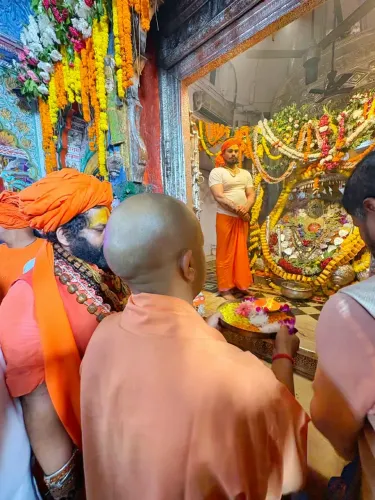
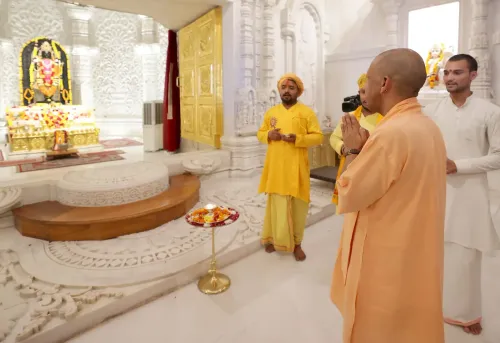
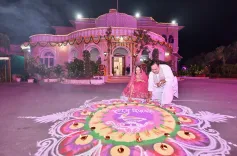
Uttar Pradesh Chief Minister Yogi Adityanath visited the Shri Ram Janmabhoomi Temple in Ayodhya on the morning of Sunday, 8 November, to offer prayers to Ram Lalla as part of Diwali celebrations. He performed the aarti, sought blessings, and lit a traditional earthen lamp within the temple premises, underscoring Ayodhya's growing centrality as a spiritual destination during major Hindu festivals.
Chief Minister's Temple Visit
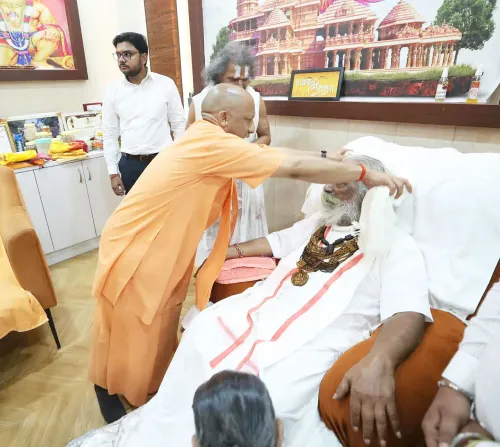
Yogi Adityanath arrived at the Shri Ram Janmabhoomi Temple at approximately 8 am and was received by Swami Govind Dev Giri Maharaj, General Secretary of the Shri Ram Janmabhoomi Teerth Kshetra Trust. He offered prayers before Ram Lalla and participated in the religious rituals marking the auspicious occasion. Following the darshan, he met Mahant Nritya Gopal Das Ji Maharaj, enquiring about his health and well-being, and interacted with several saints and religious leaders gathered at the temple.
Deepawali Milan Mahotsav at Karsevakpuram
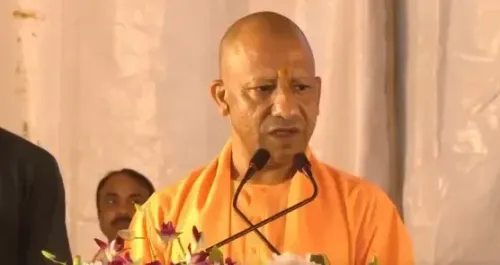
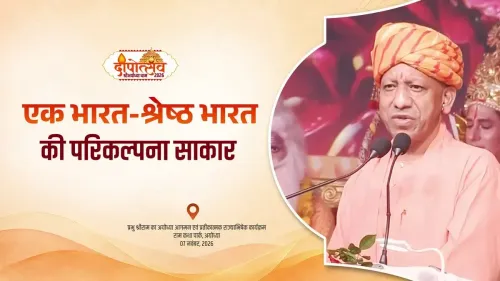
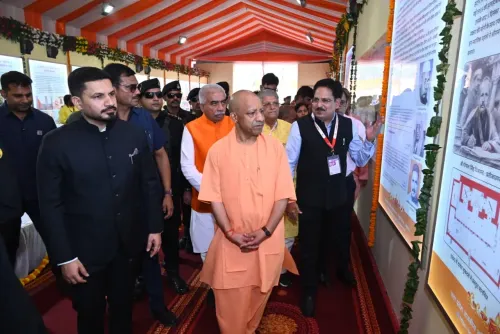
After his temple visit, the Chief Minister attended the 10th Deepawali Milan Mahotsav organised at Karsevakpuram in Ayodhya. The gathering brought together prominent saints, mahants, and personalities associated with the Ram Temple movement. Addressing the assembly, Yogi Adityanath remembered the contributions of former Vishwa Hindu Parishad (VHP) leader Ashok Singhal to the Ram Janmabhoomi movement, recalling the decades of dedication that preceded the temple's construction.
Modi's Leadership Credited for Temple's Realisation
Yogi Adityanath highlighted how the long-cherished vision of a grand Ram Temple in Ayodhya had become a reality under Prime Minister Narendra Modi's leadership. The remark echoed a broader political narrative that has consistently linked the Bharatiya Janata Party (BJP) administration to the temple's consecration, which took place in January 2024. This was notably the second Diwali celebrated at the Ram Temple since its consecration, amplifying the festival's symbolic significance for devotees and the ruling dispensation alike.
Festive Atmosphere in Ayodhya
The Chief Minister's visit added to the vibrant spiritual atmosphere in Ayodhya, where devotees, saints, and pilgrims observed Diwali with prayers, traditional rituals, and earthen lamp lighting. Officials said the festival drew large gatherings to the temple town, which has seen a significant rise in pilgrimage footfall since the Ram Temple's inauguration. Ayodhya is currently undergoing large-scale infrastructure development aimed at supporting the growing influx of visitors.
Point of View
And a moment the BJP has deliberately cultivated as proof of a civilisational promise kept. His tribute to Ashok Singhal and the credit extended to Modi signal a consistent effort to anchor the temple's legacy firmly within the party's narrative ahead of future electoral cycles. What is less discussed is Ayodhya's infrastructure strain: the pilgrim boom that the temple has catalysed is testing civic capacity, and the development response will determine whether the city's spiritual renaissance translates into lasting economic uplift for its residents.
NationPress
8 Nov 2026
Frequently Asked Questions
Why did Yogi Adityanath visit Ayodhya on Diwali 2026?
Chief Minister Yogi Adityanath visited the Shri Ram Janmabhoomi Temple in Ayodhya on 8 November 2026 to offer Diwali prayers to Ram Lalla, perform aarti, and light a traditional earthen lamp. The visit was part of the festive celebrations and reflected Ayodhya's spiritual significance as the site of the newly constructed Ram Temple.
What is the Deepawali Milan Mahotsav held in Ayodhya?
The Deepawali Milan Mahotsav is an annual gathering of saints, mahants, and personalities associated with the Ram Temple movement, held at Karsevakpuram in Ayodhya. The 10th edition of the event was attended by CM Yogi Adityanath, who paid tribute to VHP leader Ashok Singhal and recalled the journey that led to the temple's construction.
Who received CM Yogi Adityanath at the Ram Temple?
Yogi Adityanath was received by Swami Govind Dev Giri Maharaj, the General Secretary of the Shri Ram Janmabhoomi Teerth Kshetra Trust, upon his arrival at the temple at around 8 am. He also met Mahant Nritya Gopal Das Ji Maharaj and interacted with several saints and religious leaders.
What is the significance of Diwali at the Ayodhya Ram Temple?
This Diwali marked the second such festival since the Ram Temple's consecration in January 2024, amplifying its symbolic importance for devotees and pilgrims. Ayodhya has seen a sharp rise in pilgrimage footfall since the temple's inauguration, making Diwali one of the most significant festive occasions at the site.
What did Yogi Adityanath say about PM Modi at the event?
Yogi Adityanath highlighted that the long-cherished vision of a grand Ram Temple in Ayodhya had become a reality under Prime Minister Narendra Modi's leadership. He made the remark while addressing the gathering at the 10th Deepawali Milan Mahotsav at Karsevakpuram.