CM Yogi on Heritage: Gratitude to Sanatan Is Our Duty
Synopsis
Chief Minister Yogi Adityanath declared on 26 October 2026 that expressing gratitude toward Sanatan traditions and Bharatbhoomi is a duty, reinforcing the UP government's decade-long cultural-heritage identity.
Key Takeaways
CM Yogi Adityanath described gratitude toward Sanatan traditions and Bharatbhoomi as a civic and moral 'duty' ( dāyitva ).
The statement was shared with a video by the Chief Minister's Office of Uttar Pradesh on 26 October 2026 .
Since 2017 , the Yogi government has backed heritage rhetoric with redevelopment of Ayodhya , Varanasi , and other pilgrimage corridors.
Uttar Pradesh , India's most populous state with over 240 million residents, gives such statements an outsized public reach.
The statement continues a pattern of Sanatan Dharma affirmations in BJP -governed states visible since 2014 .
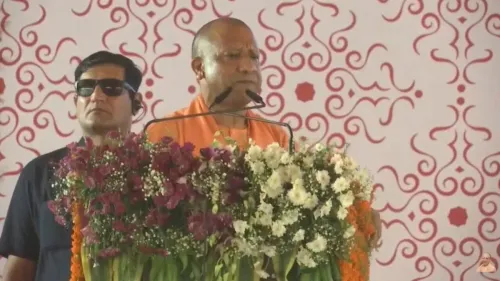
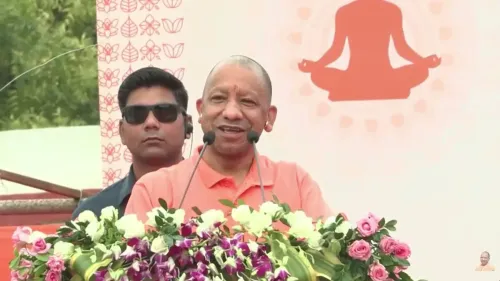
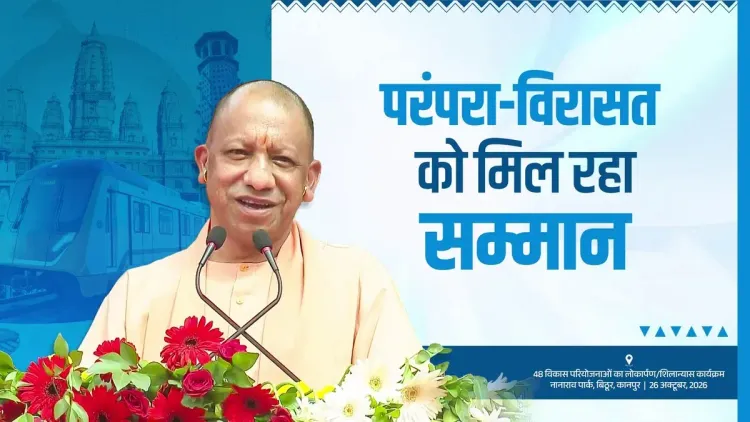
A sense of debt to the land and its civilisational roots — that is how Chief Minister Yogi Adityanath has framed Uttar Pradesh's cultural identity in a statement shared by the Chief Minister's Office of Uttar Pradesh on Monday, 26 October 2026.
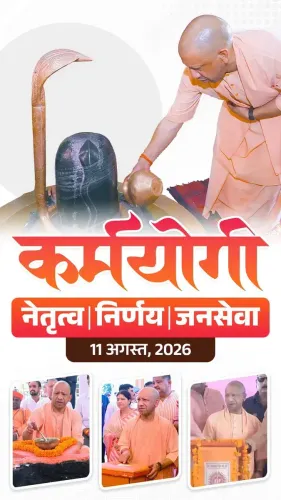
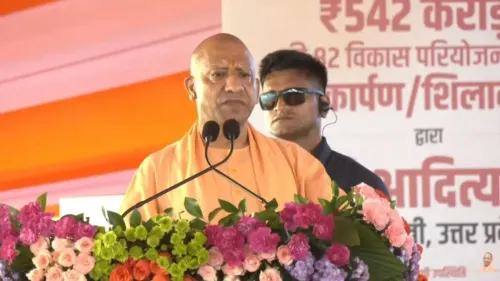
Speaking in Hindi, CM Yogi said: 'We are people who respect tradition and heritage. We feel pride in our legacy. We believe it is our duty to express gratitude towards everyone who has contributed to this land, to Sanatan, and to Bharatbhoomi.' The statement was accompanied by a video, lending it the weight of a formal address rather than a passing remark.
The idea at the centre: debt to 'Bharatbhoomi'
The phrase kṛtajñatā jñāpita karnā hamārā dāyitva hai — 'to express gratitude is our duty' — is the rhetorical load-bearing wall here. By framing heritage not as preference but as dāyitva (obligation), CM Yogi casts cultural stewardship as a civic responsibility, not merely a political platform. It is a subtle but deliberate elevation: from sentiment to duty.Yogi's heritage agenda since 2017
Since taking office in 2017, Yogi Adityanath has consistently anchored his government's identity in the promotion of Sanatan traditions and Hindu pilgrimage. Ayodhya and Varanasi have received landmark redevelopment investment, repositioned as flagship sites of what the administration calls cultural revival. This statement sits squarely within that arc — another public articulation of the same governing philosophy that has shaped infrastructure budgets, tourism policy, and official ceremony in Uttar Pradesh for nearly a decade. The broader pattern is well established: BJP-governed states have made affirmations of Sanatan Dharma and Indian civilisational pride a regular feature of official communications, particularly since 2014. What distinguishes UP's version is scale — India's most populous state amplifies every such message to an audience of more than 240 million people. The question the statement implicitly raises is what follows the words. Heritage rhetoric from this administration has, in the past, translated into concrete policy: river-front ghats rebuilt, ancient fairs elevated to state events, pilgrimage corridors fast-tracked. Whether this particular address signals a forthcoming announcement — a new scheme, a heritage site declaration, a religious tourism push — will become clear in the days ahead. For now, the Chief Minister has staked out the philosophical ground. The duty, he says, is gratitude. The land, he says, demands it.Point of View
Philosophy has repeatedly preceded policy. By grounding cultural stewardship in the language of obligation rather than preference, the CM reinforces the BJP's long-running project of making Sanatan identity synonymous with responsible governance. It also positions the state government as the custodian of civilisational continuity, a framing that pays dividends in electoral and social messaging. Analysts watching UP will look for any concrete follow-through — a heritage scheme, a pilgrimage investment announcement — that converts the rhetoric into the kind of tangible deliverable the administration has used before to sustain this narrative.
NationPress
26 Oct 2026
Frequently Asked Questions
What did CM Yogi Adityanath say about heritage and Sanatan Dharma?
CM Yogi said it is a duty to express gratitude toward all who have contributed to this land, to Sanatan, and to Bharatbhoomi, framing cultural respect as a civic obligation.
What is the UP government's heritage policy under Yogi Adityanath?
Since 2017, the Yogi Adityanath government has promoted Hindu pilgrimage sites including Ayodhya and Varanasi through large-scale redevelopment, positioning cultural revival as a governance priority.
Why does Yogi Adityanath frequently speak about Sanatan Dharma?
Yogi Adityanath is a Hindu priest-politician whose public identity is closely tied to Sanatan traditions; such statements also align with the BJP's broader cultural messaging visible across BJP-governed states since 2014.
What does 'Bharatbhoomi' mean in Yogi's statement?
'Bharatbhoomi' literally means 'the land of Bharat (India)'; in this context CM Yogi uses it to invoke a civilisational sense of the Indian subcontinent rooted in Sanatan tradition.
What heritage projects has UP launched under CM Yogi?
The UP government has undertaken major redevelopment of Ayodhya and Varanasi, elevated ancient fairs to state-level events, and promoted religious tourism as part of its cultural-revival agenda since 2017.