CM Majhi Backs DBT, Slams Congress-Era 'Phone Banking'
Synopsis
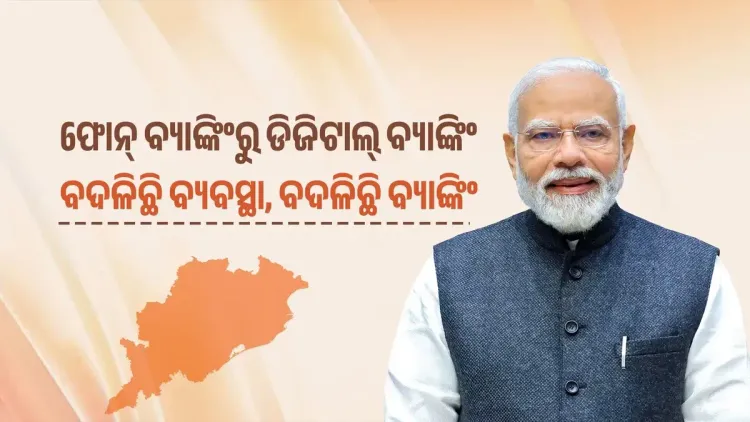
Odisha Chief Minister Mohan Charan Majhi on 26 October 2026 contrasted the BJP-era Direct Benefit Transfer and Jan Dhan architecture with what he termed Congress-era 'phone banking' that favoured influential groups, asserting every rupee now reaches beneficiaries in full.
Key Takeaways
CM Majhi posted on 26 October 2026 crediting digital banking with ensuring every ₹1 from Delhi reaches beneficiaries' accounts in full.
He alleged that under Congress, loans through 'phone banking' reached only a select, influential group — a claim that is a political characterisation, not a documented policy record.
The Pradhan Mantri Jan Dhan Yojana , launched in August 2014 , had opened over 40 crore zero-balance accounts by 2023.
The Direct Benefit Transfer framework, scaled post-2014 with Aadhaar seeding and UPI, is the mechanism Majhi credits for eliminating leakage.
Odisha returned a BJP government in 2024 after 24 years, making state-level digital-literacy and last-mile banking investments the key test of this promise locally.
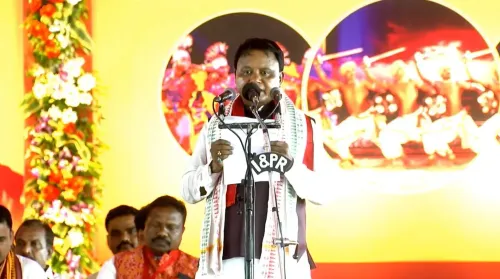
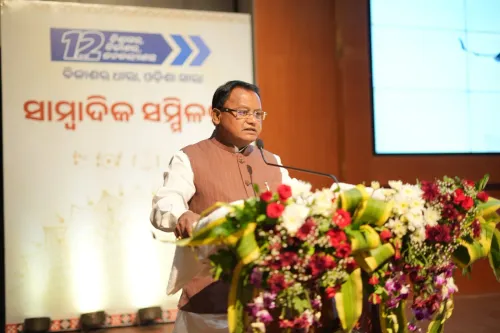
A single rupee released from Delhi should arrive whole — not trimmed by middlemen, not siphoned by influence. Odisha Chief Minister Mohan Charan Majhi made that case sharply on Monday, 26 October 2026, contrasting the current digital transfer architecture with what he called a Congress-era system where loans flowed through 'phone banking' to a select few.
Posting in both Odia and English, the Chief Minister wrote: 'During the Congress government, loans through phone banking were available only to a select group of influential people. Today, digital banking has opened new doors to financial access for every family in the country. Every ₹1 released from Delhi now reaches the beneficiary's bank account in full.'
From Crony Credit to Crore-Plus Jan Dhan Accounts
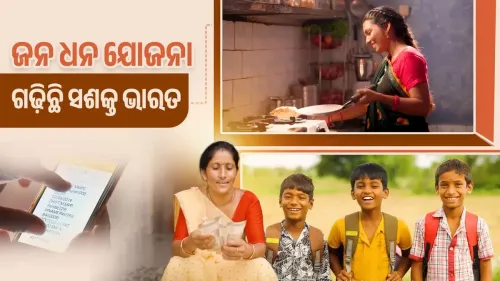
The infrastructure underpinning that claim is real and substantial. The Pradhan Mantri Jan Dhan Yojana, launched in August 2014, crossed 40 crore zero-balance accounts by 2023 — pulling hundreds of millions of previously unbanked households into the formal financial system. Seeded with Aadhaar identifiers and increasingly linked to the Unified Payments Interface (introduced in 2016), these accounts became the last-mile pipeline for welfare money.
The Direct Benefit Transfer (DBT) framework — formally launched in 2013 and dramatically scaled after 2014 — is the mechanism Majhi is pointing to. By routing subsidies and scheme payments directly into Aadhaar-linked accounts, the system was designed to cut out the intermediaries who historically skimmed, delayed, or redirected funds. The Jan Dhan–Aadhaar–Mobile trinity became the architectural spine of this shift.
The Political Charge Behind the Data Point
Majhi's framing — Congress 'phone banking' versus BJP 'digital banking' — is a well-worn plank of the party's post-2014 governance narrative. The contrast draws on genuine structural change in welfare delivery, even as the specific allegation of 'phone banking' under the previous dispensation remains an unverified political characterisation rather than a documented policy record.
Still, the direction of travel is hard to dispute. Welfare leakage in India's subsidy chain was a widely documented problem for decades. The DBT architecture was intended precisely to address it — and independent assessments have broadly credited the system with reducing diversion in targeted schemes, even if measuring exact leakage savings remains contested.
What Odisha's Own Trajectory Signals
For Majhi, the statement carries a state-level subtext. Odisha — which returned a BJP government in 2024 after 24 years of BJD rule — is now responsible for translating central digital-transfer infrastructure into last-mile delivery for a state with significant rural and tribal populations. The Majhi government's own budget priorities around digital literacy and local banking access will determine whether the promise of 'every ₹1 arriving whole' holds in Odisha's most remote districts.
The post lands a familiar BJP argument — but the weight it carries depends entirely on the state's own follow-through.
Point of View
Lending the argument a factual scaffold the party has consistently exploited. The real watch-item is whether Odisha's own state apparatus — newly under BJP control after 24 years — can back the rhetoric with measurable last-mile delivery improvements in a state where rural and tribal exclusion from formal banking has historically been acute.
NationPress
26 Oct 2026
Frequently Asked Questions
What did Odisha CM Majhi say about Congress and phone banking?
CM Majhi claimed that during Congress rule, loans through 'phone banking' were accessible only to a select group of influential people, contrasting that with today's digital system where every rupee reaches beneficiaries directly.
What is Direct Benefit Transfer and how does it work?
Direct Benefit Transfer (DBT) is a system that routes government subsidies and welfare payments directly into Aadhaar-linked bank accounts, removing intermediaries and reducing diversion of funds. It was formally launched in 2013 and significantly expanded after 2014.
How many Jan Dhan accounts have been opened in India?
The Pradhan Mantri Jan Dhan Yojana, launched in August 2014, had opened over 40 crore zero-balance accounts by 2023, bringing hundreds of millions of unbanked households into the formal financial system.
Is the claim that Congress used 'phone banking' for loans verified?
The specific allegation of 'phone banking' favouring influential groups under the Congress government is a political characterisation made by CM Majhi. It is not backed by a documented policy record and should be treated as a partisan claim.
Why does digital banking matter for welfare delivery in Odisha?
Odisha has significant rural and tribal populations historically excluded from formal banking. The DBT and Jan Dhan infrastructure is meant to ensure welfare payments reach these communities without leakage, making digital last-mile access a critical governance priority for the Majhi government.