CM Yogi: Over 2,300 New School Buildings Built Under Project Alankaar
Synopsis
Uttar Pradesh Chief Minister Yogi Adityanath announced that Project Alankaar has delivered new buildings for over 2,300 government schools across the state, marking a large-scale push to modernise UP's public education infrastructure.
Key Takeaways
Over 2,300 new school buildings have been constructed under Project Alankaar in Uttar Pradesh.
The announcement was made by Chief Minister Yogi Adityanath on October 3, 2026 .
Project Alankaar is a flagship Yogi government initiative targeting infrastructure upgrades across UP's vast government school network.
Uttar Pradesh operates one of the largest public school systems in the world, with over 1.5 lakh government schools.
New school buildings are framed by the administration as a core 'vikas' (development) deliverable ahead of future electoral cycles.
The project covers construction, sanitation, boundary walls, and classroom facilities — elements tied directly to enrolment and retention rates.
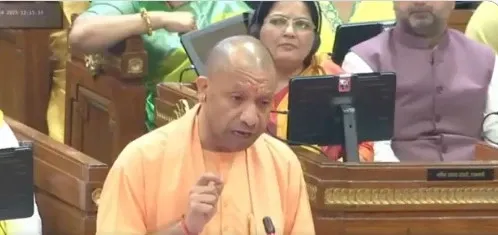
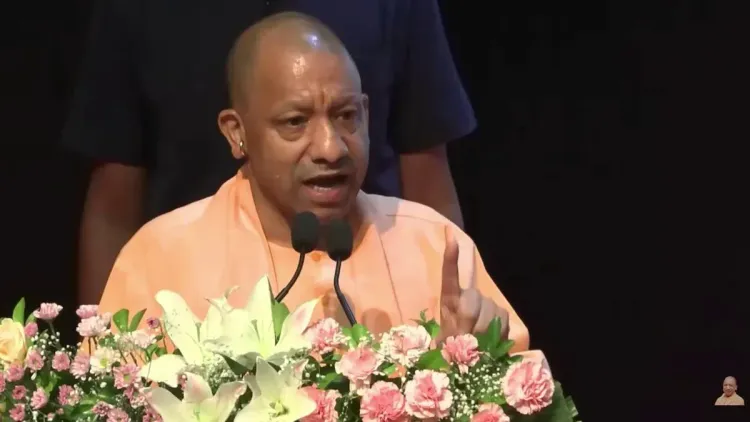
More than 2,300 government school buildings across Uttar Pradesh have been newly constructed under Project Alankaar, Uttar Pradesh Chief Minister Yogi Adityanath announced on Saturday, October 3, 2026 — a scale of infrastructure delivery that signals a deliberate push to overhaul the state's long-neglected public education landscape.
In his post on X, CM Yogi stated: 'Project Alankaar ke antargat hum logon ne 2,300 se adhik vidyalayon ke naye bhavan bana diye hain' — 'Under Project Alankaar, we have constructed new buildings for more than 2,300 schools.' The use of 'hum logon ne' ('we have done') frames the achievement as a collective government accomplishment, not a bureaucratic statistic.
What Project Alankaar Set Out to Do
Project Alankaar is a flagship school infrastructure initiative of the Yogi Adityanath government in Uttar Pradesh, aimed at upgrading and rebuilding crumbling or inadequate government school premises across the state. Uttar Pradesh runs one of the largest government school networks in the world, with millions of children dependent on state-funded primary and upper-primary institutions — many of which had operated for decades in dilapidated structures or open-air settings.
The programme targets not just new construction but also improvements to sanitation, furniture, boundary walls, and classrooms — elements that directly affect enrolment, especially for girls. A functional building is, in many rural communities, the difference between a child attending school and not attending at all.
2,300 Buildings — and the Weight Behind That Number
The figure of 2,300-plus new school buildings is significant in the context of a state with over 1.5 lakh (150,000) government schools. It represents a concerted capital push in a state where education infrastructure had historically been among the most underfunded in the country. Each new building touches a specific village, a specific set of families — the aggregate hides thousands of individual stories of classrooms that actually have roofs now.
Chief Ministers of Uttar Pradesh have long promised school modernisation; the political difference the Yogi administration is stressing here is delivery at documented scale. Whether the pace of construction matches the need across all 75 districts of the state is the metric that will matter most to parents and administrators on the ground.
Why School Buildings Are a Political Marker in UP
In Uttar Pradesh — a state that sends the largest bloc of MPs to Parliament and whose assembly elections are closely watched nationally — government school infrastructure has become an unusually visible measure of governance credibility. The BJP administration under CM Yogi has repeatedly positioned education infrastructure alongside law-and-order and expressway construction as proof points of 'vikas' (development) in its electoral narrative.
Project Alankaar fits that frame: it is tangible, photographable, and constituency-specific. A new school building is something a voter can see, touch, and remember on polling day — which is precisely why the Chief Minister is foregrounding it.
With over 2,300 schools already built and the project still active, the question now is whether quality of learning inside those new walls keeps pace with the speed of construction outside them.
Point of View
300 new school buildings serves a dual purpose: it positions the state government as a delivery-focused administration ahead of political cycles, and it deflects longstanding criticism that UP's education system has suffered from decades of underinvestment. The real test, however, lies beyond construction — learning outcomes, teacher attendance, and enrolment retention will determine whether the infrastructure investment translates into human capital gains or remains a political talking point.
NationPress
3 Oct 2026
Frequently Asked Questions
What is Project Alankaar in Uttar Pradesh?
Project Alankaar is a flagship school infrastructure initiative of the Yogi Adityanath government in Uttar Pradesh, focused on constructing new buildings and upgrading existing government school premises across the state, including improvements to classrooms, sanitation, and boundary walls.
How many schools have been built under Project Alankaar?
As of October 2026, Chief Minister Yogi Adityanath has stated that new buildings have been constructed for more than 2,300 government schools under Project Alankaar.
Why is Project Alankaar important for UP students?
Uttar Pradesh has one of the largest government school networks in the world, and many schools historically operated in dilapidated structures. New buildings directly affect enrolment rates, safety, and the quality of learning environment — particularly for girls in rural areas.
How many government schools are there in Uttar Pradesh?
Uttar Pradesh has over 1.5 lakh (150,000) government schools, making it one of the largest publicly funded school systems anywhere in the world.
When did CM Yogi announce the Project Alankaar milestone?
Chief Minister Yogi Adityanath announced the completion of over 2,300 new school buildings under Project Alankaar on Saturday, October 3, 2026, via a post on X.