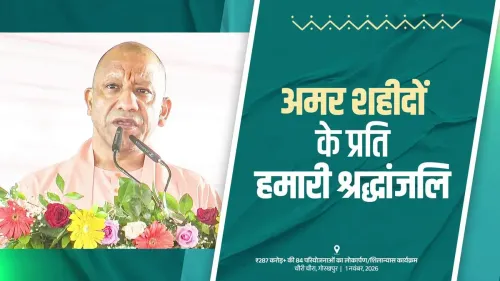
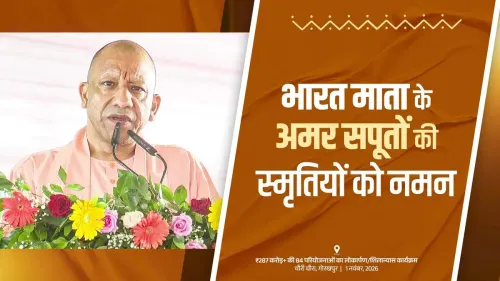
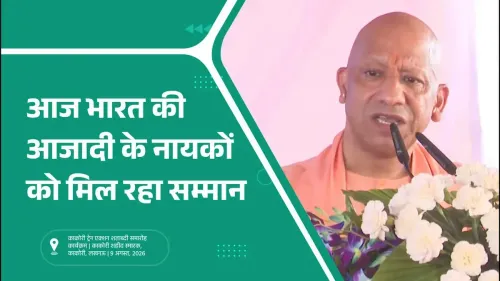
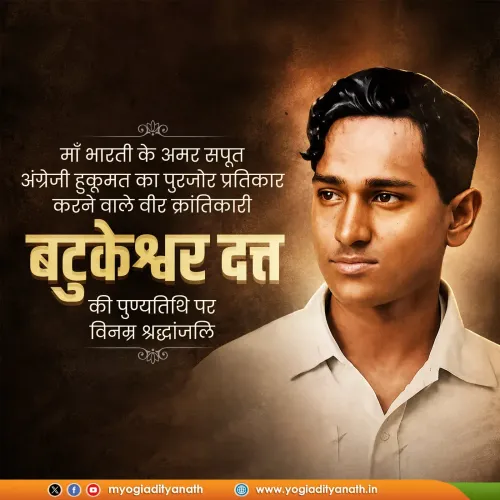
CM Yogi pays tribute to Chauri-Chaura's freedom fighters
Synopsis
Chief Minister Yogi Adityanath honours Chauri-Chaura's role in the freedom struggle, citing martyr Bandhu Singh and the 1922 uprising that shook British colonial authority and forced a pivot in Mahatma Gandhi's Non-Cooperation Movement.
Key Takeaways
CM Yogi Adityanath posted a tribute on 1 November 2026 honouring the historical legacy of Chauri-Chaura in Gorakhpur district.
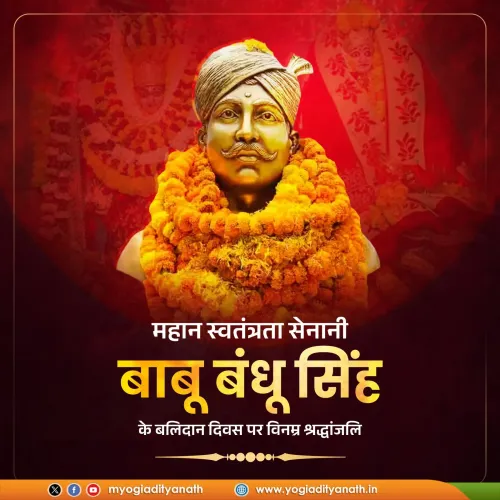
The post specifically names Shaheed Bandhu Singh as a brave martyr produced by the Chauri-Chaura region.
The Chauri-Chaura incident of 4 February 1922 saw protesters burn a police station, killing 22 officers , and directly caused Gandhi to suspend the Non-Cooperation Movement.
Chauri-Chaura is located in Gorakhpur , CM Yogi's parliamentary constituency, deepening the personal and political resonance of the tribute.
The UP government under CM Yogi consistently elevates district-level freedom struggle episodes as part of a wider historical-awareness and cultural-education drive.
A district, a date, and a defiant act that shook British rule — Chief Minister Yogi Adityanath on Sunday, 1 November 2026 invoked the legacy of Chauri-Chaura, reminding citizens that every Indian who has read the country's true history knows Chauri-Chaura and Gorakhpur as inseparable names in the chronicle of resistance.
What Chauri-Chaura means to Gorakhpur's identity
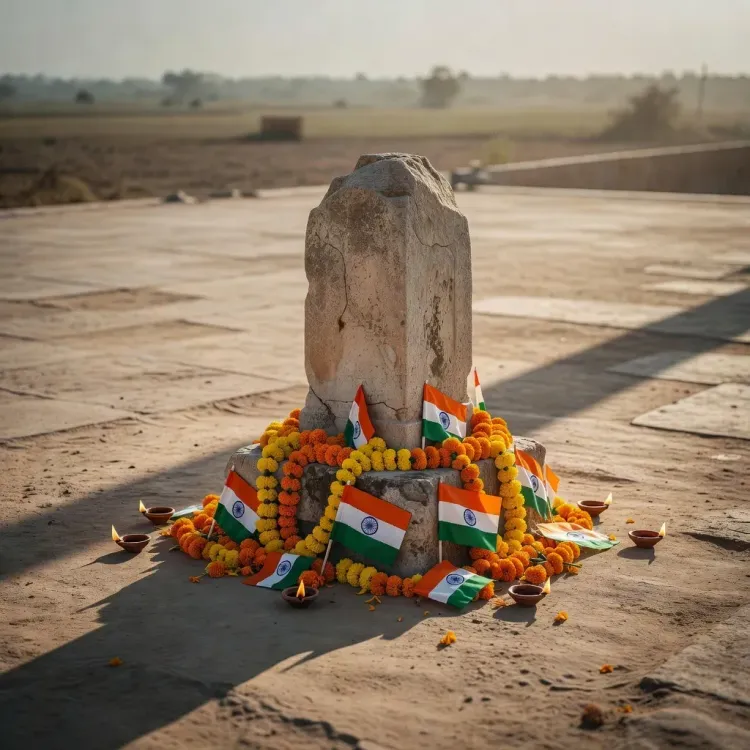
In a post from the Chief Minister's Office of Uttar Pradesh, CM Yogi stated — 'चौरी-चौरा को इसलिए भी जानता है, क्योंकि यह वही धरती है' ('Chauri-Chaura is known because it is the very land') — that produced brave martyrs like Shaheed Bandhu Singh and, through the historic Chauri-Chaura incident, 'shook the very foundations of British rule.' The tribute frames the district not merely as a footnote in colonial history but as a source of the freedom movement's fire.
Gorakhpur is both the Chief Minister's parliamentary constituency and the district that contains the Chauri-Chaura site. That geography is not incidental — it anchors Yogi Adityanath's political identity to one of the most consequential local uprisings of the independence era.
The 1922 incident that paused a movement
On 4 February 1922, protesters in Chauri-Chaura set a police station ablaze, killing 22 officers. The violence so disturbed Mahatma Gandhi that he suspended the entire Non-Cooperation Movement — a decision that reverberated across the subcontinent and remains one of the most debated pivots in India's independence narrative. The site thus carries a double weight: the courage of local resisters and the moral reckoning their action forced on the broader movement's leadership.
The Uttar Pradesh government has, under the current administration, consistently elevated such district-level episodes and figures in its public communications — part of a deliberate effort to anchor the freedom struggle in primary-source, ground-level accounts rather than only in national-level biography.
Why this kind of tribute matters now
Commemorative messaging around Chauri-Chaura tends to intensify as the February anniversary approaches, and state-level events or site-development announcements around that date are worth watching. But Sunday's post does something beyond the calendar — it presses the claim that knowing 'true history' means knowing the localities that bled for it, not just the leaders who are remembered in textbooks.
For a Chief Minister whose political home is Gorakhpur, that is both a historical argument and a deeply personal one. The soil he represents, he is saying, was never on the margins of the struggle. It was, in its moment, the centre of it.
Point of View
Primary-source history rather than centred solely on national icons. For Yogi Adityanath, whose parliamentary base is Gorakhpur, invoking Chauri-Chaura is simultaneously a historical assertion and a political one — it places his own constituency at the heart of India's independence arc. The reference to 'true history' carries a pointed implication that mainstream historical accounts have underserved such local episodes, a framing that resonates with broader cultural-policy debates about how the freedom struggle is taught and remembered.
NationPress
1 Nov 2026
Frequently Asked Questions
What was the Chauri-Chaura incident?
On 4 February 1922, protesters in Chauri-Chaura, Gorakhpur district, set a police station on fire, killing 22 officers. The incident prompted Mahatma Gandhi to suspend the Non-Cooperation Movement, making it one of the most consequential local events of India's independence struggle.
Who was Shaheed Bandhu Singh?
Shaheed Bandhu Singh is cited by CM Yogi Adityanath as a martyr from Chauri-Chaura who exemplified the bravery of the region's freedom fighters. Specific biographical details about him are not widely documented in mainstream historical records.
Why is Chauri-Chaura significant for Gorakhpur?
Chauri-Chaura falls within Gorakhpur district in eastern Uttar Pradesh and is considered a landmark site of anti-colonial resistance. It is also the parliamentary constituency of Chief Minister Yogi Adityanath, giving the tribute both historical and political resonance.
Why did Gandhi suspend the Non-Cooperation Movement after Chauri-Chaura?
Gandhi suspended the Non-Cooperation Movement in February 1922 because the violence at Chauri-Chaura contradicted his principle of non-violent resistance. He believed the movement had turned premature and needed moral discipline before resuming mass civil disobedience.
What is the Uttar Pradesh government doing to commemorate Chauri-Chaura?
The UP government under CM Yogi Adityanath regularly highlights Chauri-Chaura in official communications as part of broader initiatives to promote local freedom struggle history. State-level commemorative events are typically observed around the February anniversary of the 1922 incident.