CM Yogi Pays Tribute to Freedom Fighter Babu Bandhu Singh
Synopsis
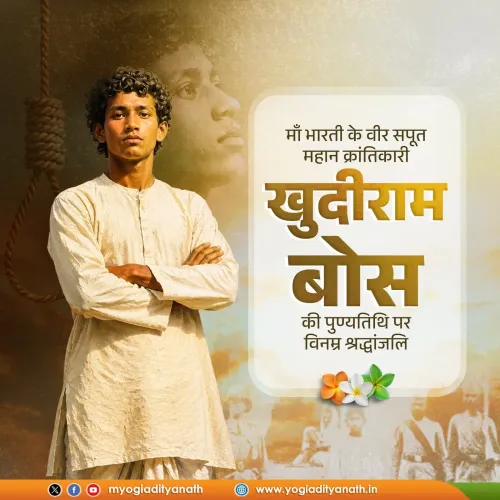
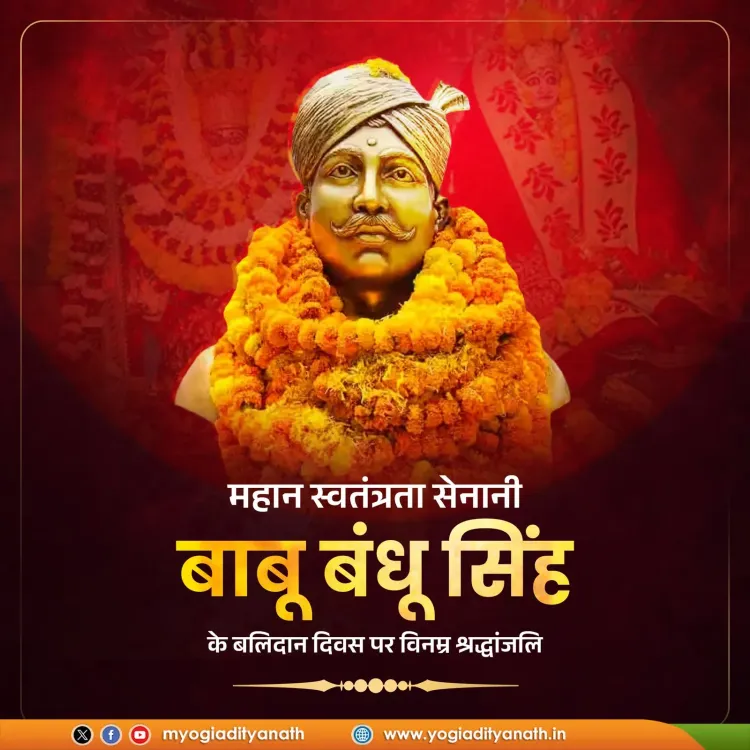
Uttar Pradesh Chief Minister Yogi Adityanath marked the martyrdom anniversary of Gorakhpur freedom fighter Babu Bandhu Singh on 12 August 2026, honouring his resistance against British rule and his devotion to Maa Tarkulha Devi, days ahead of Independence Day.
Key Takeaways
CM Yogi Adityanath paid tribute to freedom fighter Babu Bandhu Singh on his martyrdom anniversary on 12 August 2026 .
Babu Bandhu Singh is described as a devoted follower of Maa Tarkulha Devi and a proud son of Gorakhpur .
CM Yogi praised Bandhu Singh for 'valiantly resisting the British' and called his courage an enduring inspiration for national integrity.
The tribute is part of Yogi Adityanath's consistent practice of commemorating regional figures from Uttar Pradesh 's independence movement.
The post comes days before Independence Day, 15 August , a period of heightened patriotic observance.
On the martyrdom anniversary of a son of Gorakhpur's soil, Uttar Pradesh Chief Minister Yogi Adityanath paused to honour a freedom fighter whose name the mainstream record has long underpaid — Babu Bandhu Singh, a devoted follower of Maa Tarkulha Devi and a fearless resister of British rule.
Posting on Wednesday, 12 August 2026, CM Yogi offered his tribute in Hindi: 'माँ तरकुलहा देवी के अनन्य भक्त और गोरखपुर की माटी के गौरव' — 'a devoted devotee of Maa Tarkulha Devi and the pride of Gorakhpur's soil.' He added that Bandhu Singh 'valiantly resisted the British' and that 'his courage will forever stir our consciousness in defence of the motherland's integrity.'
A Gorakhpur Hero the History Books Passed Over
Babu Bandhu Singh is remembered in Gorakhpur as a regional freedom fighter who stood against colonial authority, his identity closely woven with the faith tradition around Maa Tarkulha Devi — a local deity with deep roots in eastern Uttar Pradesh. Beyond that, the historical record on his life and the precise date of his martyrdom remains sparse, a fate shared by many grassroots participants in India's independence movement whose contributions never reached the national chronicle.
Gorakhpur itself carries a layered anti-colonial memory — the district witnessed significant unrest during the non-cooperation movement era, and local lore preserves names that formal history has often overlooked. CM Yogi, who heads the Gorakhnath Math in Gorakhpur, has made the retrieval of such regional figures a recurring feature of his public communication.
BJP's Deliberate Localisation of Independence Memory
This tribute fits a visible pattern. Yogi Adityanath regularly marks the martyrdom or birth anniversaries of figures tied specifically to Uttar Pradesh and to Gorakhpur in particular — a political and cultural project of surfacing local contributors to the freedom struggle alongside the national icons. For the BJP, this serves a dual purpose: deepening regional identity politics while anchoring the party's narrative in patriotic memory rather than purely administrative record.
The post arrives days before Independence Day on 15 August, a period when such tributes carry amplified resonance across the political spectrum.
Point of View
Whose political and spiritual base is Gorakhpur, honouring figures tied to the city reinforces his identity as a custodian of eastern UP's cultural and historical legacy. Timed just before Independence Day, such posts also serve to frame the BJP as the inheritor of a broad, grassroots freedom struggle — not merely a post-independence political formation. The thin historical record on Bandhu Singh, however, underscores how much of this regional memory remains to be formally documented.
NationPress
26 Sept 2026
Frequently Asked Questions
Who is Babu Bandhu Singh?
Babu Bandhu Singh was a freedom fighter from Gorakhpur in Uttar Pradesh, remembered for his resistance against British colonial rule and his devotion to the local deity Maa Tarkulha Devi. Detailed biographical records on him are limited.
Why did CM Yogi pay tribute to Babu Bandhu Singh?
CM Yogi Adityanath posted the tribute on Babu Bandhu Singh's martyrdom anniversary on 12 August 2026, honouring his courage and sacrifice in the fight against British rule.
Who is Maa Tarkulha Devi?
Maa Tarkulha Devi is a local deity revered in the Gorakhpur region of eastern Uttar Pradesh. Babu Bandhu Singh is described as a devoted follower of this faith tradition.
Why does CM Yogi frequently tribute regional freedom fighters?
Yogi Adityanath regularly commemorates local figures from Uttar Pradesh's independence movement, aligning with the BJP's broader effort to highlight grassroots contributors to India's freedom struggle alongside nationally recognised icons.
When is Babu Bandhu Singh's martyrdom day?
Based on CM Yogi's post, the martyrdom day falls on or around 12 August, though the exact historical date is not widely documented in the public record.