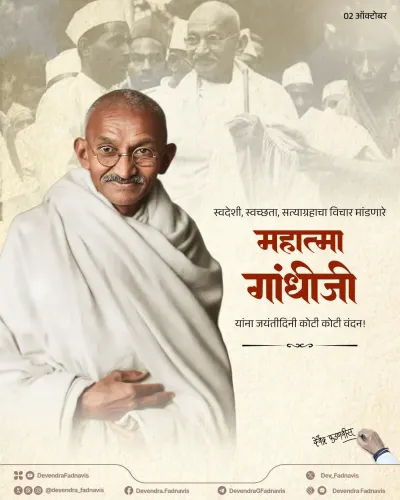
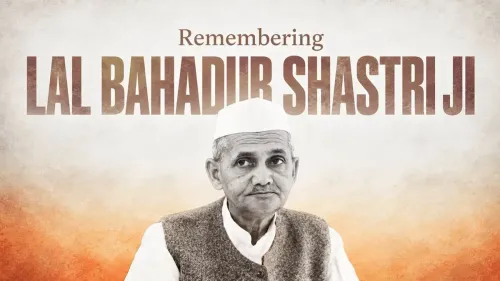
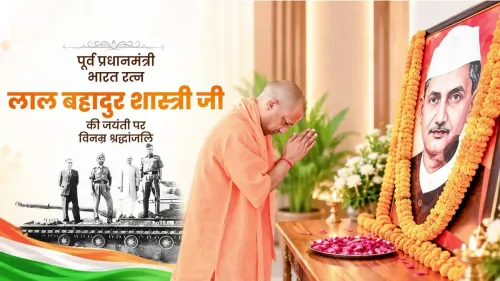
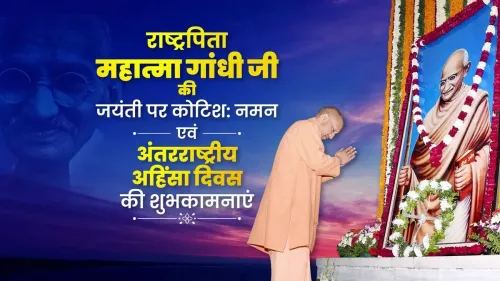
CM Yogi pays tribute to Gandhi and Shastri on birth anniversary
Synopsis
Uttar Pradesh CM Yogi Adityanath on 2 October 2026 honoured Mahatma Gandhi and Lal Bahadur Shastri on their shared birth anniversary, calling their life and character an inspiration for all Indians.
Key Takeaways
2 October 2026 : CM Yogi Adityanath posted a tribute on X marking the birth anniversaries of Mahatma Gandhi and Lal Bahadur Shastri .
Both leaders share 2 October as their birthday — Gandhi born in 1869 , Shastri in 1904 .
The day is observed as Gandhi Jayanti , a national holiday, and the UN International Day of Non-Violence .
Lal Bahadur Shastri was born in present-day Uttar Pradesh , giving the state a special connection to his legacy.
CM Yogi heads the Gorakhnath Math in Gorakhpur, an institution with deep roots in UP's social-service traditions.
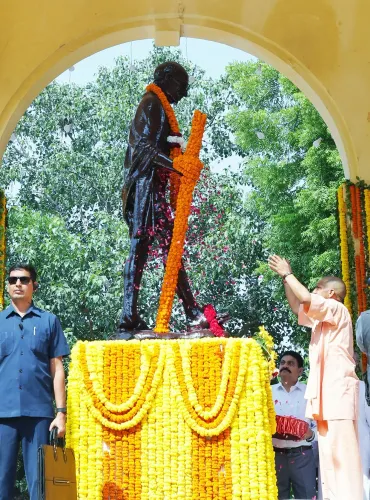
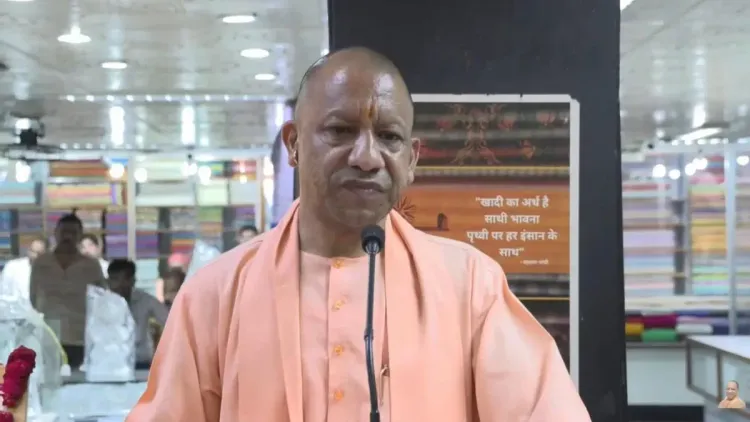
On the birth anniversaries of two figures who shaped modern India's moral imagination, Uttar Pradesh Chief Minister Yogi Adityanath on Friday, 2 October 2026 paid solemn tribute to Mahatma Gandhi and Lal Bahadur Shastri, calling their life stories a source of enduring inspiration for every Indian.
Posting in Hindi on X, CM Yogi wrote: 'महात्मा गांधी जी और लाल बहादुर शास्त्री जी का जीवन-चरित्र हम सबको प्रेरणा देता है' — 'The life and character of Mahatma Gandhi ji and Lal Bahadur Shastri ji inspire all of us.'
Two birthdays, one national day of reflection
2 October holds a rare distinction in the Indian calendar: it marks the birth of both Mohandas Karamchand Gandhi (1869) and Lal Bahadur Shastri (1904), two leaders separated by a generation but united by an ethic of selfless public service. Gandhi's philosophy of non-violence and truth, and Shastri's clarion call of 'Jai Jawan, Jai Kisan' — 'Hail the soldier, hail the farmer' — remain reference points in Indian political discourse across party lines.
The day is observed as Gandhi Jayanti, a national holiday, and also as the International Day of Non-Violence as designated by the United Nations. Tributes from constitutional offices and political leaders across the spectrum are a defining feature of the occasion each year.
Gorakhnath Math's tradition of Gandhian commemoration
CM Yogi's tribute carries institutional weight beyond electoral politics. As the head of the Gorakhnath Math in Gorakhpur, he leads one of the most influential religious and cultural institutions in Uttar Pradesh — a state that was central to Gandhi's mass movements, from the Champaran Satyagraha to the Non-Cooperation Movement. The Math's tradition of social service echoes themes Gandhi championed: village welfare, sanitation, and uplift of the marginalised.
Shastri, born in Mughalsarai (now Pt. Deen Dayal Upadhyaya Nagar) in Uttar Pradesh, is claimed with particular pride by the state. His legacy of austerity and crisis-era leadership during the 1965 Indo-Pakistan War continues to resonate as a template of understated governance.
Two giants, one date — and a reminder that inspiration, in Indian public life, is still drawn from lives lived in sacrifice rather than spectacle.
Point of View
Invoking Gandhi alongside Shastri on 2 October is a calibrated act of national ownership — claiming both the Gandhian moral tradition and Shastri's UP roots as part of a broader civilisational inheritance rather than exclusive Congress patrimony. The framing of 'life and character as inspiration' sidesteps ideology and grounds the tribute in personal virtue, a register that travels across the political spectrum. As UP approaches its next electoral cycle, such gestures signal that the ruling dispensation is comfortable competing on the terrain of national icons. The quiet dignity of the tribute also reflects how commemorative politics in India increasingly plays out on social media as a first-order act of statecraft.
NationPress
2 Oct 2026
Frequently Asked Questions
Why are Gandhi Jayanti and Lal Bahadur Shastri's birthday on the same date?
Both Mahatma Gandhi (born 2 October 1869 ) and Lal Bahadur Shastri (born 2 October 1904 ) share the same birth date by coincidence. India observes 2 October as Gandhi Jayanti, a national holiday, and the UN marks it as the International Day of Non-Violence.
What did CM Yogi Adityanath say about Gandhi and Shastri on 2 October 2026?
CM Yogi posted in Hindi that 'the life and character of Mahatma Gandhi ji and Lal Bahadur Shastri ji inspire all of us,' paying tribute to both leaders on their shared birth anniversary.
What is Lal Bahadur Shastri's connection to Uttar Pradesh?
Lal Bahadur Shastri was born in Mughalsarai , now renamed Pt. Deen Dayal Upadhyaya Nagar , in Uttar Pradesh, making him one of the state's most celebrated sons.
What is the Gorakhnath Math and what is CM Yogi's role there?
The Gorakhnath Math is a prominent Hindu religious and social institution based in Gorakhpur , Uttar Pradesh. CM Yogi Adityanath serves as its head — the Mahant — alongside his role as Chief Minister of Uttar Pradesh.
What is the significance of 2 October as the International Day of Non-Violence?
The United Nations designated 2 October as the International Day of Non-Violence in honour of Mahatma Gandhi's birth anniversary, recognising his philosophy of non-violence as a universal principle of global relevance.