CM Yogi Pays Tribute to JP Narayan on Birth Anniversary
Synopsis
Uttar Pradesh Chief Minister Yogi Adityanath marked the birth anniversary of Bharat Ratna Jayaprakash Narayan on October 11, honouring the Loknayak's fearless resistance during the 1975 Emergency and his enduring call to place Constitution above power.
Key Takeaways
CM Yogi Adityanath paid tribute to Jayaprakash Narayan on his birth anniversary, October 11 .
Narayan, born October 11, 1902 , in Sitabdiara, Bihar , is remembered as Loknayak — People's Leader.
His 'Total Revolution' movement during the 1975 Emergency is credited with restoring Indian democracy by 1977 .
He was awarded the Bharat Ratna posthumously in 1999 .
CM Yogi invoked Narayan's principle of placing the Constitution above power and national interest above self.
On the birth anniversary of one of independent India's most consequential figures, Uttar Pradesh Chief Minister Yogi Adityanath offered a solemn tribute to Jayaprakash Narayan — the freedom fighter, socialist leader, and architect of the movement that shook the Emergency's foundations — on Sunday, October 11, 2026.
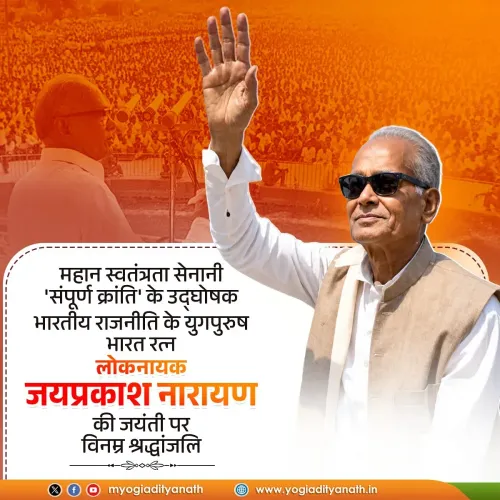
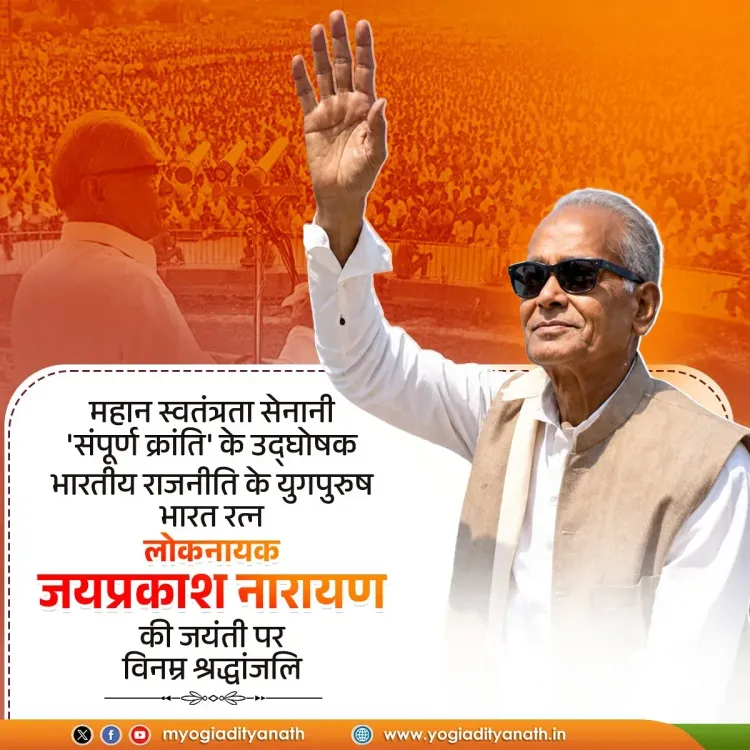
In his post, CM Yogi wrote: 'महान स्वतंत्रता सेनानी, भारतीय राजनीति के युगपुरुष, 'भारत रत्न', 'लोकनायक' जयप्रकाश नारायण की जयंती पर विनम्र श्रद्धांजलि।' — 'Humble tribute on the birth anniversary of great freedom fighter, epoch-maker of Indian politics, Bharat Ratna, Loknayak Jayaprakash Narayan.' He added that during the dark days of the Emergency, Narayan's voice became 'a powerful expression of democratic consciousness,' and that his fearless struggle and life of sacrifice inspire placing the Constitution above power, principle above position, and national interest above self.
The Man Who Said No to Emergency
Jayaprakash Narayan, born October 11, 1902, in Sitabdiara, Bihar, earned the title Loknayak — 'People's Leader' — not through electoral office but through moral authority. A veteran of the Quit India Movement of 1942, he had long walked away from the pursuit of ministerial power, choosing instead the path of social reform through his Sarvodaya movement. That restraint made his eventual return to the political arena in 1974-75 all the more electrifying.
When Prime Minister Indira Gandhi declared the Emergency in June 1975, suspending civil liberties and press freedom, Narayan became the undisputed voice of resistance. His call for a 'Total Revolution' — Sampurna Kranti — galvanised students, farmers, and opposition parties into a unified front. He was arrested, his health deteriorated in detention, yet his moral stature only grew. The 1977 general elections, which ended Emergency rule and brought the Janata Party to power, were widely seen as the fruit of the movement he had seeded at great personal cost.
Bharat Ratna Awarded Posthumously — and a Legacy Still Claimed Across Party Lines
Narayan passed away on October 8, 1979, just months after seeing democracy restored. He was awarded the Bharat Ratna — India's highest civilian honour — posthumously in 1999. His legacy is rare in Indian politics: claimed sincerely across ideological lines, from socialists to the BJP, precisely because he never let any one party own him. CM Yogi's tribute underscores that tradition, invoking Narayan's emphasis on constitutional values and national interest above partisan loyalty.
The reminder lands with quiet force. A leader who held no office at the peak of his influence, yet moved a nation — that is the measure JP Narayan left behind.
Point of View
Socialist parties, and regional outfits all invoke without contradiction, because he never subordinated himself to any single ideological camp. CM Yogi's tribute, emphasising constitutional supremacy and principle over position, reflects a broader BJP effort to anchor itself to the moral vocabulary of the anti-Emergency movement, a political memory the party has consistently used to frame its democratic credentials. The homage also arrives as India's political discourse increasingly revisits Emergency-era history, making Narayan a recurring touchstone. That a sitting chief minister quotes his values — Constitution above power — carries an implicit normative claim about governance standards.
NationPress
11 Oct 2026
Frequently Asked Questions
Who was Jayaprakash Narayan?
Jayaprakash Narayan, born on October 11, 1902, was a freedom fighter, socialist leader, and the architect of the 'Total Revolution' movement against the 1975 Emergency. He is revered as Loknayak — People's Leader — and was awarded the Bharat Ratna posthumously in 1999.
Why is Jayaprakash Narayan called Loknayak?
He earned the title Loknayak, meaning 'People's Leader,' for his grassroots leadership and moral authority, especially his fearless resistance to the Emergency declared by Prime Minister Indira Gandhi in 1975, which cost him his health and freedom.
What was JP Narayan's role during the Emergency?
During the Emergency of 1975-77, Jayaprakash Narayan led the 'Sampurna Kranti' or Total Revolution movement, uniting opposition parties and civil society against the suspension of civil liberties. He was arrested but his movement is credited with the restoration of democracy after the 1977 elections.
When did CM Yogi pay tribute to JP Narayan in 2026?
Uttar Pradesh Chief Minister Yogi Adityanath paid tribute to Jayaprakash Narayan on Sunday, October 11, 2026, the leader's birth anniversary, via a post on X.
When was Jayaprakash Narayan awarded the Bharat Ratna?
Jayaprakash Narayan was awarded the Bharat Ratna, India's highest civilian honour, posthumously in 1999. He had passed away on October 8, 1979.