CM Yogi pledges 10.5 lakh govt jobs in UP's 10-year term

Synopsis
Uttar Pradesh CM Yogi Adityanath has claimed that by the end of the BJP government's 10-year tenure, 10.5 lakh youth in the state will have been given government jobs — framing public-sector recruitment as the administration's defining achievement.
Key Takeaways
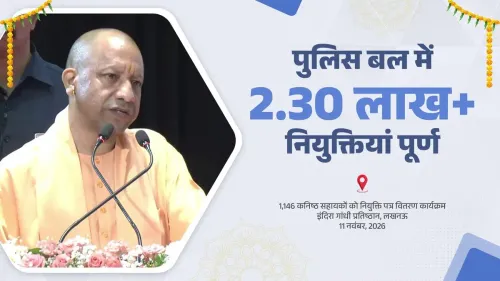
Yogi Adityanath announced on November 18, 2026 that the UP government will have provided 10.5 lakh (1.05 million) government jobs by the end of its ten-year term.
The BJP-led Uttar Pradesh government has cited public-sector recruitment as a central governance achievement since taking office in March 2017 .
The claim covers appointments through the UP Public Service Commission and subordinate services recruitment boards.
Government jobs in Uttar Pradesh are intensely competitive and carry major social and political weight for families across the state.
The forward-looking figure will be tested against official appointment data, budget allocations for new posts, and upcoming recruitment notifications.
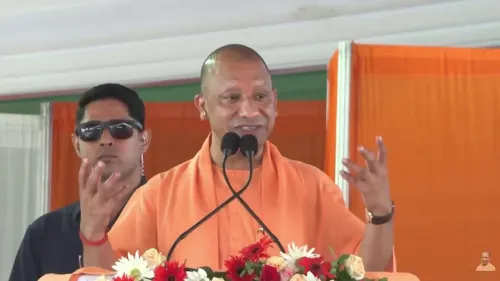
A decade in office, and Uttar Pradesh Chief Minister Yogi Adityanath is putting a number to it — 10.5 lakh government jobs delivered to the state's youth by the time his party's ten-year run concludes. The claim, posted on Wednesday, November 18, 2026, frames public-sector recruitment as the defining ledger of BJP governance in India's most populous state.
In his own words: 'जब हमारा 10 वर्ष का कार्यकाल पूरा होगा, तब तक हम साढ़े 10 लाख युवाओं को सरकारी नौकरी दे चुके होंगे...' ('When our 10-year tenure is complete, we will have given government jobs to 1.05 million young people...'). The statement is both a progress marker and a forward-looking pledge.
A recruitment push that began in 2017
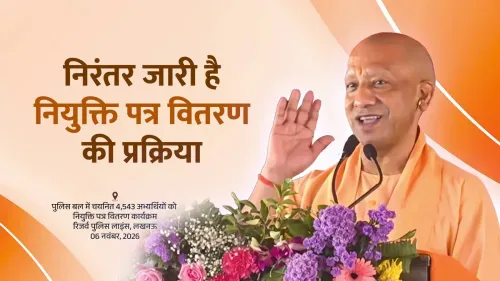
When Yogi Adityanath first assumed office in March 2017, the state government announced a systematic drive to fill long-vacant posts across the public sector — a backlog that had accumulated over years of contested recruitment processes and administrative delays in Uttar Pradesh. The strategy aimed to restore confidence in state hiring, which had been dogged by paper-leak scandals and legal challenges under earlier administrations.
Clearing that backlog and running fresh recruitment cycles through the UP Public Service Commission and subordinate services boards became a recurring talking point for the BJP administration. The November 2026 post positions the cumulative result of those cycles as the government's most tangible deliverable to young voters.
Why 10.5 lakh is a politically loaded figure
Government jobs in Uttar Pradesh carry weight far beyond a salary — they represent security, social mobility, and family aspiration in a state where the private-sector job market remains thin outside a handful of urban clusters. Each recruitment cycle generates hundreds of thousands of applicants; the competitive intensity makes every appointment politically visible.
Across India, state governments of every stripe have learned that public-employment tallies drive voter sentiment as powerfully as infrastructure or welfare schemes. By anchoring the claim to a full ten-year arc, the Adityanath government is essentially asking the electorate to judge the entire BJP stint in Lucknow against a single, concrete metric. That is a high-stakes wager — and one the opposition will almost certainly test against official recruitment notifications and actual appointment orders.
What the numbers will need to prove
The claim's credibility will ultimately rest on verifiable data: cumulative appointment letters issued, posts filled versus posts advertised, and whether the count covers direct recruitments or also includes contract and outsourced roles. Watchers of UP governance will be tracking budget allocations for new sanctioned posts and the pace of UP Public Service Commission notification cycles in the remaining period of the administration's term.
For now, the post signals that the ruling party intends to run its final stretch — and any future electoral pitch — on the argument that it delivered jobs at a scale Uttar Pradesh had not seen before. Whether the final count validates that narrative is the question every job-seeking family in the state is quietly asking.
Point of View
Quantifiable employment number, Yogi Adityanath is making a calculated political bet — inviting scrutiny but also setting a simple benchmark voters can measure him against. This continues a broader BJP pattern of converting governance into countable deliverables, a strategy that proved effective in prior elections. The 10-year framing is itself significant: it conflates two electoral mandates into one seamless arc, implicitly arguing that continuity of power produced scale. The opposition's challenge will be to audit the methodology behind the figure before it hardens into accepted political fact.
NationPress
18 Nov 2026
Frequently Asked Questions
How many government jobs has the Yogi Adityanath government promised in UP?
CM Yogi Adityanath has stated that by the end of the BJP government's 10-year tenure in Uttar Pradesh, 10.5 lakh (1.05 million) youth will have been given government jobs.
When did Yogi Adityanath first become Chief Minister of Uttar Pradesh?
Yogi Adityanath first became Chief Minister of Uttar Pradesh in March 2017 , following the BJP's victory in the state assembly elections.
Which body handles government recruitment in Uttar Pradesh?
Government recruitment in Uttar Pradesh is primarily handled by the UP Public Service Commission (UPPSC) and various subordinate services selection boards under the state government.
Why are government jobs politically important in Uttar Pradesh?
In Uttar Pradesh , government jobs offer unmatched job security and social mobility in a state where private-sector employment remains concentrated in a few urban areas, making public recruitment cycles intensely competitive and politically significant.
How can I verify how many government jobs UP has actually given in this period?
The count can be tracked through official appointment orders, UP Public Service Commission result notifications, state budget documents showing sanctioned posts, and annual governance reports published by the Uttar Pradesh government.