CM Yogi Launches NSG–UP Police Joint Training in Lucknow
Synopsis
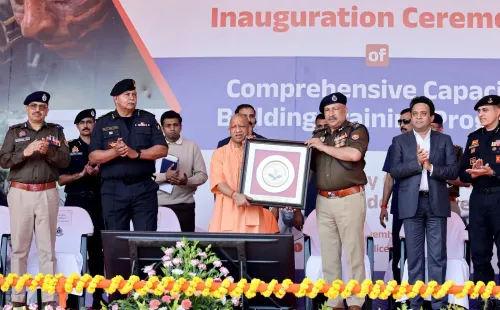
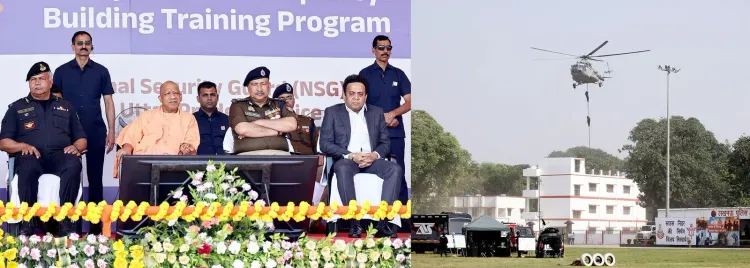
CM Yogi Adityanath launched a Joint Capacity Building Training Program between the NSG and UP Police in Lucknow on 18 November 2026, reinforcing the state's zero-tolerance doctrine on crime and terrorism and deepening centre-state internal-security coordination.
Key Takeaways
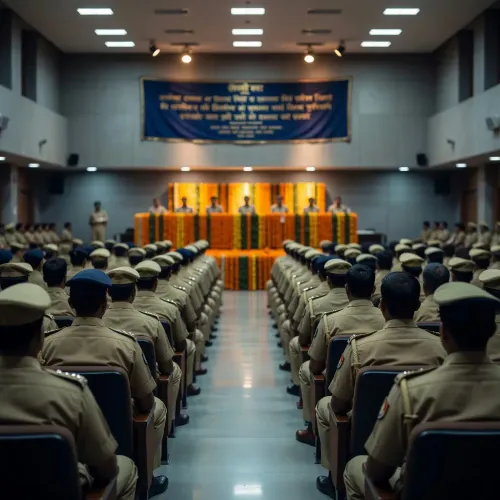
CM Yogi Adityanath inaugurated the NSG–UP Police Joint Capacity Building Training Program in Lucknow on 18 November 2026 .
The programme pairs India's elite federal counter-terrorism force, the National Security Guard (NSG) — raised in 1984 — with Uttar Pradesh Police for structured capacity building.
CM Yogi articulated a three-part security doctrine: no impunity for criminals, no opportunity for terrorists, no compromise on national security.
The initiative fits a consistent pattern of centre-state security coordination in UP since 2017 , including joint exercises with central armed forces.
Commando performance was acknowledged directly by the Chief Minister, signalling institutional recognition alongside operational intent.
Key metrics to watch include the number of commandos certified and the programme's eventual impact on UP's counter-terrorism operations.
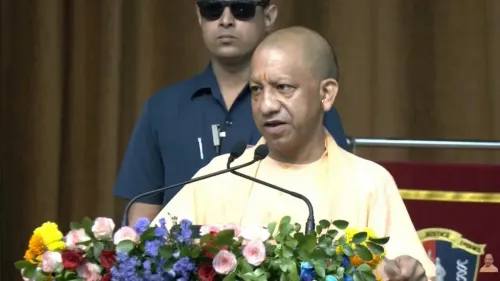
When India's elite federal counter-terrorism force and a state police outfit train together, the signal is deliberate and unmistakable. Uttar Pradesh Chief Minister Yogi Adityanath on Wednesday, 18 November 2026, inaugurated a Joint Capacity Building Training Program between the National Security Guard (NSG) and Uttar Pradesh Police in Lucknow — framing it as a direct expression of the government's zero-tolerance doctrine on crime and terrorism.
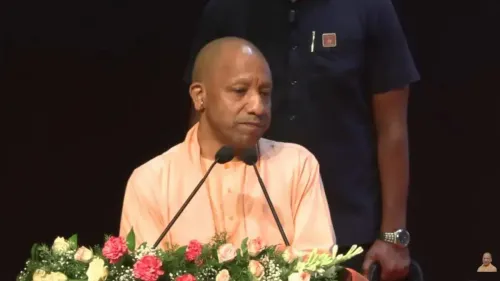
Posting on X, CM Yogi spelled out the governing philosophy in unambiguous terms: 'न अपराधियों को अभय, न आतंकियों को अवसर और न ही देश की सुरक्षा के साथ समझौता' — 'no impunity for criminals, no opportunity for terrorists, and no compromise on the country's security.' He called the joint effort between @nsgblackcats and @Uppolice a collaboration that would give India's internal security 'a new strength and a new direction', and offered personal congratulations to the commandos who performed outstandingly at the launch.
NSG's Black Cats and the UP Police: What This Partnership Means
The National Security Guard, raised in 1984 and popularly known as the 'Black Cats', is India's premier federal force for counter-terrorism, hostage rescue, and neutralising catastrophic threats. It sits at the apex of the country's internal security architecture — the unit that gets called when standard law enforcement is not enough. Partnering it with a state police force for structured capacity-building is not routine; it represents a deliberate elevation of UP Police's counter-terror capability.
Uttar Pradesh Police — one of the largest state forces in the world by headcount — has increasingly been positioned as a front-line player in internal security rather than merely a law-and-order body. Training alongside NSG commandos transfers doctrine, tactics, and institutional culture that ordinarily live only inside elite central forces. The commandos being trained gain exposure to the NSG's specialised skill sets; the NSG, in turn, embeds its methods deeper into the state fabric.
A Pattern Stretching Back to 2017
This inauguration did not arrive without precedent. Since 2017, Uttar Pradesh's administration has pursued a consistent internal-security posture built on three pillars: aggressive anti-crime operations, centre-state security coordination, and institutional capacity upgrades within the police. Joint exercises with central armed forces form a recurring feature of that pattern — each one pushing the state's operational readiness a notch higher.
The political logic is equally clear. By launching the programme himself and linking it explicitly to both the Centre and state government policy, CM Yogi anchors internal security as a governance achievement — not merely an administrative routine. The rhetorical trio he offered — no impunity, no opportunity, no compromise — functions as both a policy statement and a public reassurance.
What Comes Next for the Trained Commandos
The immediate outcome to watch is certification: how many UP Police personnel complete the programme, what specialisations they acquire, and how those skills feed into operational deployments. Longer term, analysts will track whether the training correlates with measurable outcomes in UP's counter-terrorism and organised-crime statistics. A joint programme of this nature is only as consequential as the operational follow-through it enables.
India's internal-security architecture has long grappled with the gap between elite central forces and state police capabilities. If the Lucknow initiative becomes a replicable model — scaled across other high-priority states — it could quietly reshape how that gap gets closed. That is the larger bet CM Yogi is signalling with today's inauguration.
Point of View
CM Yogi Adityanath converts a security-administrative event into a visible governance statement — reinforcing the BJP's law-and-order brand ahead of any future electoral cycle. The move also deepens a structural trend: since 2017, Uttar Pradesh has steadily narrowed the capability gap between its state police and elite central forces, making such joint programmes a pillar of its internal-security architecture rather than a one-off exercise. At the national level, the initiative models a centre-state partnership template that could be replicated in other sensitive states. The real test, however, lies not in the inauguration but in whether certified commandos are deployed in ways that produce measurable operational results.
NationPress
18 Nov 2026
Frequently Asked Questions
What is the NSG–UP Police Joint Capacity Building Training Program?
It is a joint training initiative between the National Security Guard (NSG) and Uttar Pradesh Police, inaugurated by CM Yogi Adityanath in Lucknow on 18 November 2026, designed to transfer elite counter-terrorism skills from the NSG to UP Police commandos.
What is the NSG and why is it called the Black Cats?
The National Security Guard (NSG) is India's federal counter-terrorism force, raised in 1984. It is nicknamed the 'Black Cats' because of the black uniforms its commandos wear during operations, and it specialises in hostage rescue and neutralising high-threat scenarios.
Why did CM Yogi Adityanath launch this programme in Lucknow?
Lucknow is the capital of Uttar Pradesh and the administrative headquarters of UP Police. CM Yogi inaugurated the programme there as part of the state government's stated zero-tolerance policy on crime and terrorism, linking it explicitly to both central and state security doctrine.
How does this fit into UP's internal security strategy since 2017?
Since 2017, Uttar Pradesh has pursued closer integration with central armed forces through joint exercises and anti-crime operations. The NSG–UP Police training programme is the latest in a series of capacity-building steps that have gradually upgraded the state police's counter-terrorism capabilities.
What comes next after the inauguration of the NSG–UP Police training?
The focus will shift to the certification of commandos who complete the programme, the specialisations they acquire, and whether the new skills translate into improved operational outcomes in counter-terrorism and organised-crime cases across Uttar Pradesh.