Nvidia AI Podcast Returns With Open Models and Agent Safety Focus

Synopsis
Nvidia's AI Podcast returns with Hugging Face co-founder Thom Wolf and ServiceNow's Amanda Grady to explore agent identity, open versus proprietary models in cyber defence, fine-tuning accessibility, and extending AI safety into physical systems — a wide-ranging conversation reflecting the industry's sharpest current tensions.
Key Takeaways
Nvidia's AI Podcast returned on 18 November 2026 with guests Thom Wolf (Hugging Face) and Amanda Grady (ServiceNow).
The episode covers agent identity and permissions as a core security primitive for autonomous AI systems operating inside enterprise networks.
Guests examine the open versus proprietary model debate specifically in the context of cyber defence, landing on a hybrid approach.
Discussion at 13:10 addresses making fine-tuning more accessible so more developers can build safely with AI.
The conversation extends AI safety concerns into physical-world environments , reflecting the growing deployment of AI beyond software.
Nvidia uses the podcast to bridge open-source contributors and enterprise security leaders, reinforcing its role as an ecosystem convener.
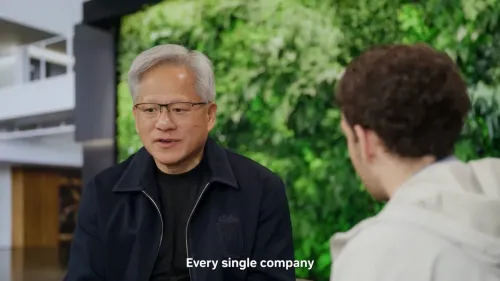
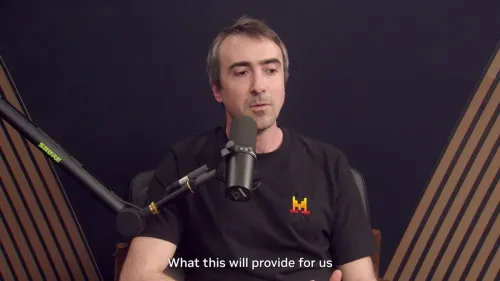
When the machines start acting on their own, who vouches for them? Nvidia's returning AI Podcast drops straight into that question, bringing together two of the industry's most consequential voices — Thom Wolf, co-founder and chief science officer at Hugging Face, and Amanda Grady of enterprise-automation giant ServiceNow — to wrestle with open models, agent safety, and the democratisation of AI development, in an episode published on 18 November 2026.
From the prompt to the perimeter: why agent identity is the new firewall
The episode's sharpest pivot comes early. The conversation moves swiftly from conventional AI safety discourse — the kind anchored around prompt injection and guardrails — toward something structurally harder: what happens when an AI agent operates autonomously inside an enterprise network, calling APIs, touching sensitive data, and triggering workflows without a human in the loop for every step?
The answer, the guests suggest, begins with identity. Giving agents their own defined permissions — a concept the podcast surfaces at the 3:28 mark — treats AI actors more like employees than tools: bounded, auditable, and revocable. This framing has been gaining traction across the security industry as agentic AI moves from research curiosity to production reality inside large organisations.
Open versus proprietary: a cyber-defence détente
Wolf brings Hugging Face's signature open-source gospel to the table, and the exchange at the 1:50 mark doesn't shy away from the tension: can open models, by their very transparency, serve as a stronger foundation for cyber defence than black-box proprietary systems — or does that same openness create new attack surfaces?
The nuanced answer both guests land on is hybrid. Open models let security teams inspect, audit, and fine-tune on domain-specific threat data; proprietary infrastructure can wrap those models with controlled deployment environments. Neither camp wins outright. The real frontier is the seam between them.
Fine-tuning for everyone — and what that unlocks
One of the episode's most practically grounded segments arrives at 13:10 and 14:09: making fine-tuning more accessible, and what better security architectures actually unlock for builders. The underlying argument is straightforward — when safety infrastructure matures, more developers can confidently customise foundation models for specialised tasks without inadvertently opening their systems to new vulnerabilities.
Grady's ServiceNow lens adds the enterprise dimension: IT service management and workflow automation are already AI-saturated, and the pressure to extend those capabilities into physical-world environments — flagged at the 10:58 mark — raises stakes that are qualitatively different from a chatbot getting a fact wrong.
Nvidia has used its podcast platform consistently to bridge open-source contributors and enterprise security practitioners, a pairing that reflects the company's dual positioning as both GPU infrastructure provider and ecosystem convener. As agentic AI scales, those conversations are only going to get louder.
Point of View
Access-control architecture must evolve in parallel. Nvidia's choice to pair an open-source champion like Thom Wolf with an enterprise platform leader reflects a deliberate bridging strategy, positioning the company as neutral infrastructure for both camps. The fine-tuning-accessibility thread is equally telling: democratising customisation is now inseparable from democratising safety, because a poorly fine-tuned model in a production pipeline is a liability, not just a performance issue. Watch this space — the next wave of GPU-era tooling announcements will likely centre precisely on making secure agentic deployment a commodity, not a speciality.
NationPress
18 Nov 2026
Frequently Asked Questions
What is Nvidia's AI Podcast about?
Nvidia's AI Podcast is a recurring series produced by Nvidia that brings together researchers, engineers, and enterprise leaders to discuss artificial intelligence trends, tools, and applications. The latest episode features Hugging Face's Thom Wolf and ServiceNow's Amanda Grady on topics including agent safety, open models, and fine-tuning accessibility.
Who is Thom Wolf from Hugging Face?
Thom Wolf is the co-founder and chief science officer of Hugging Face, the open-source AI platform best known for the Transformers library and its large community model repository. He is a prominent advocate for open-source approaches to AI development and safety.
What does 'agent identity' mean in AI security?
Agent identity refers to assigning AI agents their own defined credentials and permission scopes — similar to user accounts in a corporate system — so their actions inside a network are bounded, logged, and revocable. This approach is gaining traction as autonomous AI agents are deployed in enterprise environments.
What is the difference between open and proprietary AI models for cyber defence?
Open models allow security teams to inspect, audit, and fine-tune on specialised threat data, offering transparency. Proprietary models offer controlled deployment environments and vendor-managed security. The industry consensus, reflected in this Nvidia podcast episode, favours a hybrid approach that leverages strengths of both.
Why is fine-tuning accessibility important for AI safety?
When fine-tuning — the process of adapting a foundation model to a specific task — becomes easier and safer to perform, more developers can build specialised AI applications without inadvertently introducing security vulnerabilities. This lowers barriers for smaller teams while keeping enterprise-grade safety standards within reach.