Nvidia Podcast: Mistral CTO on Open Models in Enterprise
Synopsis
Nvidia's AI Podcast on 10 June 2026 featured Mistral AI co-founder and CTO Timothée Lacroix discussing open-model enterprise adoption, the Forge customization framework, and the companies' joint Nemotron collaboration — highlighting a deepening alliance between the chip giant and the Paris-based AI startup.
Key Takeaways
Nvidia published a new NVIDIA AI Podcast episode on 10 June 2026 featuring Mistral AI co-founder and CTO Timothée Lacroix .
The conversation covers Mistral AI's open-model philosophy , the Forge customization framework , and the Nemotron collaboration with Nvidia.
Mistral AI , founded in Paris , released the open-weight Mistral-7B model in 2023 , establishing its enterprise open-source credentials.
Nvidia expanded its NeMo framework in 2024 to support open-model customization and inference optimisation.
The partnership targets enterprise IT teams seeking auditability, data sovereignty, and cost predictability over closed API services.
Next milestones include enterprise case studies from the Forge framework and potential joint product announcements at AI conferences in 2026 .
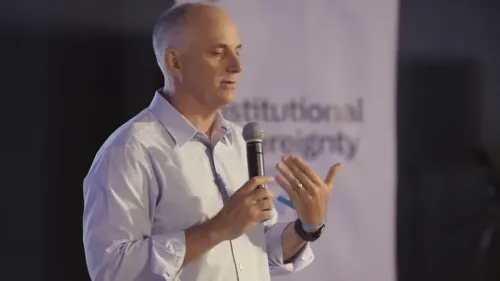
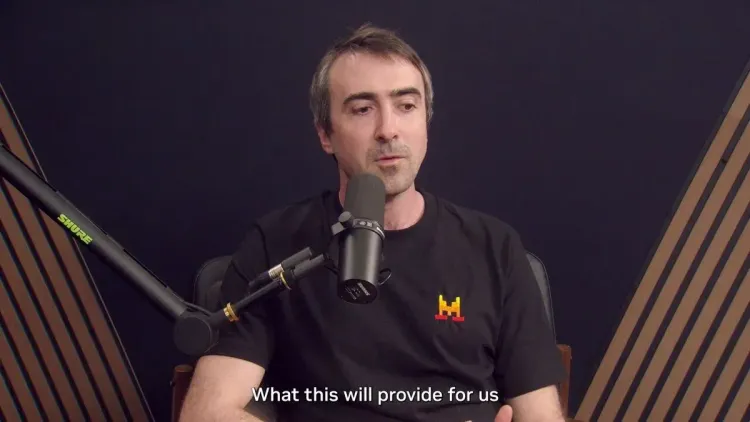
Chip giant Nvidia on Wednesday, 10 June 2026 spotlighted its ongoing collaboration with Mistral AI through the latest episode of the NVIDIA AI Podcast, featuring Mistral co-founder and CTO Timothée Lacroix in a wide-ranging conversation on bringing open-weight models into enterprise environments.
Context
The episode centres on three themes: Mistral AI's open-model philosophy, its Forge customization framework, and the companies' joint work through the Nemotron collaboration. The core question posed by Nvidia is pointed — 'What does it take to bring open models into the enterprise?' — signalling that the conversation goes beyond research theory into practical deployment challenges.
Lacroix, who previously worked as a researcher at DeepMind before co-founding Mistral AI in Paris, brings both technical depth and a builder's perspective to the discussion. His presence on Nvidia's flagship podcast underscores the deepening institutional ties between the two companies.
Policy Backdrop
Mistral AI first established its open-source credentials in 2023 with the release of Mistral-7B, a compact but capable open-weight model that quickly attracted enterprise attention for its auditability and cost predictability. The move stood in contrast to closed API services offered by larger US-based labs.
Nvidia expanded its NeMo framework in 2024 to support open-model customization and inference optimisation, laying the groundwork for the kind of joint tooling that the Nemotron collaboration now represents. Together, these moves reflect a broader industry pattern where hardware providers deepen ties with model developers to capture inference workloads at scale.
Stakeholders and Impact
The primary audience for this collaboration is enterprise IT teams and AI developers who need greater control over model behaviour, data residency, and total cost of ownership — concerns that closed API models do not always address cleanly. European enterprises in particular have cited digital sovereignty as a reason to favour open-weight models from Paris-based Mistral AI over US-headquartered alternatives.
For Nvidia, whose revenue is heavily tied to AI training and inference hardware, partnerships with open-model providers like Mistral expand the addressable market beyond hyperscalers to mid-market enterprises building private AI deployments. The Forge customization framework, discussed in the episode, is positioned as a practical on-ramp for these organisations.
What's Next
Analysts and enterprise buyers will watch for concrete case studies emerging from the Forge framework, as well as any joint Nvidia-Mistral product announcements at major AI conferences later in 2026. The podcast episode itself serves as a signal that both companies view the open-model enterprise segment as a strategic priority rather than a niche experiment.
As open-weight models mature and customization tooling becomes more accessible, the competitive divide between open and closed AI systems in enterprise settings is likely to narrow — with infrastructure and fine-tuning support, not raw model capability, becoming the key differentiator.
Point of View
Which have shown growing interest in sovereign and cost-effective AI deployments, the Mistral-Nvidia stack offers a credible alternative to hyperscaler-dependent solutions. The Nemotron collaboration in particular could accelerate fine-tuning pipelines that were previously accessible only to well-resourced labs. Cumulatively, this deepens the US-Europe AI infrastructure axis and raises the bar for any competitor trying to serve enterprise inference workloads without a comparable hardware-model partnership.
NationPress
25 Oct 2026
Frequently Asked Questions
What is the Nvidia and Mistral AI collaboration about?
Nvidia and Mistral AI are collaborating through the Nemotron framework to enable optimised deployment and fine-tuning of Mistral's open-weight models on Nvidia hardware, making enterprise AI adoption more accessible.
Who is Timothée Lacroix of Mistral AI?
Timothée Lacroix is the co-founder and CTO of Mistral AI, a Paris-based AI company. He previously worked as a researcher at DeepMind before helping establish Mistral's open-model approach.
What is the Mistral Forge framework?
Forge is Mistral AI's customization framework designed to help enterprises fine-tune and adapt open-weight models for specific business use cases, discussed in the June 2026 Nvidia AI Podcast episode.
Why are enterprises choosing open-weight AI models over closed APIs?
Enterprises favour open-weight models for greater control over data, auditability, cost predictability, and digital sovereignty — concerns that closed API services do not always address, particularly for European and regulated-sector customers.
What is the NVIDIA AI Podcast?
The NVIDIA AI Podcast is a long-running series by Nvidia featuring technical conversations with AI researchers and industry leaders, covering topics from model development to enterprise deployment.