Nvidia Backs Japan AI Push With Nemotron Open Models
Synopsis
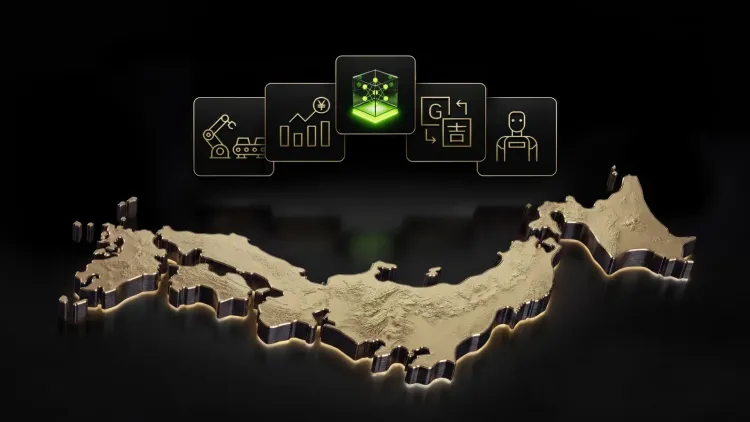
Chip giant Nvidia announced on 15 July 2026 that Japanese enterprises, startups, and research institutions are deploying its Nemotron open models and libraries to build AI tailored to Japan's language, industries, and workforce — advancing the country's sovereign AI ambitions.
Key Takeaways
Nvidia confirmed on 15 July 2026 that Japan's enterprises, startups, and research institutions are actively using its Nemotron open models, data tools, and libraries.
The deployments are aimed at building AI specialised to Japan's language, industries, and workforce , not generic global applications.
Nemotron is Nvidia's family of open-weight large language models released with fine-tuning libraries to enable domain-adapted AI by local organisations.
Japan's national AI strategy, updated in 2022 , has long prioritised sovereign language models and sector-specific AI to counter demographic decline.
The move reflects a broader pattern of US chip firms supplying open AI stacks to allied economies seeking technological autonomy against Chinese model ecosystems.
Next milestones include METI AI budget updates and Nvidia GTC sessions on Nemotron fine-tuning workflows.
Chip giant Nvidia announced on Wednesday, 15 July 2026 that Japan's enterprises, startups, and research institutions are deploying its Nemotron family of open models, data tools, and libraries to build industry-specialised artificial intelligence tailored to the country's language, industries, and workforce.
Context
Nvidia's post stated that Japanese organisations are 'building industry-specialized AI with NVIDIA Nemotron open models, data and libraries, helping advance AI tailored to the country's language, industries and workforce.' The announcement signals a deepening of Nvidia's presence in one of Asia's most technologically advanced economies, where the demand for sovereign, language-aware AI has grown sharply over the past several years.
Nemotron is Nvidia's family of open-weight large language models released alongside developer data tools and fine-tuning libraries. The suite is designed to let local organisations customise AI behaviour using their own domain-specific data, rather than relying solely on general-purpose models trained on global corpora that may underrepresent Japanese-language content and industrial context.
Policy Backdrop
Japan has pursued a deliberate national AI strategy since 2019, with significant updates in 2022, prioritising sovereign language models and sector-specific AI deployments in manufacturing, robotics, and services. The strategy was designed in part to offset the country's acute demographic decline by augmenting workforce productivity through automation and intelligent systems.
Nvidia's 2024 release of Nemotron-4 open models and associated developer libraries was explicitly aimed at enabling this kind of localised customisation by enterprises and research bodies across allied economies. Japan's Ministry of Economy, Trade and Industry (METI) has backed successive public-private AI testbeds that align with exactly the kind of infrastructure Nvidia is now supplying.
Stakeholders and Impact
The primary beneficiaries are Japanese enterprises, AI startups, and research institutions that gain access to open-weight models they can fine-tune on proprietary industrial data — covering sectors such as precision manufacturing, healthcare, and logistics where Japanese firms hold globally competitive positions. Open-weight access lowers the barrier to customisation compared with closed, API-only alternatives.
The move fits a broader pattern in which US chip and AI infrastructure firms supply open AI stacks to allied economies seeking technological autonomy, particularly as competition with Chinese model ecosystems intensifies. For Japan, combining Nvidia's tools with domestic language resources and industrial datasets allows it to preserve competitiveness without ceding AI sovereignty to any single external provider. This mirrors earlier GPU-based supercomputing partnerships between Nvidia and Japanese research centres that took shape in the early 2020s.
What's Next
Observers will watch for follow-on METI AI budget allocations and the launch of new public-private testbeds that formally incorporate Nemotron-based pipelines. Nvidia's next GTC developer conference is expected to feature sessions on Nemotron fine-tuning workflows, which could provide clearer visibility into adoption depth across Japanese verticals.
If Japan's deployment scales as intended, it could serve as a template for other allied economies — particularly in Southeast Asia and Europe — that are pursuing similar sovereign AI ambitions using open-weight infrastructure from US technology partners. The trajectory underscores how the global AI race is increasingly being contested not just at the frontier model level, but in the localisation layer where language and industry specificity determine real-world utility.
Point of View
Adopting open-weight models from a US partner threads a careful needle: gaining frontier AI capability while retaining enough customisation control to protect proprietary industrial data and language assets. This mirrors the logic of earlier semiconductor supply-chain partnerships and suggests AI infrastructure is fast becoming a new axis of technology diplomacy. The pattern, if it scales to other allied economies, could entrench Nvidia's open-model ecosystem as the de facto standard for sovereign AI deployments outside China's sphere of influence.
NationPress
14 Oct 2026
Frequently Asked Questions
What is Nvidia Nemotron and why is Japan using it?
Nvidia Nemotron is a family of open-weight large language models and developer libraries that organisations can fine-tune on their own data. Japan's enterprises and research institutions are using it to build AI adapted to the Japanese language and specific industries such as manufacturing and robotics.
Why does Japan need its own industry-specific AI models?
Japan's national AI strategy prioritises sovereign, language-aware AI to maintain industrial competitiveness and offset demographic decline. General-purpose global models often underrepresent Japanese-language content and sector-specific knowledge, making localised fine-tuning essential.
When did Nvidia release Nemotron open models?
Nvidia released the Nemotron-4 open models and associated developer libraries in 2024 , specifically targeting localised customisation by enterprises and research bodies in allied economies.
How does Nvidia's Japan AI push relate to US-China tech competition?
US chip and AI infrastructure firms are supplying open AI stacks to allied economies partly to counter the expansion of Chinese model ecosystems. Japan's adoption of Nemotron-based tools allows it to build AI capability without dependence on Chinese platforms.
What should we watch for next in Nvidia's Japan AI partnership?
Key signals include new Japanese METI AI budget allocations, public-private testbed launches incorporating Nemotron pipelines, and Nvidia GTC developer conference sessions detailing Nemotron fine-tuning workflows and adoption depth.