Nvidia Brings OpenShell to Windows, Expands Local AI Agents on RTX PCs
Synopsis
Chip giant Nvidia has unveiled NVIDIA OpenShell for Windows, framing it as the next step for local agentic AI on RTX PCs and DGX Spark systems. The corporate post also flagged Broadcast 2.2 and upcoming RTX acceleration for Adobe applications and Blender, deepening the company's push to move AI workloads from the cloud onto consumer machines.
Key Takeaways
Nvidia announced NVIDIA OpenShell, a new framework coming to Windows for agentic AI workloads.
The company said local AI agents are scaling across DGX Spark and RTX PCs.
NVIDIA Broadcast 2.2 is part of a wider creator-app refresh tied to the launch.
RTX acceleration is planned for Adobe applications and the open-source 3D suite Blender.
The move extends Nvidia's data-centre AI stack to consumer hardware, lowering barriers for on-device inference.
Release timing and developer adoption of OpenShell remain the key variables to watch.
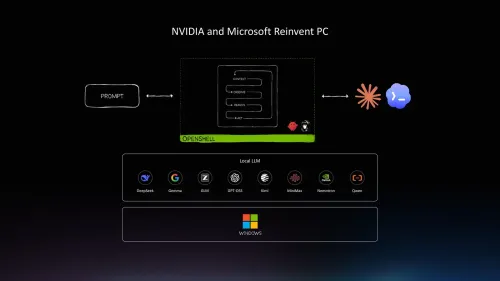
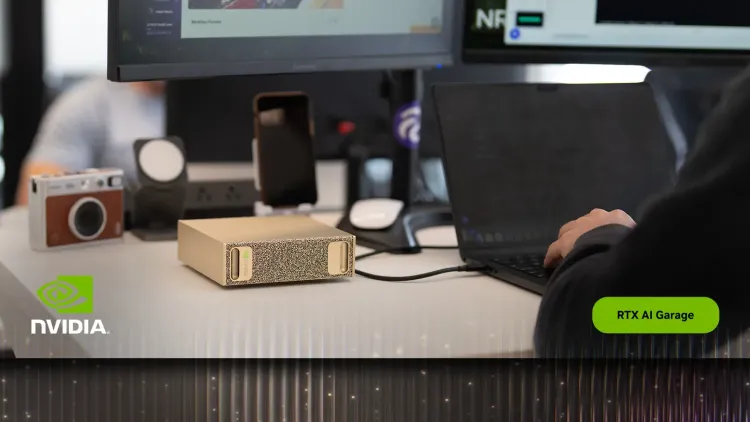
Chip giant Nvidia on Wednesday, 3 June 2026 announced a fresh push to bring agentic artificial-intelligence workloads onto consumer Windows machines, unveiling a new framework called NVIDIA OpenShell alongside performance upgrades for creator applications. The corporate post said local AI agents are 'leveling up' across the company's DGX Spark systems and RTX-powered PCs, signalling a deeper extension of its data-centre AI stack into the on-device computing layer.
'Local AI Agents are leveling up across DGX Spark & RTX PCs,' the company wrote, adding that NVIDIA OpenShell is 'coming to Windows alongside new agentic AI optimizations and creator app updates—including NVIDIA Broadcast 2.2, plus upcoming RTX acceleration for Adobe apps and Blender.' The post linked to a corporate explainer for developers and creators.
Context
The announcement reframes Nvidia's pitch from cloud-only AI compute to a hybrid posture, where inference and small-model agents run directly on a user's RTX-equipped Windows PC. RTX GPUs ship with Tensor Cores, the same class of matrix-math units that power the company's data-centre accelerators, and have increasingly been positioned as the substrate for on-device generative workloads.
The headline software piece, NVIDIA OpenShell, is being introduced as a Windows-facing layer for agentic AI. The company's post does not detail the architecture, and broader specifications were not part of the disclosure.
Policy backdrop
Nvidia's accelerated-computing journey began with the launch of the CUDA parallel-computing platform in 2006, which built the software foundation for nearly two decades of GPU-driven scientific and AI work. The shift to local agents continues that lineage, porting capabilities once reserved for server clusters down to desktops and workstations.
The move also mirrors a broader industry pivot toward the so-called 'AI PC', with rival silicon vendors pushing neural-processing units into laptops and desktops. Nvidia's bet differs in that it leans on its existing installed base of discrete RTX GPUs rather than integrated accelerators.
Stakeholders and impact
The primary audiences are AI developers building agentic applications and content creators who depend on GPU-accelerated pipelines. NVIDIA Broadcast 2.2, the updated streaming and conferencing tool, is part of the creator-side refresh, while planned RTX acceleration for Adobe applications and the open-source 3D suite Blender targets professional and hobbyist workflows.
For Indian developers and studios, the rollout matters because it potentially lowers the cost of experimenting with agentic AI: workloads that today require rented cloud GPUs could increasingly run on a single workstation. Animation houses, indie game developers and AI start-ups operating on tight budgets stand to benefit if the promised optimisations materialise as described.
For Adobe and the Blender community, hardware-specific tuning typically translates into faster renders, smoother viewport performance and lower latency for AI-assisted features such as denoising and generative fill. Specific benchmarks were not shared in the post.
What's next
Attention now turns to the release timing of NVIDIA OpenShell on Windows, the rollout cadence for Broadcast 2.2, and the delivery of the RTX-accelerated plug-ins for Adobe and Blender. Developer uptake of OpenShell will be the clearest early signal of whether agentic AI on the PC moves from marketing pitch to mainstream workflow.
If adoption tracks Nvidia's earlier creator-tool launches, the announcement could mark another step in the gradual decoupling of generative AI from always-on cloud services—an outcome with implications for data privacy, bandwidth costs and the economics of running models at the edge.
Point of View
It is binding developers and artists to its silicon at both ends of the pipeline. The pitch slots neatly into the wider 'AI PC' contest, where every major chip vendor is racing to define what on-device intelligence looks like. For India's growing base of independent developers and studios, the bigger question is whether local agentic compute can credibly substitute for rented cloud GPUs.
NationPress
18 Oct 2026
Frequently Asked Questions
What is NVIDIA OpenShell?
NVIDIA OpenShell is a new framework that Nvidia says is coming to Windows to support agentic AI workloads on RTX-powered PCs. The company has not yet detailed its full architecture or release timeline.
What is NVIDIA Broadcast 2.2?
NVIDIA Broadcast 2.2 is the latest version of Nvidia's streaming and conferencing application for creators, announced as part of a broader refresh of creator-app optimisations alongside OpenShell.
Will Adobe and Blender get faster on RTX GPUs?
Yes, Nvidia has flagged upcoming RTX acceleration for Adobe applications and the open-source 3D suite Blender. Specific performance figures and release dates were not included in the announcement.
What are local AI agents on RTX PCs?
Local AI agents are AI programs that run directly on a user's PC rather than in the cloud. Nvidia says its RTX GPUs, which include Tensor Cores, are being positioned to run such agents on Windows machines.
How does this affect Indian developers and creators?
It potentially lowers the cost of building and running agentic AI by shifting workloads from rented cloud GPUs to local RTX hardware. Animation studios, indie developers and AI start-ups stand to benefit if the optimisations deliver as described.