Nvidia Unveils RTX Spark: A 1-Petaflop AI Superchip for PCs
Synopsis
Nvidia has unveiled the RTX Spark, a 1-petaflop superchip integrating the full CUDA and RTX ecosystem with Windows-native AI agents. The company calls it a new beginning for personal computers, extending data-centre-grade AI inference to consumer devices.
Key Takeaways
Nvidia announced the RTX Spark superchip on June 1, 2026 , targeting personal computers.
The chip delivers 1 petaflop of compute performance — a threshold previously associated with data-centre hardware.
RTX Spark ships with the full CUDA parallel-computing platform and the RTX graphics and AI architecture.
The chip supports Windows-native AI agents , enabling local AI inference without cloud dependency.
The announcement continues Nvidia's strategy of migrating high-performance AI capabilities from data-centre systems to consumer edge devices.
Key stakeholders include PC manufacturers , AI software developers , and consumer hardware buyers globally, including in India .
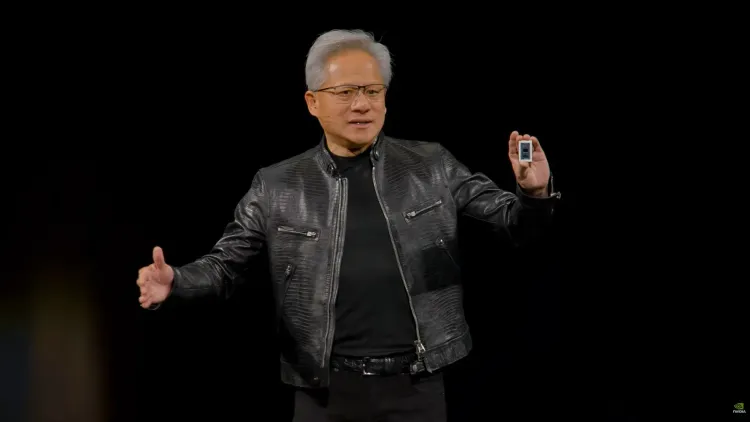
Chip giant Nvidia on Monday, June 1, 2026, announced the RTX Spark, describing it as a 1-petaflop superchip that brings the full CUDA and RTX ecosystem alongside Windows-native AI agents to personal computers, calling the launch 'a new beginning for personal computers.'
Context
In its post, Nvidia described the RTX Spark as combining 1 petaflop of compute performance with the company's established CUDA parallel-computing platform and the RTX graphics and AI architecture. The announcement explicitly ties the chip to Windows-native agents, signalling a push toward AI workloads that run locally on consumer PCs rather than in the cloud.
The framing — 'a new beginning for personal computers' — positions the RTX Spark not as an incremental GPU upgrade but as a platform shift, one that Nvidia says will bring supercomputer-class AI inference directly to desktops and laptops.
Policy Backdrop
Nvidia introduced the CUDA platform in 2006 to extend GPU utility beyond graphics into general-purpose computing and, eventually, AI training. From 2018 onward, the company expanded its RTX architecture to consumer devices, embedding tensor cores and AI-acceleration features such as DLSS into mainstream graphics cards.
The RTX Spark announcement follows a well-documented industry trajectory: capabilities once confined to Nvidia's data-centre systems — such as the DGX line — are progressively migrating to edge and consumer form factors. The broader goal is to reduce dependence on cloud infrastructure for AI inference, cutting latency and recurring costs for end users.
Microsoft, the developer of Windows, has been deepening AI integration across its operating system, making the pairing of a Windows-native agent framework with an Nvidia superchip a strategically coherent move for both companies.
Stakeholders and Impact
PC manufacturers are the most immediate stakeholders, as hardware partners will need to design and certify devices around the RTX Spark silicon before it reaches consumers. AI software developers stand to gain a standardised, high-performance local inference target, potentially accelerating the development of on-device applications that currently require cloud APIs.
For consumer hardware buyers — including a fast-growing segment in India where AI-capable laptops have seen rising demand — a 1-petaflop personal device would represent a significant step up from current mid-range AI PCs. The integration of the full CUDA ecosystem means existing developer tools, libraries, and AI models built for Nvidia hardware would carry over without re-engineering.
What's Next
Industry observers will watch for hardware partner announcements detailing which PC makers will ship RTX Spark-based systems and at what price points. Early developer tooling for the Windows-native agent framework is also expected to surface at upcoming industry events.
The announcement sets up a direct competitive dynamic with rival chip architectures targeting on-device AI, and will test whether Nvidia's software ecosystem advantage — built over two decades through CUDA — can translate as decisively in the consumer PC market as it has in data centres.
Point of View
Using the CUDA software moat as the primary competitive barrier. By tying the chip to Windows-native agents, Nvidia is effectively co-opting Microsoft's OS ecosystem to lock in an AI inference standard at the device level — a move with significant implications for rival chip designers and cloud AI service providers alike. For India's rapidly expanding base of AI-aware enterprise and student laptop buyers, a 1-petaflop local compute device could shift procurement conversations away from cloud-subscription models. The broader policy arc here is one of AI democratisation: as sovereign AI and data-localisation concerns grow globally, on-device inference chips like RTX Spark offer governments and enterprises a technically credible path to reducing dependence on foreign cloud infrastructure.
NationPress
15 Oct 2026
Frequently Asked Questions
What is Nvidia RTX Spark?
Nvidia RTX Spark is a newly announced superchip that delivers 1 petaflop of AI compute performance, integrates the full CUDA and RTX software ecosystem, and supports Windows-native AI agents for personal computers.
What does 1 petaflop mean for a personal computer?
One petaflop equals one thousand trillion floating-point operations per second. Until recently this level of performance was found only in data-centre servers; bringing it to a personal computer chip would enable complex AI models to run locally without a cloud connection.
How does Nvidia RTX Spark differ from existing RTX GPUs?
While existing RTX GPUs already include AI acceleration via tensor cores, the RTX Spark is positioned as a dedicated superchip with a full 1-petaflop rating and explicit support for Windows-native AI agents, suggesting a more integrated, platform-level approach rather than a discrete graphics card.
What is CUDA and why does it matter for RTX Spark?
CUDA is Nvidia's parallel-computing platform, launched in 2006, that allows developers to run AI and scientific workloads on Nvidia GPUs. Its inclusion in RTX Spark means the vast library of existing CUDA-compatible AI tools and models will work on RTX Spark-based PCs without modification.
When will Nvidia RTX Spark PCs be available in India?
Nvidia has not announced specific availability dates or pricing as of June 1, 2026. Hardware partner announcements and developer tool releases are expected at upcoming industry events, after which regional availability details are likely to follow.