Nvidia, Microsoft unveil full-stack agentic AI suite at Build
Synopsis
Nvidia and Microsoft used Microsoft Build to launch a unified, end-to-end agentic AI stack covering Windows PCs, on-prem systems and Azure. Highlights include RTX Spark devices, Claude on GB300 Blackwell Ultra, a 6x faster Fabric Data Warehouse, Nvidia OpenShell in GitHub Copilot and the live Fairwater Wisconsin AI factory validated for Vera Rubin.
Key Takeaways
Nvidia and Microsoft unveiled a full-stack agentic AI suite at Microsoft Build, spanning device, on-prem and cloud layers.
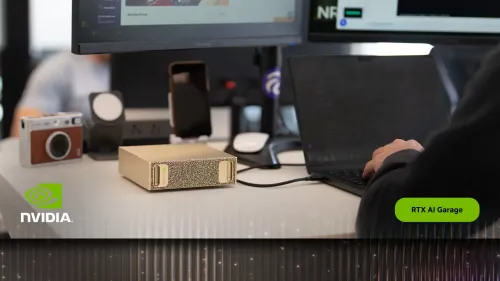
RTX Spark Windows PCs are positioned as hardware purpose-built for personal AI agents.
Anthropic's Claude models will run natively on Nvidia GB300 Blackwell Ultra systems on Azure.
Microsoft Fabric Data Warehouse claims up to 6x faster SQL execution with Nvidia acceleration.
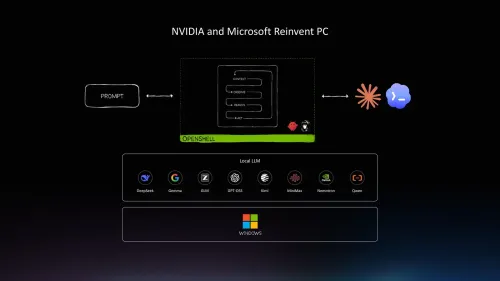
Nvidia OpenShell debuts inside GitHub Copilot as a secure-by-design agent runtime.
The Fairwater Wisconsin AI factory is live and validated for Nvidia's Vera Rubin platform.
Chip giant Nvidia and Microsoft on 3 June 2026 jointly unveiled an end-to-end developer stack for agentic artificial intelligence at the Microsoft Build conference, spanning Windows devices, on-premise systems and the Azure cloud. The corporate announcement, posted from Nvidia's official handle, framed the collaboration as 'one unified stack' with 'every layer accelerated' for developers building autonomous AI agents.
Context
The post listed five headline deliverables. These include RTX Spark, described as Windows PCs 'purpose-built for personal agents'; the availability of Nvidia open models on Microsoft Foundry; and Anthropic's Claude models running natively on Nvidia GB300 Blackwell Ultra systems on Azure.
The companies also flagged a Nvidia-accelerated Microsoft Fabric Data Warehouse delivering 'up to 6x faster SQL execution', the launch of Nvidia OpenShell inside GitHub Copilot as a 'secure-by-design agent runtime', and confirmation that the Fairwater Wisconsin AI factory is live and validated for the Nvidia Vera Rubin platform.
Policy backdrop
The announcement extends a partnership that dates back to the mid-2010s, when Nvidia's CUDA computing platform was first paired with dedicated Azure GPU instances. Microsoft has used successive editions of its annual Build developer conference since 2023 to integrate Nvidia silicon deeper into Windows tooling, the Azure stack and GitHub's developer products.
The latest unveiling continues a now-familiar pattern of hardware-software co-design intended to cover edge devices, enterprise data centres and hyperscale cloud workloads under a single accelerated computing fabric. It also tightens the link between Nvidia's Blackwell generation, announced in 2024, and Microsoft's enterprise AI roadmap.
Stakeholders and impact
The most immediate beneficiaries are AI developers and enterprise IT teams, who gain a uniform toolchain from a Windows laptop to an Azure region. The inclusion of Anthropic's Claude on Nvidia's GB300 Blackwell Ultra servers signals that Microsoft's cloud will host competing frontier model families alongside its own offerings, a notable continuation of multi-model hosting on Azure.
For Indian enterprises and startups, which consume Azure capacity heavily for generative AI projects, the unified stack could simplify procurement decisions across desktop, on-prem and cloud tiers. Developers using GitHub Copilot would also gain access to Nvidia OpenShell, positioned as a secure runtime for agentic workflows that increasingly execute code, browse and call APIs autonomously.
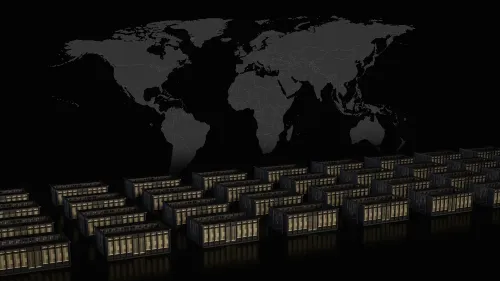
The Fairwater Wisconsin AI factory, cited in the post as validated for Nvidia's next-generation Vera Rubin platform, marks a further expansion of US-located AI capacity. It fits a broader industry trend of locating heavy AI compute inside the United States amid intensifying global competition over semiconductors and cloud infrastructure.
What's next
Industry watchers will track follow-on rollouts of Blackwell-based instances on Azure and the operational ramp at Fairwater, particularly any disclosures around capacity, customer onboarding and benchmarks for the Vera Rubin platform. Future editions of Microsoft Build and Nvidia's GTC developer conference are the likeliest venues for the next set of joint announcements.
For the broader market, the unveiling reinforces an emerging template: a single vendor pairing — in this case Nvidia and Microsoft — offering customers a vertically integrated path from chip to agent. How rival cloud providers and chipmakers respond, and how regulators view the deepening concentration of AI infrastructure, will shape the next phase of the agentic AI race.
Point of View
Where autonomy and tool-use shift workloads from cloud-only inference to a continuum that runs on personal devices, enterprise estates and hyperscale data centres. Hosting Anthropic's Claude on Nvidia's newest Blackwell Ultra silicon inside Azure also signals that multi-model neutrality remains a strategic asset for hyperscalers. For Indian enterprise buyers, the bundling simplifies vendor decisions but deepens dependence on a US-anchored AI stack. The next test will be whether rival chipmakers and clouds can credibly match this vertical integration.
NationPress
21 Oct 2026
Frequently Asked Questions
What did Nvidia and Microsoft announce at Microsoft Build 2026?
They announced an end-to-end developer stack for agentic AI spanning Windows devices, on-prem systems and Azure cloud, including RTX Spark PCs, Nvidia open models on Microsoft Foundry, Claude on GB300 Blackwell Ultra, an accelerated Fabric Data Warehouse, Nvidia OpenShell in GitHub Copilot and the Fairwater Wisconsin AI factory.
Which AI models will run on Nvidia GB300 Blackwell Ultra on Azure?
Anthropic's Claude models will run natively on Nvidia GB300 Blackwell Ultra systems hosted on Microsoft Azure, alongside Nvidia open models available through Microsoft Foundry.
What is the Fairwater Wisconsin AI factory?
It is an AI data centre facility that, according to the announcement, is live and validated for Nvidia's next-generation Vera Rubin platform, extending US-based AI compute capacity.
How does this affect AI developers in India?
Indian developers and enterprises using Azure and GitHub Copilot gain access to a unified Nvidia-accelerated toolchain from Windows devices to cloud, potentially simplifying agentic AI development but increasing reliance on a US-anchored infrastructure stack.