Nvidia, Microsoft Pitch 'Agentic AI Era' at MSBuild Stage
Synopsis
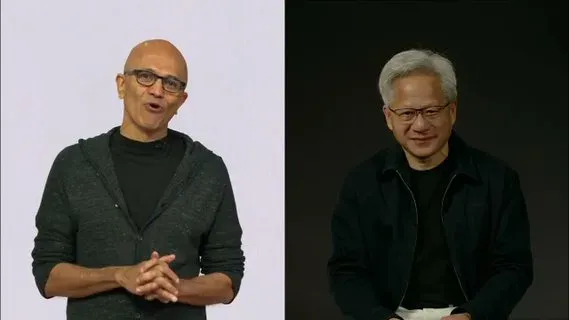
Chip giant Nvidia has announced that chief executive Jensen Huang joined Microsoft's Satya Nadella at MSBuild, dialling in from Taipei, to lay out a shared roadmap for the 'agentic AI era' spanning Windows devices and hyperscale AI factories, deepening a decade-long hardware-software alliance now central to the global AI stack.
Key Takeaways
Nvidia framed its MSBuild appearance as marking the arrival of the 'agentic AI era'.
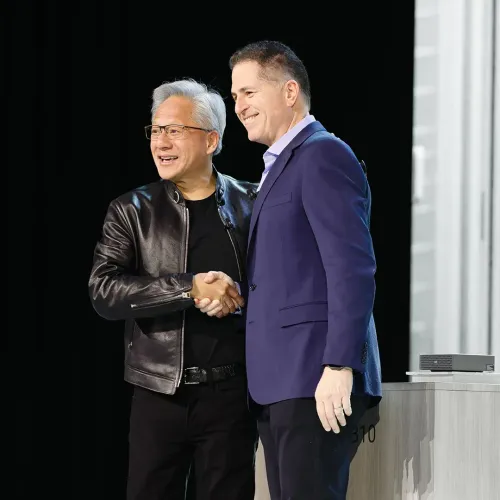
CEO Jensen Huang joined Microsoft's Satya Nadella on stage, with Nvidia datelining the post from Taipei.
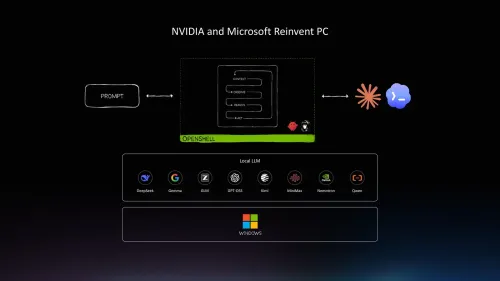
The pitch spans Windows devices at the edge to large-scale AI factories in the cloud.
The partnership builds on Nvidia's CUDA platform and Microsoft's Azure-OpenAI investments.
Enterprise developers and cloud providers are the primary stakeholders flagged by the messaging.
Future Microsoft Build and Ignite events are expected to detail concrete agent features.
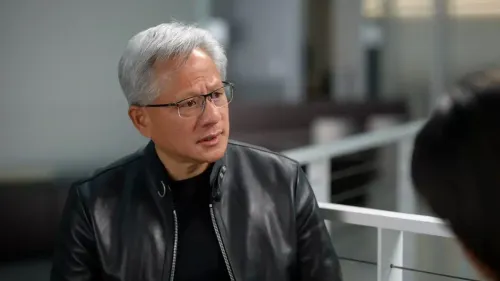
Chip giant Nvidia has declared that the 'agentic AI era is here', announcing that founder-chief executive Jensen Huang joined Microsoft chief executive Satya Nadella at #MSBuild to outline a joint roadmap spanning Windows devices and large-scale AI infrastructure. The corporate post, datelined from Taipei on 3 June 2026, frames the partnership as a full-stack push 'from Windows devices to AI factories at scale'.
Context
In its post, Nvidia wrote: 'The agentic AI era is here. From Taipei, Jensen Huang joined @satyanadella at #MSBuild to show how NVIDIA and @Microsoft are building it together, from Windows devices to AI factories at scale.' The accompanying link points viewers to a recording of the conversation.
The phrase 'agentic AI' refers to systems that can autonomously plan, reason and execute multi-step tasks rather than simply respond to a single prompt. The framing signals a shift in the industry's product narrative from chat-style assistants toward software agents that operate across applications, devices and cloud back-ends.
Policy backdrop
The Nvidia-Microsoft alignment has deep roots. Nvidia's CUDA platform, launched in 2006, made GPUs broadly programmable and seeded later integrations with Microsoft's Azure cloud. Microsoft's multi-billion-dollar investment in OpenAI in 2019 further locked in demand for Nvidia accelerators, whose clusters power some of the world's largest model-training runs.
The Taipei dateline is also significant. Taiwan sits at the centre of the global semiconductor supply chain, and Nvidia's senior leadership has been a frequent presence at the island's electronics events, reflecting how tightly advanced AI hardware is tied to a narrow set of fabrication partners.
Stakeholders and impact
For enterprise developers, the joint pitch suggests that agent-building tools will straddle local Windows endpoints and Azure-hosted GPU pools, lowering the friction of moving prototypes into production. For cloud providers, the messaging reinforces Microsoft's positioning as the most tightly integrated hyperscaler for Nvidia silicon, even as rival platforms court the same chips.
The reference to 'AI factories at scale' echoes Huang's repeated characterisation of modern data centres as industrial-grade producers of intelligence, where racks of GPUs convert electricity and data into tokens. Pairing that language with 'Windows devices' is a deliberate attempt to stretch the same narrative down to the laptop and desktop tier.
For India's developer base — one of the largest user populations for both Windows and Azure — the announcement points to a near-term expansion of agent-capable tooling that local enterprises, startups and system integrators will need to evaluate. Indian IT services firms, in particular, are likely to read it as a signal to deepen capability building around agent orchestration on the Microsoft stack.
What's next
Concrete product detail will be watched at subsequent Microsoft developer events, including future editions of Build and Ignite, where Windows agent features and Azure AI-factory capacity updates are typically disclosed. Nvidia's own keynote calendar, anchored around its GTC conferences, will set the cadence for new accelerator generations underpinning the same roadmap.
The broader implication is that the competitive frontier in AI is shifting from raw model benchmarks to the plumbing that lets agents act reliably across devices and clouds. If the Nvidia-Microsoft pairing delivers on that promise, it will tighten an already dominant duopoly at the base of the global AI stack — with downstream consequences for pricing, vendor choice and sovereign AI ambitions in markets including India.
Point of View
And that the Nvidia-Microsoft stack is the default substrate for that shift. By staging Huang's appearance from Taipei, Nvidia also subtly reminds the market that the supply chain underwriting this vision still routes through one island. For policymakers in India and elsewhere chasing sovereign AI compute, the messaging sharpens the dependency question even as it expands the developer toolkit.
NationPress
18 Oct 2026
Frequently Asked Questions
What did Nvidia announce at MSBuild?
Nvidia said its chief executive Jensen Huang joined Microsoft's Satya Nadella at MSBuild to outline how the two companies are jointly building the 'agentic AI era' across Windows devices and large-scale AI factories.
Why did Jensen Huang appear from Taipei?
Taipei is the capital of Taiwan, a central hub for the semiconductor supply chain that produces the advanced chips underpinning Nvidia's AI accelerators, and a frequent stop for Nvidia leadership.
How are Nvidia and Microsoft connected?
The two firms have long co-developed hardware and software, with Nvidia GPUs powering Microsoft's Azure cloud and the training of large models tied to Microsoft's investment in OpenAI.
What does this mean for Indian developers?
Indian developers and IT services firms using Windows and Azure can expect expanded agent-building tools and infrastructure, making agent orchestration on the Microsoft-Nvidia stack a growing skill area.