Nvidia CEO Jensen Huang on AI as a productivity lever
Synopsis
Chip giant Nvidia posted remarks by CEO Jensen Huang arguing that AI gives people greater leverage to do their best work, framing AI assistants as tools that help enterprise teams move faster, think bigger, and tackle challenges once out of reach.
Key Takeaways
Nvidia's official corporate account posted on 24 May 2026 , sharing CEO Jensen Huang's perspective on AI as a human productivity multiplier.
Huang argues AI assistants help teams 'move faster, think bigger and take on challenges that were once out of reach.' Nvidia's CUDA platform, launched in 2006 , laid the software foundation that underpins today's GPU-accelerated AI ecosystem.
The productivity-first framing positions Nvidia alongside Microsoft , Google , and OpenAI in the enterprise AI assistant market.
Enterprise teams, software developers, and AI researchers — including those in India's fast-growing tech sector — are the primary stakeholders of this messaging.
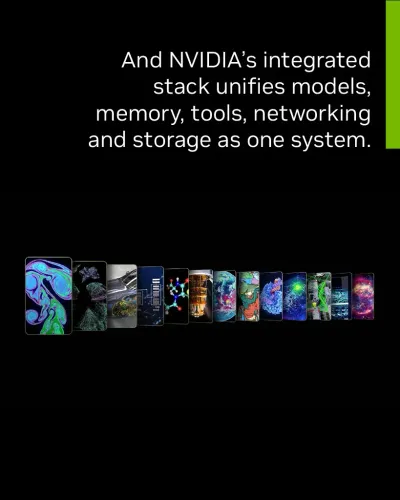
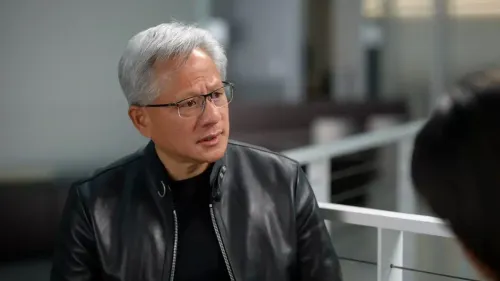
Chip giant Nvidia posted on Saturday, 24 May 2026, arguing that artificial intelligence gives people greater leverage to do their best work, sharing remarks by chief executive Jensen Huang on how AI assistants can help teams move faster, think bigger, and take on challenges once considered out of reach.
Context
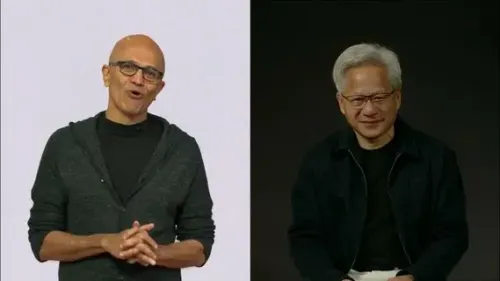
The post, published on Nvidia's official corporate account, carries the company's institutional voice. It references a video in which Huang elaborates on the role of AI assistants in expanding the scope of what enterprise teams can accomplish. The framing is explicitly additive: AI as a force multiplier for human capability, not a substitute for it.
Nvidia describes the shift in plain terms — AI tools help teams 'move faster, think bigger and take on challenges that were once out of reach.' The message is consistent with the company's long-running narrative that its hardware and software platforms exist to amplify human productivity.
Policy Backdrop
Nvidia has been central to the infrastructure of modern AI since its 2006 introduction of the CUDA programming platform, which gave developers a software foundation for GPU-accelerated computing. That foundational bet paid off dramatically after the 2022–2023 generative AI boom, when demand for Nvidia's accelerators surged across cloud providers, research institutions, and enterprises worldwide.
The company's corporate messaging has consistently emphasised human-AI collaboration — a positioning that distinguishes it from debates around automation and job displacement. By foregrounding productivity gains and expanded task scope, Nvidia aligns itself with the more optimistic strand of enterprise AI adoption discourse.
Stakeholders and Impact
The primary audience for this message is enterprise decision-makers, software developers, and AI researchers — the communities that sit at the intersection of Nvidia's hardware sales and the broader AI tooling market. For Indian technology firms, which have rapidly expanded AI adoption across sectors including banking, healthcare, and logistics, the framing has direct relevance.
Nvidia's positioning also occurs alongside parallel efforts by Microsoft, Google, and OpenAI to embed AI assistants into workplace software. Each of these companies competes, in part, on the same productivity narrative that Huang articulates here, making Nvidia's voice in this conversation strategically significant beyond hardware sales alone.
For enterprise teams in India — where IT services exports and domestic digital transformation both depend heavily on developer productivity — the promise of AI-assisted acceleration carries particular weight. Indian technology sector stakeholders will be watching how Nvidia's software and ecosystem investments translate into tangible tooling for local developers.
What's Next
Nvidia's next scheduled developer conference or quarterly earnings call is expected to provide more granular data on AI software tooling adoption and enterprise metrics. Investors and enterprise customers alike will be looking for specifics on how the productivity gains Huang describes are being measured and delivered across Nvidia's platform ecosystem.
As AI assistant integration deepens across global workplaces, the competition to define the dominant productivity narrative — and the underlying infrastructure that powers it — will only intensify. Nvidia's consistent emphasis on human leverage, rather than replacement, positions it carefully within that debate.
Point of View
Reinforcing the company's long-held narrative that AI expands human capability rather than displacing it. At a moment when AI-driven automation anxiety is rising across global labour markets, this framing is deliberate and politically useful for a company selling the infrastructure that powers those same systems. For India, where enterprise AI adoption is accelerating rapidly, Huang's message lands in a context where productivity gains and workforce augmentation are central to both corporate strategy and government digital ambition. The consistency of this messaging across Nvidia's earnings calls, developer conferences, and social media signals a coherent communications strategy, not an off-the-cuff remark.
NationPress
9 Oct 2026
Frequently Asked Questions
What did Nvidia CEO Jensen Huang say about AI and productivity?
Jensen Huang said AI gives people more leverage to do their best work, arguing that AI assistants help teams move faster, think bigger, and take on challenges that were once out of reach.
How is Nvidia involved in AI development?
Nvidia designs GPUs and AI infrastructure that power the majority of AI training and inference workloads globally. Its CUDA platform, launched in 2006, is the foundational software layer for GPU-accelerated AI.
Is Nvidia saying AI will replace jobs?
No. Nvidia's corporate messaging explicitly frames AI as a productivity multiplier that expands what human teams can accomplish, rather than a replacement for workers.
How does Nvidia's AI message affect Indian tech companies?
Indian IT firms and enterprises adopting AI tools rely heavily on Nvidia's GPU infrastructure. Huang's productivity framing is directly relevant to India's technology sector, where AI-assisted developer tools are increasingly central to competitiveness.
What should I watch for next from Nvidia on AI tools?
Nvidia's next developer conference or quarterly earnings call is expected to provide updates on AI software tooling adoption and enterprise metrics, offering more detail on the productivity gains Huang references.