Nvidia, Dell Unveil Major AI Factory Update for Enterprise Agents
Synopsis
Nvidia and Dell Technologies have jointly updated the Dell AI Factory with NVIDIA, their full-stack enterprise AI platform. CEO Jensen Huang and Michael Dell unveiled the expansion, which now spans deskside workstations to large data-centre racks running NVIDIA Vera Rubin architecture, targeting the next wave of autonomous AI agents in enterprise.
Key Takeaways
Jensen Huang and Michael Dell jointly unveiled a major update to the Dell AI Factory with NVIDIA platform in May 2026.
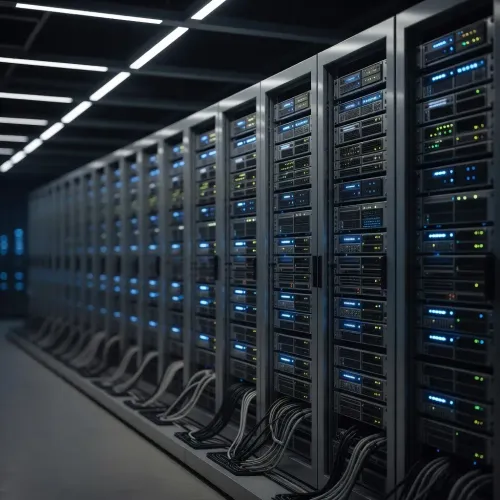
The platform now spans from deskside workstations to massive data-centre racks running the NVIDIA Vera Rubin architecture.
The Dell AI Factory with NVIDIA is designed as a full-stack solution to accelerate deployment of autonomous AI agents in enterprise settings.
The partnership builds on an initial 2024 launch that used Hopper-generation GPUs, now extending to the newer Vera Rubin generation.
Rival OEMs including HPE , Lenovo , and Supermicro have announced similar NVIDIA-based AI factory alliances, cementing this as the dominant enterprise AI go-to-market model.
Availability timelines and pricing for Vera Rubin-based Dell racks are yet to be confirmed publicly.
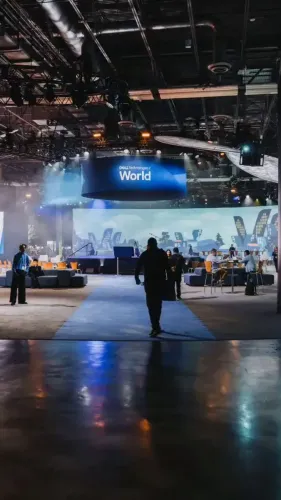
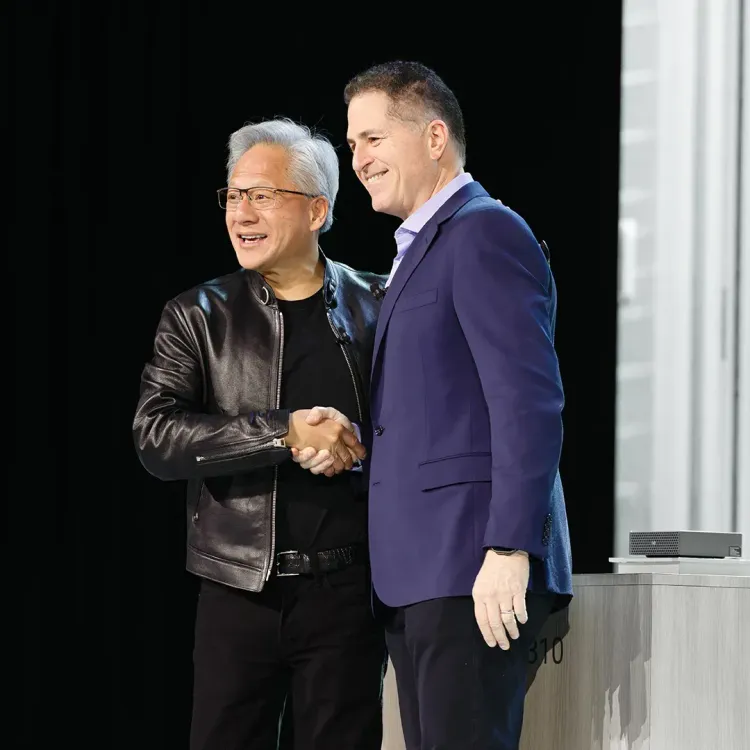
Chip giant Nvidia announced on Thursday, 22 May 2026 that its chief executive Jensen Huang joined Dell Technologies founder and CEO Michael Dell on stage to unveil a significant update to the Dell AI Factory with NVIDIA, a full-stack platform designed to accelerate the deployment of autonomous AI agents across enterprise environments. The announcement spans hardware from deskside workstations all the way to massive data-centre racks powered by NVIDIA Vera Rubin architecture.
Context
The Dell AI Factory with NVIDIA is a joint reference architecture that combines Dell Technologies servers and storage with NVIDIA's full-stack AI software and silicon, offering enterprises a turnkey pathway to deploy generative and agentic AI without deep in-house infrastructure expertise. In its post, Nvidia described the platform as 'the full-stack platform powering the next wave of autonomous AI agents in the enterprise.' The latest update marks a step beyond the initial 2024 launch, which was built on Hopper-generation GPUs, now extending to the newer Vera Rubin architecture for data-centre-scale deployments.
The two chief executives appearing together signals the strategic weight both companies are placing on enterprise AI adoption. Jensen Huang has led NVIDIA since 1993, steering it from a gaming GPU maker to the dominant force in AI accelerator infrastructure. Michael Dell has repositioned Dell Technologies in recent years as a premier systems integrator for corporate AI workloads, embedding NVIDIA chips across its server and workstation portfolio.
Policy Backdrop
The announcement reflects a broader industry shift in which hardware original equipment manufacturers and chip designers are co-engineering pre-integrated AI stacks that span the full compute spectrum — from edge workstations to exascale data-centre racks. This reduces deployment friction for enterprises that lack specialist AI infrastructure teams. Rival alliances from HPE, Lenovo, and Supermicro — all leveraging successive NVIDIA architectures — underscore that this model is becoming the standard go-to-market approach for enterprise AI.
For Indian enterprises, which are rapidly scaling AI pilots into production workloads, pre-validated reference architectures such as the Dell AI Factory with NVIDIA lower the barrier to deploying agentic AI at scale. India's growing data-centre investment cycle, backed by both domestic conglomerates and global hyperscalers, makes such turnkey platforms particularly relevant.
Stakeholders and Impact
Enterprise IT teams and corporate AI adopters stand to benefit most directly from the updated platform. By packaging NVIDIA's software stack — including inference runtimes, orchestration tools, and model libraries — with Dell's server and storage hardware, the factory model removes the need for organisations to source and integrate components independently. The inclusion of Vera Rubin-based data-centre racks signals that the platform is built to handle the compute demands of large-scale autonomous agent deployments, not merely inferencing smaller models.
For Dell, the partnership deepens its differentiation in a competitive enterprise server market. For NVIDIA, embedding its full stack into a major OEM's reference architecture accelerates adoption of its latest silicon generation among corporate customers who may not purchase directly from hyperscale cloud providers.
What's Next
Availability timelines and pricing for Vera Rubin-based Dell racks have not yet been confirmed. Customer case studies and deeper technical disclosures are expected at upcoming industry events, with Dell Technologies World and NVIDIA GTC later in 2026 likely venues. As autonomous AI agents move from experimental to mission-critical status inside enterprises, the pace at which platforms like the Dell AI Factory with NVIDIA can be provisioned and scaled will increasingly determine competitive advantage for corporate adopters worldwide.
Point of View
Much like traditional server refresh programmes. For NVIDIA, embedding Vera Rubin into a major OEM's reference architecture is a calculated move to capture enterprise spend before rivals can close the silicon gap. For Indian enterprises accelerating AI adoption, turnkey factory models lower the entry barrier significantly, making this announcement more consequential than a typical product refresh. The broader pattern of chip designers co-owning the go-to-market stack with OEMs signals that the AI infrastructure market is consolidating around a handful of vertically integrated alliances.
NationPress
7 Oct 2026
Frequently Asked Questions
What is the Dell AI Factory with NVIDIA?
The Dell AI Factory with NVIDIA is a joint reference architecture that combines Dell Technologies servers and storage with NVIDIA's full-stack AI software and chips, offering enterprises a pre-validated, turnkey platform to deploy generative and agentic AI workloads without building custom infrastructure from scratch.
What is NVIDIA Vera Rubin architecture?
NVIDIA Vera Rubin is a next-generation GPU and compute architecture from NVIDIA, succeeding the Hopper generation, designed for large-scale AI training and inference in data-centre environments. It is now being integrated into Dell AI Factory racks as part of the May 2026 update.
Why did Jensen Huang and Michael Dell appear together?
Jensen Huang, CEO of NVIDIA, and Michael Dell, CEO of Dell Technologies, appeared on stage together to jointly announce a major update to their shared Dell AI Factory platform, signalling the strategic importance both companies place on enterprise AI infrastructure.
How does the Dell AI Factory with NVIDIA benefit Indian enterprises?
For Indian enterprises scaling AI from pilot to production, the Dell AI Factory with NVIDIA reduces deployment complexity by offering a pre-integrated hardware and software stack, eliminating the need to source and validate components independently — particularly relevant as India's data-centre investment cycle accelerates.
Who are NVIDIA's main competitors in enterprise AI factory alliances?
HPE, Lenovo, and Supermicro have all announced similar enterprise AI factory alliances leveraging successive NVIDIA architectures, making pre-integrated AI stacks the dominant model in the enterprise server market.