KTR Credits KCR for Telangana's World Bank Income Rise
Synopsis
BRS working president K. T. Rama Rao cited a reported World Bank income classification on 8 July 2026 to argue that former CM KCR's decade of governance — anchored by TS-iPASS, Kaleshwaram, Mission Kakatiya, and Rythu Bandhu — drove Telangana's rise, while demanding CM Revanth Reddy stop calling the state bankrupt.
Key Takeaways
BRS working president K.
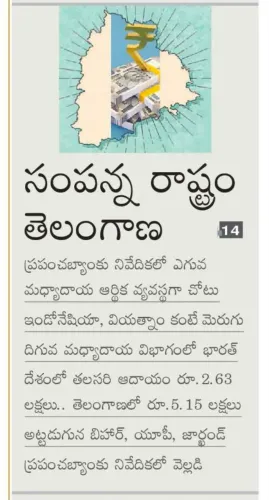
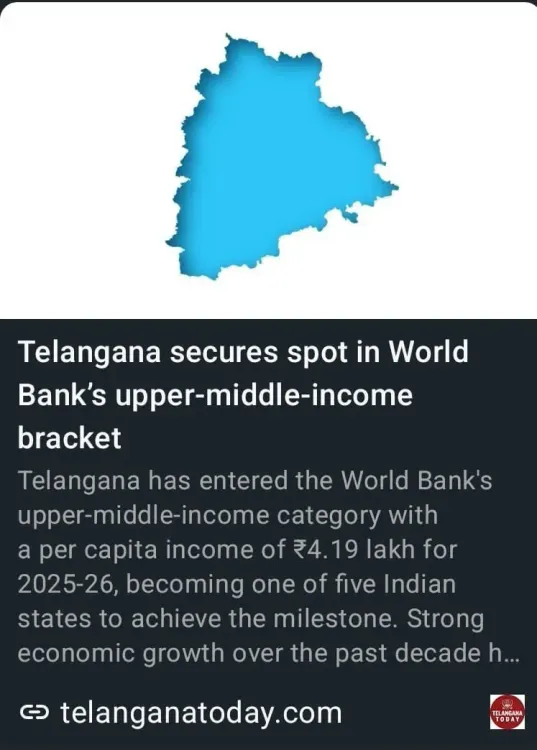
Rama Rao posted on 8 July 2026 crediting KCR with Telangana's reported rise to a World Bank Upper-Middle Income benchmark, citing a per capita income of $5,407 .
Telangana was formed in June 2014 from Andhra Pradesh without the legacy infrastructure advantages of older states.
KTR highlighted three flagship schemes — TS-iPASS (2015), Mission Kakatiya (2015), and Rythu Bandhu (2018) — alongside the Kaleshwaram Lift Irrigation Project as drivers of growth.
KTR directly challenged CM Revanth Reddy to stop describing Telangana as financially distressed, framing it as a cover for broken promises.
The World Bank income classification cited by KTR is formally a country-level metric; its application to Indian states is a political and competitive framing rather than an official designation.
The debate is expected to intensify around the next state budget and forthcoming RBI or NITI Aayog state-level income assessments.
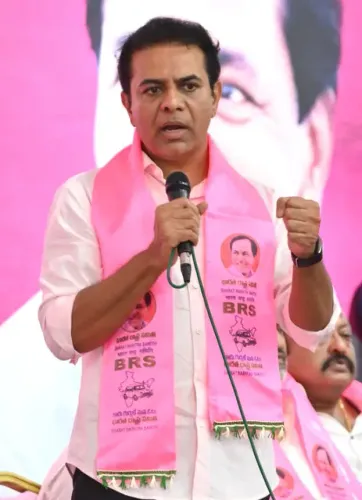
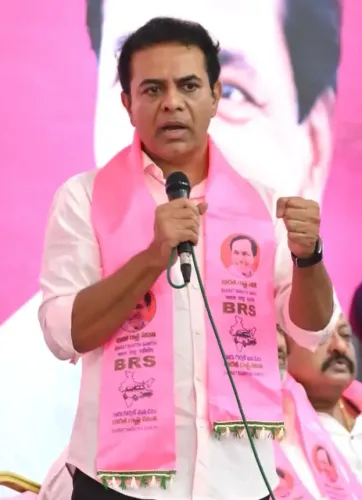
BRS working president K. T. Rama Rao on Wednesday, 8 July 2026, invoked a reported World Bank classification to argue that former Chief Minister K. Chandrashekar Rao's decade-long governance transformed Telangana from a neglected region into one of India's higher-income states, while simultaneously demanding that incumbent Chief Minister Revanth Reddy stop describing the state as financially distressed.
Context
KTR's post claims that Telangana has been placed in a World Bank Upper-Middle Income category among Indian states, citing a per capita income figure of $5,407. The assertion is framed as external, global validation of the developmental record built under KCR, who led the state from its formation in June 2014 until the BRS lost power in the 2023 assembly elections. KTR wrote that the state moved 'from decades of neglect to earning a place among India's World Bank Upper-Middle Income category states,' crediting 'visionary leadership, bold reforms, and transformative initiatives.'
The post singles out three flagship programmes: TS-iPASS, Kaleshwaram Project, and Mission Kakatiya, as well as the farmer income-support scheme Rythu Bandhu. It closes with a pointed political message directed at the Congress-led government: 'CM Revanth Reddy must stop portraying Telangana as a bankrupt state to justify broken promises.'
Policy Backdrop
Telangana was carved out of Andhra Pradesh in June 2014, inheriting limited legacy infrastructure compared with older, more industrialised states. The BRS government responded with a cluster of targeted reforms. TS-iPASS, launched in 2015, created a single-window industrial clearance mechanism designed to compress approval timelines and attract manufacturing investment.
Mission Kakatiya, also initiated in 2015, set out to restore thousands of minor irrigation tanks that had fallen into disrepair, aiming to stabilise rain-fed agriculture. Rythu Bandhu, introduced in 2018, provided direct seasonal cash transfers to farmers on a per-acre basis, becoming one of the more widely discussed farm-income support models in the country. The Kaleshwaram Lift Irrigation Project was positioned as a transformative infrastructure investment to bring water to drought-prone districts.
Stakeholders and Impact
The debate over Telangana's fiscal health and growth record directly affects farmers dependent on Rythu Bandhu continuity, industrial investors who entered the state under TS-iPASS incentives, and the broader state exchequer, whose debt profile has become a point of political contention between BRS and the ruling Congress. Sub-national benchmarking against World Bank income categories has gained traction across Indian states as a competitive governance signal, even though such classifications are formally applied to sovereign nations rather than states.
For the BRS, now in opposition, KTR's framing serves to keep the party's development narrative alive ahead of future electoral cycles. For the Congress government under CM Revanth Reddy, the post represents a direct challenge to its fiscal-stress messaging, which it has used to explain delays in fulfilling pre-election guarantees.
What's Next
The political contest over Telangana's economic record is likely to intensify around the next state budget presentation and any fresh assessments from bodies such as the RBI or NITI Aayog that update state-level per-capita income rankings. Whether the specific World Bank classification cited by KTR is formally acknowledged in any official report will be closely watched, as it forms the empirical spine of his argument. The Congress government's response to this post, and whether it releases counter-data on state debt levels, will shape the next round of this ongoing rivalry over credit for Telangana's growth story.
Point of View
Performer, Transformer' is designed as a durable slogan for the BRS campaign cycle ahead. The move signals that the economic record, not just welfare schemes, will be the central battleground in Telangana's next electoral contest.
NationPress
8 Jul 2026
Frequently Asked Questions
What did KTR say about Telangana's World Bank ranking?
KTR claimed that the World Bank has placed Telangana in an Upper-Middle Income category among Indian states, citing a per capita income of $5,407, and attributed this to KCR's governance during the state's first decade.
What is TS-iPASS and why is it significant?
TS-iPASS is Telangana's single-window industrial clearance system launched in 2015 to streamline project approvals and attract investment; KTR cited it as one of the bold reforms behind the state's economic rise.
Why is KTR criticising CM Revanth Reddy?
KTR accused CM Revanth Reddy of portraying Telangana as a bankrupt state in order to justify unfulfilled election promises, arguing that the state's growth record contradicts any such characterisation.
What is Rythu Bandhu and who introduced it?
Rythu Bandhu is a direct income-support scheme for farmers that provides seasonal cash transfers on a per-acre basis; it was introduced by the BRS government under KCR in 2018.
Is the World Bank Upper-Middle Income label officially applied to Indian states?
World Bank income classifications are formally applied to sovereign nations, not sub-national states; KTR's use of the label in the context of Telangana reflects a political benchmarking argument rather than an official World Bank designation of the state.