Jal Shakti Minister Paatil Reviews Godavari-Kaveri Link Project
Synopsis
Union Jal Shakti Minister C. R. Paatil reviewed the Godavari-Kaveri Link Project on 8 July 2026 alongside Ministers Pralhad Joshi and G. Kishan Reddy. Described as South India's first proposed inter-basin river link, the project aims to bolster irrigation, drinking water access, and inter-state water cooperation under PM Modi's guidance.
Key Takeaways
Paatil , Union Jal Shakti Minister, chaired a review of the Godavari-Kaveri Link Project on 8 July 2026 .
The project is described as South India's first proposed inter-basin river linking initiative and a priority under the National River Linking Programme .
Union Ministers Pralhad Joshi and G.
Kishan Reddy were present at the review meeting.
The National Water Development Agency , set up in 1982 , has been the nodal body for inter-basin water transfer feasibility studies.
The Ken-Betwa Link Project , approved in 2021 , is the first project under the revived interlinking programme and serves as a reference model.
Key next steps include state-level consultations, detailed project reports, and environmental and tribal affairs clearances.
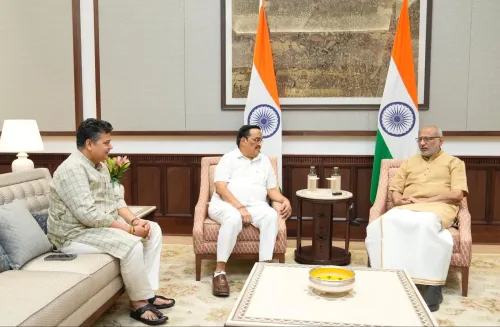
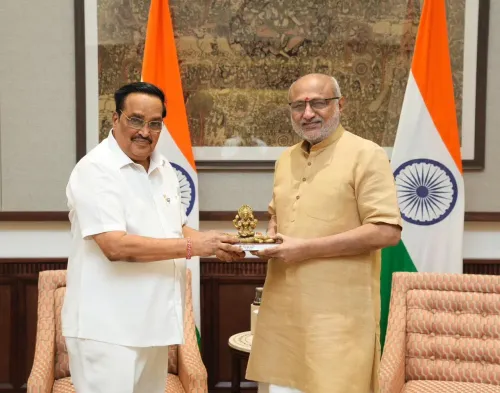
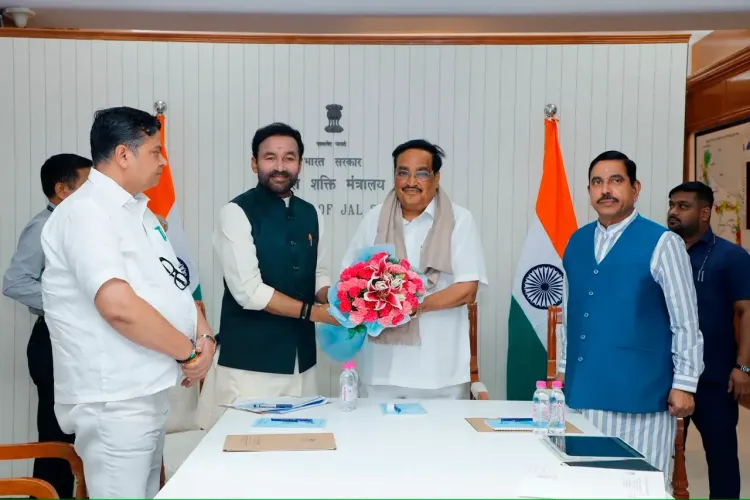
Union Jal Shakti Minister C. R. Paatil chaired a high-level review of the Godavari-Kaveri Link Project on Wednesday, 8 July 2026, describing it as the first proposed inter-basin river linking initiative in South India and one of the priority projects under the National River Linking Programme.
Context
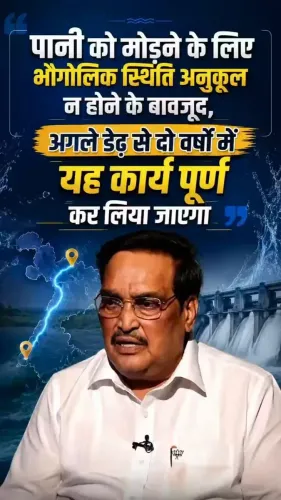
Posting on X, Minister Paatil wrote — 'आज गोदावरी–कावेरी लिंक परियोजना के विभिन्न पहलुओं की समीक्षा की' ('Today I reviewed various aspects of the Godavari-Kaveri Link Project') — and called it a critical initiative to strengthen inter-state cooperation, water security, irrigation, and drinking water availability. He expressed confidence that, under the guidance of Prime Minister Narendra Modi and with the cooperation of all concerned states, the project would establish 'a new chapter in the country's water management.'
The review meeting was attended by Union Minister Pralhad Joshi and Union Minister G. Kishan Reddy, signalling a multi-ministry focus on advancing the peninsular river-linking agenda.
Policy Backdrop
The idea of interlinking India's rivers dates to a National Perspective Plan formulated in 1980, which identified priority links across both Himalayan and peninsular river systems. The National Water Development Agency (NWDA), established in 1982, was tasked with examining the technical and economic feasibility of inter-basin water transfers.
The current government revived the programme with fresh momentum: the Ken-Betwa Link Project received cabinet approval in 2021 as the first project to be executed under the renewed interlinking drive. The Godavari-Kaveri link represents the peninsular component of that broader national ambition, aimed at transferring surplus water from the Godavari basin to the water-deficit Kaveri basin across southern states.
Stakeholders and Impact
The project has direct implications for farmers and urban populations across multiple southern states that depend on the Godavari and Kaveri river systems for irrigation and drinking water. Proponents argue that channelling surplus Godavari flows southward could ease chronic water stress in the Kaveri delta, which has been the flashpoint of prolonged inter-state disputes.
At the same time, the project requires coordinated consent and cooperation from the states through which the link canal would pass — a politically sensitive process given the history of river-water sharing disagreements in peninsular India. Clearances from environment and tribal affairs ministries will also be critical milestones before construction can begin.
What's Next
The immediate priority following the review will be advancing state-level consultations and finalising detailed project reports through the NWDA. Environmental and forest clearances, alongside assessments of impact on tribal communities in the project corridor, are expected to be among the most closely watched procedural steps.
With the Ken-Betwa project serving as a live test case for the interlinking programme's implementation capacity, progress on the Godavari-Kaveri link will be a key indicator of how quickly the government can translate peninsular river-linking ambitions into ground-level action.
Point of View
Accelerating visibility on southern water infrastructure also carries electoral resonance in states where water stress is a perennial voter concern. Whether this review translates into a formal DPR timeline or remains at the consultative stage will be the real test of momentum.
NationPress
7 Oct 2026
Frequently Asked Questions
What is the Godavari-Kaveri Link Project?
The Godavari-Kaveri Link Project is South India's first proposed inter-basin river linking initiative, designed to transfer surplus water from the Godavari river basin to the water-deficit Kaveri basin to support irrigation and drinking water needs across southern states.
Who attended the Godavari-Kaveri Link Project review meeting in July 2026?
The review was chaired by Union Jal Shakti Minister C. R. Paatil and was also attended by Union Ministers Pralhad Joshi and G. Kishan Reddy.
What is the National River Linking Programme?
The National River Linking Programme is a central government initiative to connect Himalayan and peninsular rivers to improve water availability, irrigation, and flood management across India. It traces its origins to a National Perspective Plan formulated in 1980.
What is the status of river interlinking projects in India?
The Ken-Betwa Link Project, approved by the cabinet in 2021, is the first project to move toward execution under the revived interlinking programme. The Godavari-Kaveri link is at the review and feasibility stage, with detailed project reports and state consultations yet to be finalised.
Which states are affected by the Godavari-Kaveri Link Project?
The project involves multiple southern states that share the Godavari and Kaveri river basins. Inter-state cooperation and consent from these states is a prerequisite for the project's advancement, alongside environmental and tribal affairs clearances.