Nvidia unveils enterprise agent stack toolkit, Huang explains
Synopsis
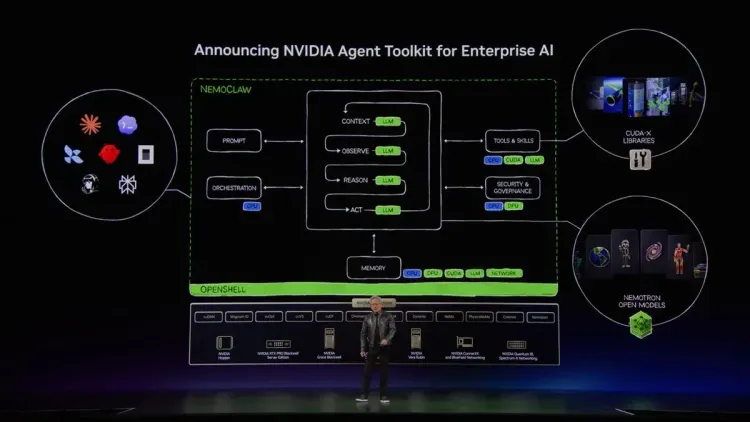
Nvidia has outlined a full enterprise agent stack, with chief executive Jensen Huang explaining how models, orchestration, skill-equipped tools and a secure runtime fit together. The company is pitching the bundle as a reference toolkit for businesses building production AI agents beyond standalone large language models.
Key Takeaways
Nvidia posted its enterprise agent stack framing on June 3, 2026 via its official account.
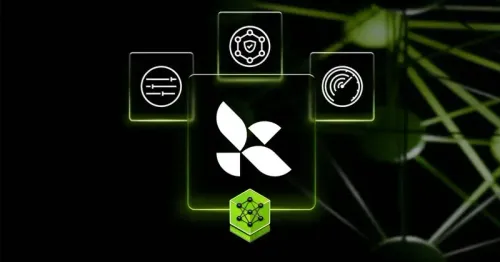
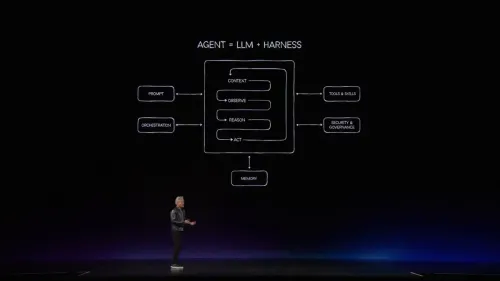
Chief executive Jensen Huang outlines four layers: models, orchestration, tools with skills, and a secure runtime.
The company brands the bundle as the Nvidia toolkit for agents.
The move extends Nvidia's software push that began with CUDA in 2006 and Nvidia AI Enterprise in 2021.
Target users are enterprise developers and AI infrastructure teams in large organisations.
Pricing, release timing and specific new components are not detailed in the post.
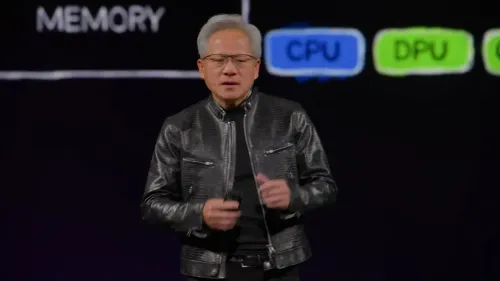
Chip giant Nvidia on June 3, 2026 publicly outlined what its chief executive Jensen Huang describes as the full enterprise stack required to build artificial intelligence agents, framing the offering as a toolkit that combines models, orchestration, tools and a secure runtime. The post, shared from the company's official handle, accompanied a video walkthrough by Huang and positioned the package as Nvidia's reference blueprint for businesses moving beyond standalone large language models.
'Agents need more than a model,' the post stated, adding that Huang 'breaks down the enterprise agent stack: models, orchestration, tools with skills, and a secure runtime to hold it all together.' The company called the bundle 'the NVIDIA toolkit for agents' and linked to a longer explainer.
Context
The announcement crystallises a shift the industry has been signalling for more than a year: that production-grade AI agents require far more than a powerful base model. Orchestration software routes tasks between models and external systems, a tools-with-skills layer lets agents call functions and APIs, and a secure runtime enforces guardrails on what the agent can read, write or execute.
Nvidia's framing groups these components into a single stack narrative under its brand, a packaging move that follows years of incremental software releases layered atop its GPU hardware.
Policy backdrop
The company has steadily built a software moat around its silicon. Nvidia introduced the CUDA programming platform in 2006 to enable general-purpose GPU computing, which became the foundation for later AI acceleration tools used across research and industry.
In 2021, the company launched the Nvidia AI Enterprise software suite to support secure, scalable deployment of AI workloads in corporate data centres. The new agent toolkit extends that lineage upward in the stack, targeting the workflow layer where enterprise customers increasingly want plug-and-play building blocks rather than bespoke integration projects.
Stakeholders and impact
The primary audience is enterprise developers and AI infrastructure teams inside large corporations, banks, manufacturers and cloud customers that have committed sizeable capital expenditure to AI build-outs. For these buyers, the appeal of a vendor-curated stack is reduced integration risk and a clearer support path when multi-component agent systems fail in production.
For competitors, the move sharpens the contest at the software layer. Independent orchestration frameworks, model providers and security vendors now face a reference architecture endorsed by the dominant GPU supplier. Cloud platforms that resell Nvidia hardware will likely have to decide how tightly to align with the toolkit versus their own agent offerings.
The post itself does not detail pricing, availability windows or which specific components are new versus rebranded. Nvidia has historically rolled out such stack updates incrementally through its developer programmes.
What's next
Watchers will look to upcoming Nvidia GTC developer events for granular updates on agent runtime components, integration partners and case studies from early enterprise adopters. Disclosures on how the secure runtime handles credentials, tool-permission scoping and audit logging will be central for regulated sectors such as financial services and healthcare.
The broader pattern is unmistakable: technology firms are converging on composite agent architectures rather than monolithic models, and infrastructure vendors are racing to own the layers that sit between the chip and the application. Nvidia's toolkit pitch is a clear statement that the company intends to compete not only on hardware throughput but on the surrounding software fabric that determines whether enterprise agents actually ship.
Point of View
The company is trying to set the reference architecture that customers, partners and rivals will be measured against. It fits a familiar playbook: extend dominance in silicon by owning more of the software stack above it, much as CUDA did for accelerated computing. The real test will be whether the secure runtime and orchestration components prove sticky in regulated enterprises, or whether buyers continue to mix and match best-of-breed tools.
NationPress
21 Oct 2026
Frequently Asked Questions
What is the Nvidia agent toolkit?
It is Nvidia's bundled framework for building enterprise AI agents, covering models, orchestration, tools with skills and a secure runtime, as outlined by chief executive Jensen Huang in a company post on June 3, 2026.
Why does Jensen Huang say agents need more than a model?
Because production agents must plan tasks, call external tools and run safely, which requires orchestration, a tools-and-skills layer and a secure runtime in addition to the underlying language model.
How does the agent toolkit relate to Nvidia AI Enterprise?
It builds on Nvidia AI Enterprise, the software suite launched in 2021 for secure, scalable AI deployment, extending Nvidia's stack upward into the agent workflow layer.
Who are the main users of the Nvidia agent stack?
Enterprise developers and AI infrastructure teams in large corporations, cloud customers and regulated industries that are building production agent systems on Nvidia hardware.
Where can details about the toolkit be expected next?
Further details are expected through Nvidia's developer channels and its GTC conferences, where the company typically releases updates on agent runtime components and customer pilots.