Nvidia Explains AI Agents With a Workshop Metaphor
Synopsis
Nvidia's official X account on June 19, 2026, shared CEO Jensen Huang's four-part framework for understanding AI agents — model, harness, tools, and runtime — using a workshop analogy. The post distils a complex software architecture into industrial terms, reflecting Nvidia's push to define the emerging agentic AI stack.
Key Takeaways
Nvidia posted Jensen Huang's simplest explanation of an AI agent on June 19, 2026 , framing it as a worker in a workshop.
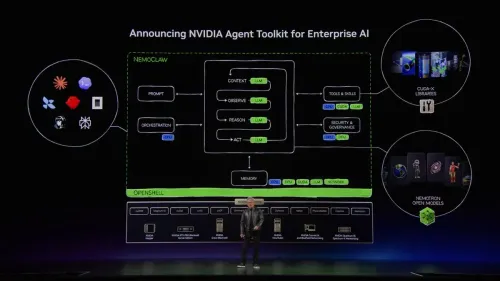
The framework breaks an AI agent into four parts: the model (thinks), the harness (gives form), tools and skills (enable action), and the runtime (provides a place to work).
Nvidia has been moving up the AI stack since releasing the CUDA platform in 2007 , from chips to frameworks to agent runtimes.
The post targets AI developers and enterprise IT teams , audiences central to Nvidia's platform expansion strategy.
Nvidia's next GTC keynote is expected to be the venue for any concrete agent-specific product or SDK announcements.
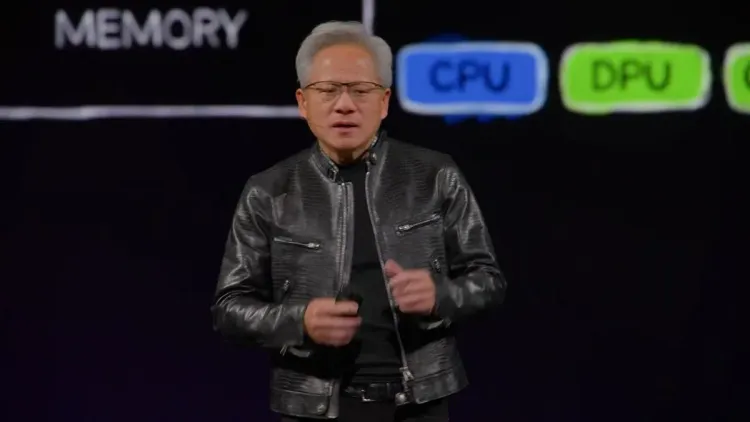
Chip giant Nvidia used its official X (formerly Twitter) account on Friday, June 19, 2026, to share chief executive Jensen Huang's distilled explanation of how an AI agent works, framing the concept through the analogy of a worker inside a workshop.
Context
In the post, Huang's explanation breaks an AI agent into four discrete components: the model, which thinks; the harness, which gives it form; tools and skills, which let it act; and the runtime, which gives the agent a place to get work done. The workshop metaphor is deliberately industrial — translating an abstract software architecture into terms familiar to anyone who has watched a craftsperson operate inside a structured environment.
The post links to a video elaborating on this framework, though the specific contents of that media have not been independently verified. Nvidia's corporate account has increasingly used short-form social content to explain stack-level AI concepts to a broad developer and enterprise audience.
Policy Backdrop
Nvidia's journey to the centre of the AI infrastructure conversation stretches back to 2007, when the company released the CUDA programming platform, enabling graphics processing units to handle general-purpose parallel computing. That foundational move quietly positioned Nvidia's hardware as the substrate on which modern AI workloads would eventually run.
The 2022–2024 generative-AI boom dramatically amplified demand for Nvidia's full-stack offerings — from chips to software frameworks. The company has since moved steadily up the value chain, framing each successive layer of the AI stack as a natural extension of its GPU franchise. Agent runtimes represent the latest such layer: systems that do not merely respond to prompts but can plan, use tools, and execute multi-step tasks autonomously.
Stakeholders and Impact
AI developers and enterprise IT teams are the primary audience for this kind of conceptual framing. For Indian technology companies and IT services exporters — many of which are actively building or procuring agentic AI capabilities — clarity on the architectural components of an agent has direct product and procurement implications.
The four-part framework Nvidia is popularising (model, harness, tools, runtime) could influence how Indian software teams structure agent pipelines, how cloud vendors package their offerings, and how enterprise buyers evaluate competing platforms. Nvidia's position as the de-facto compute supplier means its vocabulary for the AI stack tends to become industry vocabulary.
What's Next
Nvidia's next GTC (GPU Technology Conference) keynote is the natural venue to watch for any announced agent-specific software development kits, runtime services, or hardware configurations aimed at autonomous workflows. The workshop metaphor Huang is now popularising on social media may well be the conceptual scaffolding for a broader product announcement targeting the agentic AI segment.
As global enterprises accelerate deployment of autonomous AI systems, the company that defines the runtime layer — the 'workshop' in Huang's analogy — stands to capture significant platform value beyond chip sales alone.
Point of View
Harness, tools, runtime), Nvidia signals its intent to own not just the compute layer but the conceptual architecture developers build around. For India's large IT services sector, which is racing to embed agentic AI into enterprise offerings, the frameworks that dominant infrastructure players popularise tend to become de-facto standards. The timing — ahead of what is likely a major GTC product cycle — suggests this social-media clarity is the precursor to a concrete commercial pitch.
NationPress
19 Sept 2026
Frequently Asked Questions
What is Jensen Huang's explanation of an AI agent?
Jensen Huang describes an AI agent using a workshop analogy: the model thinks, the harness gives it form, tools and skills let it act, and the runtime gives the agent a place to get work done.
What is the Nvidia AI agent runtime?
The runtime, in Nvidia's framework, is the environment that provides an AI agent with the infrastructure to execute tasks — analogous to the workshop in which a skilled worker operates.
What is CUDA and why does it matter for AI?
CUDA is a programming platform Nvidia released in 2007 that allowed GPUs to handle general-purpose parallel computing, laying the groundwork for modern AI training and inference workloads.
How does Nvidia's agent framework affect Indian IT companies?
Indian IT and software firms building agentic AI products may align their architectures with Nvidia's four-part framework — model, harness, tools, runtime — given Nvidia's dominant position as the underlying compute supplier.
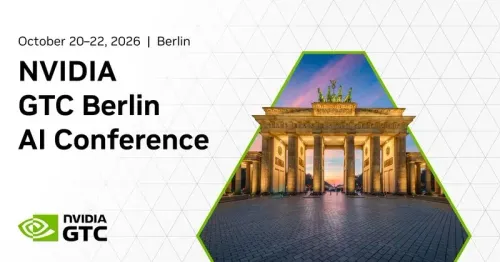
What is Nvidia's GTC conference?
GTC, or GPU Technology Conference, is Nvidia's flagship annual event where the company typically announces new chips, software platforms, and developer tools, and is the most likely venue for agent-specific product launches.