CM Yogi recalls Shinzo Abe's vision of a strong India-Japan bond
Synopsis
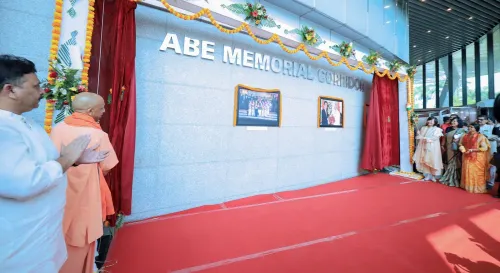
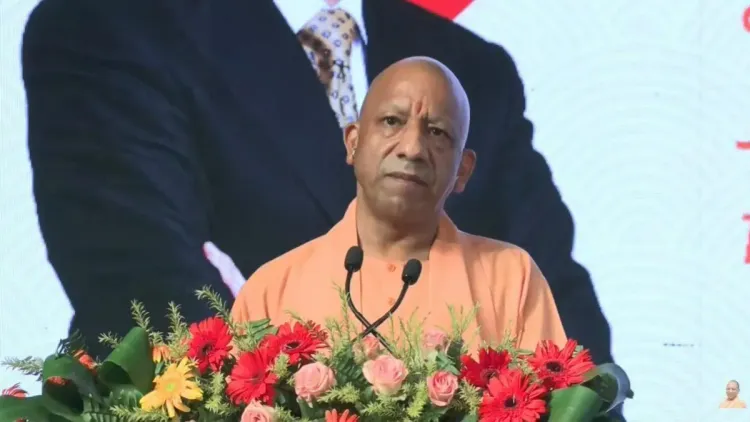
Uttar Pradesh CM Yogi Adityanath on October 7, 2026, invoked late Japanese PM Shinzo Abe's celebrated Parliament address, recalling his vision that a strong India and a strong Japan are each other's best strategic interest.
Key Takeaways
CM Yogi Adityanath shared the tribute on October 7, 2026 via his official X account.
The quote is from Shinzo Abe 's address to India's Parliament during his first official visit to India as Prime Minister.
Abe declared: 'A strong India is in Japan's best interest, and a strong Japan is in India's best interest.' Abe, assassinated in July 2022 , is credited with elevating bilateral ties to a 'Special Strategic and Global Partnership'.
His August 2007 Parliament speech introduced the 'Confluence of the Two Seas' concept, a founding idea of the Indo-Pacific framework.
The Mumbai-Ahmedabad Bullet Train Corridor stands as a tangible legacy of Abe's India partnership push.
A single sentence spoken inside India's Parliament by a visiting Japanese Prime Minister continues to echo across diplomatic circles. Uttar Pradesh Chief Minister Yogi Adityanath on Wednesday, October 7, 2026, quoted the late Shinzo Abe to underline the enduring depth of the India-Japan strategic relationship — a bond Abe himself called a matter of mutual survival.
Abe's Parliament address and the phrase that defined a relationship
CM Yogi shared Abe's celebrated words from the Japanese leader's first official visit to India, when Abe addressed a joint session of the Indian Parliament. The quote, rendered from Hindi, reads: 'Majboot Bharat, Japan ke sarvottam hit mein hai, aur majboot Japan, Bharat ke sarvottam hit mein hai' — 'A strong India is in Japan's best interest, and a strong Japan is in India's best interest.' Few diplomatic formulations have aged as gracefully, or been cited as frequently, in the context of the two nations' growing closeness.
Shinzo Abe, who served as Japan's longest-serving Prime Minister before his assassination in July 2022, is widely regarded as one of the principal architects of the modern India-Japan strategic partnership. His visits to India — and Indian leaders' reciprocal visits to Japan — helped elevate the bilateral relationship to a 'Special Strategic and Global Partnership', a designation that came with concrete commitments in defence, infrastructure, and technology.
Why this tribute carries real diplomatic weight
Abe's parliamentary address was not a ceremonial gesture. It coincided with Japan's commitment to accelerate high-speed rail investment in India, a promise that eventually materialised into the ongoing Mumbai-Ahmedabad Bullet Train Corridor — built on Japanese Shinkansen technology and largely financed through a Japanese soft loan. The speech set the philosophical tone: Indian growth and Japanese strategic depth were not parallel interests but interlinked ones.
By invoking Abe's exact words, CM Yogi signals that this framing remains the governing logic of India's engagement with Tokyo. The tribute also lands at a moment when India's global strategic positioning — including its role in the Quad grouping alongside Japan, the United States, and Australia — is under sharp international focus.
Abe's 2007 vision and its living imprint on Indian policy
Shinzo Abe first articulated the concept of the 'Confluence of the Two Seas' — a vision of the Pacific and Indian Oceans as a single strategic space — in his address to the Indian Parliament in August 2007. That speech is now regarded as a founding intellectual document of the Indo-Pacific framework. His relationship with successive Indian Prime Ministers, and the warmth he extended to India's development ambitions, made him an unusually popular foreign leader among Indian political audiences across party lines.
CM Yogi's post, quiet in its register but pointed in its choice of words, is a reminder that Abe's vision was not his alone — it was absorbed into the institutional DNA of both nations. The strongest tribute to a statesman is not a memorial plaque. It is a policy still running on his blueprint.
Point of View
The post reinforces continuity: the idea that India-Japan solidarity is a structural, cross-party commitment rather than a personal bond now lost. For the BJP, Abe remains a symbolic asset — a democratic world leader who publicly championed Indian power before it became fashionable. The tribute subtly signals that New Delhi's Quad commitments and Japan ties remain on firm ideological ground.
NationPress
7 Oct 2026
Frequently Asked Questions
What did Shinzo Abe say about India in his Parliament speech?
Shinzo Abe told India's Parliament: 'A strong India is in Japan's best interest, and a strong Japan is in India's best interest.' The address, delivered during his first visit to India, is regarded as a landmark statement on the bilateral relationship.
When did Shinzo Abe address the Indian Parliament?
Shinzo Abe addressed the Indian Parliament in August 2007 during his first official visit to India as Prime Minister. The speech introduced the 'Confluence of the Two Seas' concept that later shaped Indo-Pacific policy.
Why is CM Yogi Adityanath quoting Shinzo Abe?
CM Yogi Adityanath quoted Abe to pay tribute to his legacy and reaffirm the importance of the India-Japan strategic partnership, recalling the late leader's vision of mutual strength between the two nations.
What is India's relationship with Japan called?
India and Japan share a 'Special Strategic and Global Partnership', a designation formalised during the tenure of Shinzo Abe and reflecting cooperation in defence, infrastructure, and technology.
What is Shinzo Abe's legacy for India?
Shinzo Abe is credited with deepening India-Japan ties, championing Japan's investment in the Mumbai-Ahmedabad Bullet Train, and articulating the Indo-Pacific vision — all of which continue to shape Indian foreign and infrastructure policy.