White House Touts Largest US Shipyard Built Since WWII
Synopsis
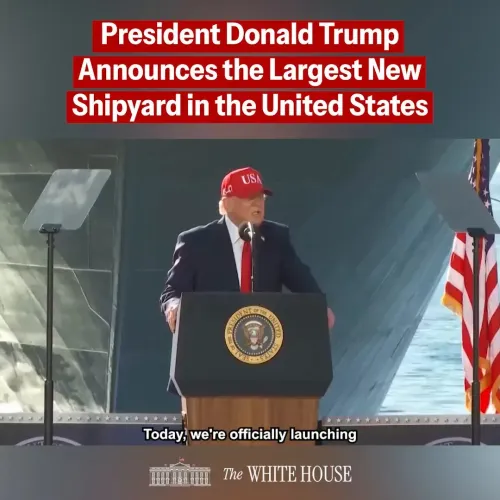
The White House declared on 7 October 2026 that the US has built its largest new shipyard since World War II, framing the development as a defining moment in American maritime dominance and signalling a major shift in US naval-industrial ambition.
Key Takeaways
The White House announced on 7 October 2026 that the largest new American shipyard since World War II has been established.
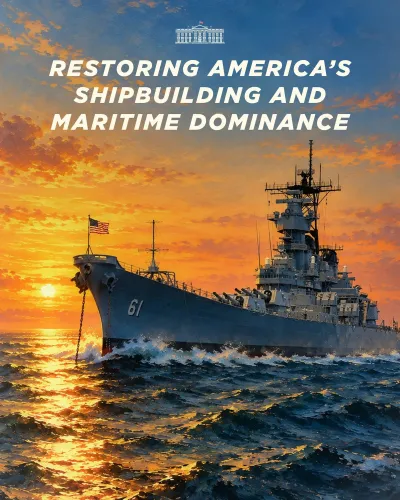
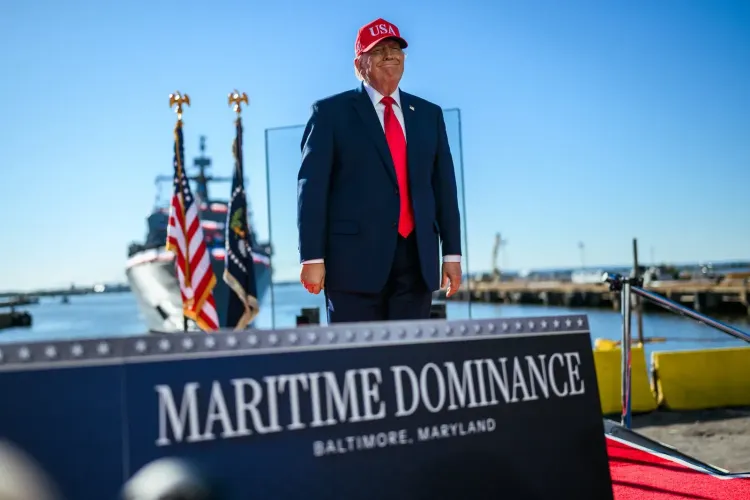
The announcement frames the project explicitly under the banner of 'American Maritime Dominance,' signalling both industrial and strategic intent.
US shipbuilding capacity declined sharply in the post-WWII decades, with South Korea , Japan , and China dominating global commercial yards.
The US Navy has faced sustained pressure to expand its fleet while existing yards contend with backlogs and workforce shortages.
The White House post does not specify the shipyard's location, ownership structure, or timeline for full operational capacity.
For the first time since the Second World War, the United States has commissioned a shipyard large enough to reshape its maritime industrial base — and The White House is making sure the world notices. On Wednesday, 7 October 2026, the official White House account on X declared the development a landmark moment in 'American Maritime Dominance.'
The post, brief but pointed, carries the full weight of an administration keen to project industrial resurgence: 'The largest new shipyard in the United States since WWII.' No qualifier, no caveat — just a claim staked squarely in the language of national strength.
Why a shipyard signals more than steel and water
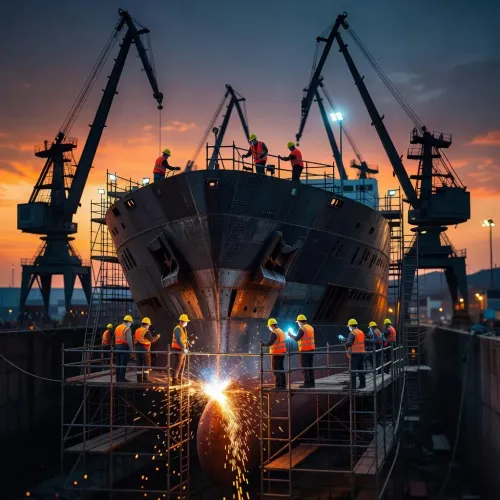
Shipbuilding has long been a strategic barometer of a nation's industrial ambition. At the peak of America's wartime production in the 1940s, US shipyards were churning out vessels at a pace that altered the balance of global conflict. The decades that followed saw that capacity erode sharply, with commercial and even certain naval contracts increasingly shifting to yards in South Korea, Japan, and China — the last of which now dominates global commercial shipbuilding by a vast margin. Against that backdrop, the announcement of a major new domestic shipyard is not merely an infrastructure story. It sits at the intersection of defence readiness, industrial policy, and great-power competition — particularly as the US Navy faces sustained pressure to expand its fleet while existing yards struggle with backlogs and workforce shortfalls.The WWII benchmark and what it actually means
Invoking the Second World War is deliberate political shorthand. It anchors the project in a moment of uncontested American industrial supremacy and signals ambition calibrated to peer-level rivalry, not routine procurement. Whether the new facility is a greenfield yard, a major expansion of an existing installation, or a public-private partnership has not been detailed in the White House post, and no additional sourcing is available to confirm the specifics. What is clear is the framing: this is being positioned as a generational investment, not an incremental upgrade. The American flag emoji and the phrase 'Maritime Dominance' signal that the administration intends this to read as a deterrence statement as much as an economic one. For India — whose own shipbuilding ambitions under domestic defence manufacturing policy are gathering pace, and whose navy operates in the same Indo-Pacific waters where US maritime posture matters most — the signal from Washington is worth watching closely. A stronger, more self-sufficient American naval-industrial base reshapes alliance dynamics, procurement conversations, and the broader regional balance all at once.Point of View
Flag-forward announcement is a calculated act of strategic signalling — invoking the WWII-era industrial peak to frame a domestic infrastructure move as a great-power statement. It sits neatly within a broader arc of US industrial policy that has sought, through successive administrations, to claw back manufacturing capacity ceded to Asian competitors over decades. For Washington's allies and rivals alike, the message is that American maritime ambition is shifting from aspiration to concrete steel. The absence of operational detail, however, means scrutiny of whether the reality matches the rhetoric will follow quickly.
NationPress
7 Oct 2026
Frequently Asked Questions
What is the largest new US shipyard since WWII that the White House announced?
The White House announced on 7 October 2026 that the United States has established its largest new shipyard since World War II, framing it as a cornerstone of American maritime dominance, though specific details about the yard's location and operator were not included in the announcement.
Why does the US need a new large shipyard?
The US Navy faces a growing fleet expansion requirement while existing shipyards deal with significant backlogs and workforce shortfalls. Decades of reduced domestic shipbuilding activity have left the US heavily dependent on allied and foreign yards for commercial and some naval construction.
How does the US shipyard announcement affect India?
India, which shares the Indo-Pacific strategic space with the United States and has its own growing naval and shipbuilding ambitions, stands to be affected by shifts in US maritime posture — particularly in terms of defence cooperation, regional deterrence dynamics, and allied fleet capabilities.
Which countries dominate global shipbuilding today?
South Korea, Japan, and China are the dominant players in global shipbuilding. China, in particular, has emerged as the world leader in commercial shipbuilding by volume, a position that US policymakers have identified as a strategic vulnerability.
What does 'American Maritime Dominance' mean in this context?
The phrase, used by the White House alongside the shipyard announcement, signals an intent to restore US leadership in naval-industrial capacity — positioning shipbuilding as a matter of national security and great-power competition, not just economic output.