Rahul Gandhi Vows Justice Over Election Commission Row at Jantar Mantar
Synopsis
Congress leader Rahul Gandhi posted a combative message on October 7, 2026, thanking INDIA alliance MPs for their stand near Jantar Mantar after a march was blocked, and directly naming PM Modi, Amit Shah, and Chief Election Commissioner Gyanesh Kumar in a vow to seek justice.
Key Takeaways
Rahul Gandhi publicly thanked every INDIA alliance MP for standing firm in Parliament, on the streets, and near Jantar Mantar on October 7, 2026 .
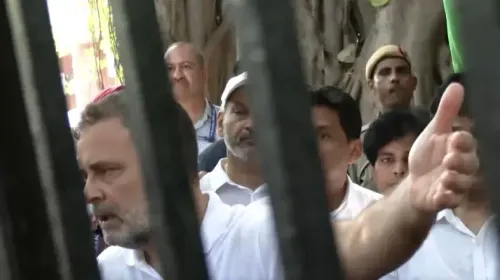
Gandhi confirmed that the opposition's march was stopped and a meeting was refused by authorities.
He directly named PM Narendra Modi , Home Minister Amit Shah , and Chief Election Commissioner Gyanesh Kumar in a vow that they would be 'brought to justice.' Including a sitting constitutional officeholder in such language signals the opposition's core grievance is the integrity of the electoral process itself.
The action at Jantar Mantar underscores the INDIA bloc's strategy of street-level pressure when institutional channels are perceived as closed.
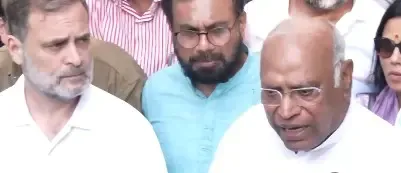
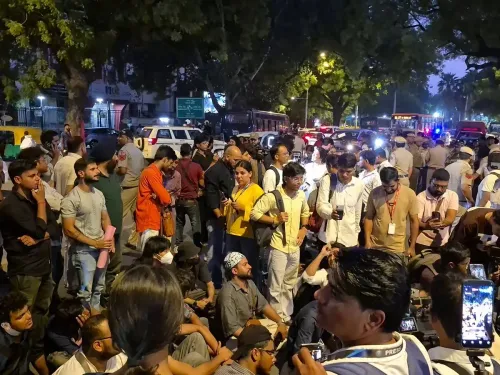
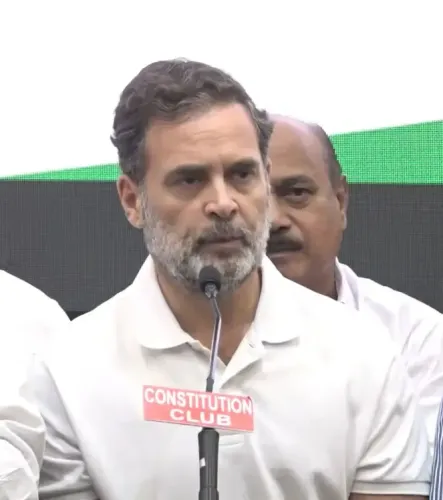
A political confrontation that has been building for weeks came to a sharp public point on Wednesday evening when Congress leader and Leader of the Opposition Rahul Gandhi posted a defiant message crediting every INDIA alliance MP for holding the line — in Parliament, on the streets, and near Jantar Mantar in New Delhi — and promised that Prime Minister Narendra Modi, Home Minister Amit Shah, Chief Election Commissioner Gyanesh Kumar, and 'the entire system' would be 'brought to justice.'
What Rahul Gandhi said — and who he named
The post, timestamped 9:01 PM IST on October 7, 2026, acknowledged that the opposition's march had been stopped and that a meeting had been refused, but framed both as acts of a regime unable to suppress public will. 'They can stop a march. They can refuse a meeting. But they cannot stop the will of our people,' Gandhi wrote, in language designed to rally a coalition that spans dozens of parties across the country.
Strikingly, Gandhi named Chief Election Commissioner Gyanesh Kumar alongside two of the most powerful members of the Union Cabinet — a direct, on-record accusation that the election authority itself is implicated in whatever wrongdoing the opposition is alleging. Naming a sitting constitutional officeholder in language invoking 'justice' raises the political stakes considerably beyond routine parliamentary sparring.
Jantar Mantar as flashpoint — the geography of dissent
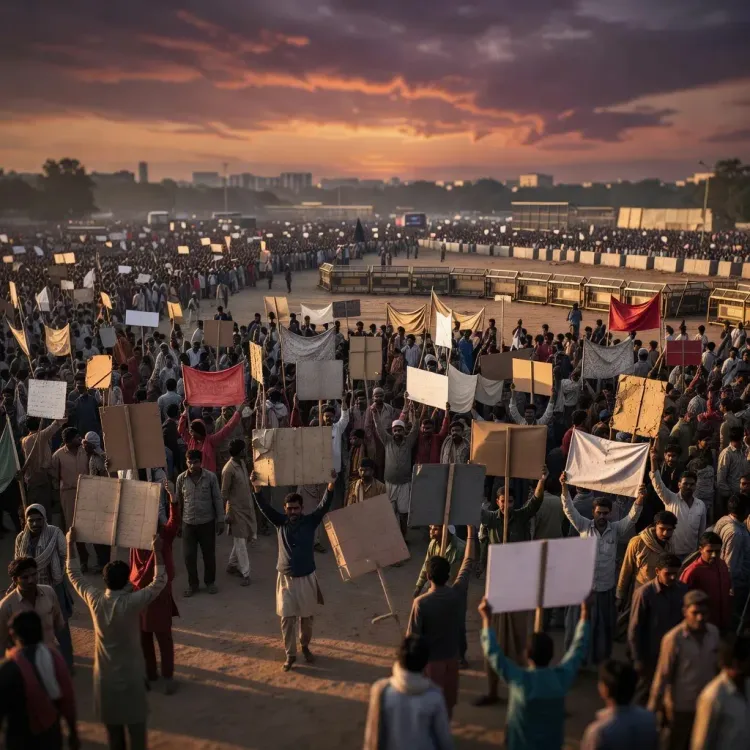
Jantar Mantar, the designated protest ground in central New Delhi, has historically served as the symbolic pressure valve for opposition agitation — from anti-corruption drives to farmers' rallies. The fact that alliance MPs converged there today, apparently after a planned march was blocked, follows a pattern the INDIA bloc has used repeatedly: when institutional channels close, move the fight to the street and the camera frame.
The refusal of a 'meeting' — whose meeting, at what level, was not specified in the post — adds a procedural grievance to what is already a constitutional one. Opposition leaders have repeatedly argued that access to neutral arbiters of the democratic process is being denied to them.
The INDIA alliance front — solidarity under pressure
Gandhi's explicit thanks to 'every INDIA alliance MP' signals that the coalition, often scrutinised for internal frictions, presented a united face at today's action. The INDIA bloc — formally the Indian National Developmental Inclusive Alliance — groups Congress with regional heavyweights and left parties in a broad anti-BJP front first assembled ahead of the 2024 general election.
Maintaining that front through sustained street-level action, even when marches are stopped, is itself a strategic goal: it demonstrates organisational cohesion to voters watching from every state.
What the accusation against Gyanesh Kumar means
The inclusion of Chief Election Commissioner Gyanesh Kumar in a promise of 'justice' is the most legally and constitutionally charged element of the post. The Election Commission of India is a constitutionally independent body; accusations against its leadership by a sitting Leader of the Opposition carry weight that goes well beyond political rhetoric. While Gandhi did not specify the nature of the alleged wrongdoing, the framing — lumping a constitutional authority with the executive leadership — suggests the opposition's core grievance centres on the integrity of the electoral process itself. That is a claim with profound implications for every election that follows.
The opposition's defiance was loud and visible today. Whether it translates into institutional accountability — or remains a rallying cry — is the question that will define Indian democratic politics in the months ahead.
Point of View
Sustained street action even when marches are stopped serves a dual purpose: it signals coalition discipline and keeps a media spotlight on grievances that might otherwise stall inside Parliament. The broader arc here is an opposition testing how far it can push the accountability narrative without institutional recourse — a posture that grows more potent the closer the country gets to any future electoral contest.
NationPress
7 Oct 2026
Frequently Asked Questions
Why did Rahul Gandhi thank INDIA alliance MPs on October 7 2026?
Gandhi thanked them for standing firm in Parliament, on the streets, and near Jantar Mantar in New Delhi after the opposition's march was blocked and a meeting was refused by authorities.
Who is Gyanesh Kumar and why did Rahul Gandhi name him?
Gyanesh Kumar is India's Chief Election Commissioner, a constitutionally independent position. Gandhi named him alongside PM Modi and Amit Shah in a vow of justice, signalling the opposition's allegation that the electoral authority itself is implicated in their grievances.
What happened at Jantar Mantar on October 7 2026?
INDIA alliance MPs gathered near Jantar Mantar in New Delhi after a planned march was stopped by authorities. The protest was part of a broader opposition campaign around democratic accountability.
What is the INDIA alliance?
The INDIA alliance — Indian National Developmental Inclusive Alliance — is a multi-party opposition coalition led by Congress, grouping regional and left parties against the BJP, first formed ahead of the 2024 general election.
What does Rahul Gandhi mean by 'brought to justice'?
Gandhi did not specify the precise legal or procedural route, but the phrase — directed at the Prime Minister, Home Minister, and Chief Election Commissioner — signals the opposition's intent to pursue formal accountability for what it characterises as attacks on democracy and electoral integrity.