Gujarat farmer earns ₹11 lakh from 4 acres by processing turmeric into powder, pickle
Synopsis
A 70-year-old Gujarat farmer turned four acres of turmeric into a ₹10–11 lakh annual income — not by selling raw crop at ₹150 per kg, but by steaming, drying, and grinding it into GOPCA-certified powder sold at ₹350 per kg and pickle at ₹440 per kg. Kalubhai Patel's 'Shakti Organic' story is a rare ground-up template for farm-gate value addition that the state government is now actively spotlighting.
Key Takeaways
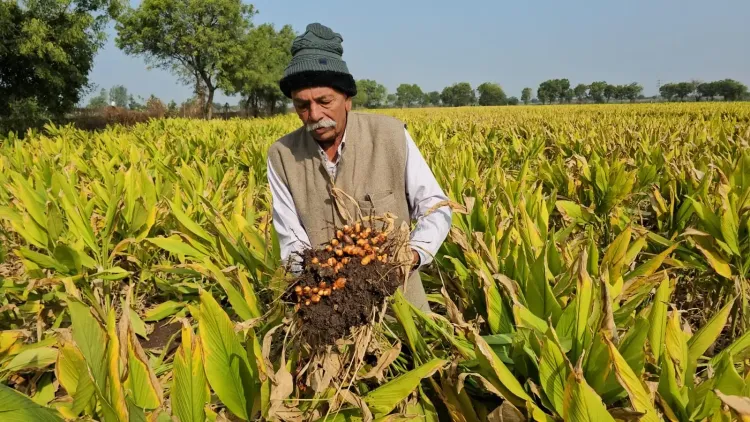
Kalubhai Patel , 70, of Vadod village , Surendranagar , earns ₹10–11 lakh annually from turmeric grown on just four acres .
He sells turmeric powder at ₹350/kg and green turmeric pickle at ₹440/kg , compared to the raw market price of ₹150/kg .
His home processing unit, set up for ₹5 lakh , received a ₹2.5 lakh subsidy from the Gujarat Horticulture Department .
Products are sold under the 'Shakti Organic' brand and carry GOPCA organic certification .
Patel has practised natural farming for 13–14 years and raised soil organic carbon to 0.94% .
He has received Best Farmer Awards at taluka, district, and state levels, including the Best ATMA Farmer Award in the presence of Governor Acharya Devvrat and Chief Minister Bhupendra Patel .
A 70-year-old farmer from Vadod village in Wadhwan taluka, Surendranagar district, has transformed a modest four-acre turmeric plot into an annual income stream of ₹10–11 lakh — not by selling raw produce, but by converting the crop into value-added products including turmeric powder, green turmeric pickle, and a turmeric mouth freshener under his own brand. The story of Kalubhai Patel has drawn attention as a model for agricultural value addition and natural farming in Gujarat.
From Fallow Land to Four Acres of Natural Farming
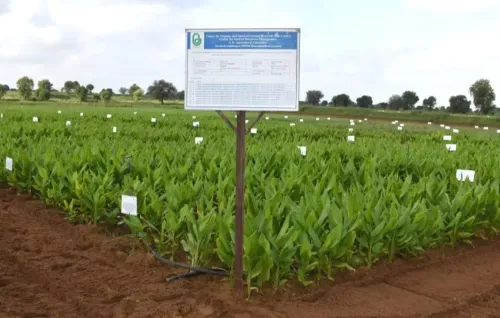
Kalubhai Patel owns 10 acres of land in total and has been practising natural farming on four acres for the past 13 to 14 years. The journey began after he witnessed a farmer use natural methods for turmeric cultivation at an agricultural fair in Kagvad. Inspired, he started on one acre of fallow land before gradually expanding. On the remaining six acres, he cultivates cotton with pigeon pea as an intercrop — a practice that adds nitrogen to the soil and reduces dependence on urea.
Patel also follows crop diversification, growing short-duration crops such as moong, sesame, and pearl millet after the eight-month turmeric crop cycle. He uses a solution prepared from aak leaves as a source of potassium, and these combined natural practices have reportedly raised the organic carbon content of his soil to 0.94 per cent.
Home Processing Unit: The Engine of Value Addition
The turning point in Patel's farming model was establishing a home-based processing unit at a cost of approximately ₹5 lakh. The unit is equipped with a steam boiler, polishing machine, and pulveriser. The Gujarat Horticulture Department provided a subsidy of ₹2.5 lakh for setting it up. Rather than boiling turmeric in water, Patel steams it — a method he says helps retain the crop's beneficial and medicinal properties.
After steaming, the turmeric is dried for approximately one month before being cleaned and ground into powder. The family then packages the finished products at home, selling them under the brand name 'Shakti Organic'. While raw turmeric commands roughly ₹150 per kg in the open market, Patel's processed turmeric powder fetches ₹350 per kg and his green turmeric pickle sells at ₹440 per kg — a pricing premium made possible by his GOPCA-certified organic status.
Sales Through Word of Mouth, Not Advertising
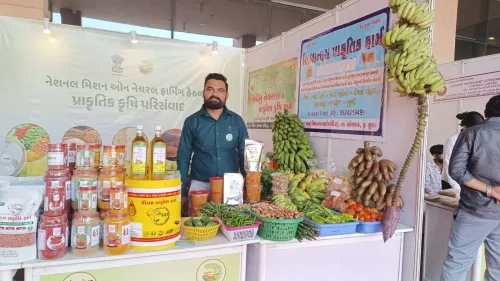
Notably, Patel's Shakti Organic products are sold almost entirely through word-of-mouth, with no formal advertising expenditure. This lean go-to-market approach has allowed him to retain margins rather than divert income toward marketing costs. The model highlights a growing rural entrepreneurship pattern in India, where certified organic branding and direct consumer relationships are enabling farmers to bypass intermediaries.
This comes amid a broader national push for natural and organic farming, with multiple state governments extending subsidies for processing infrastructure to incentivise farm-gate value addition.
State Recognition and Innovation
Patel has been conferred Best Farmer Awards at the taluka, district, and state levels by the Gujarat government. He has also received honours from Junagadh Agricultural University and Dantiwada Agricultural University. Most recently, in the presence of Governor Acharya Devvrat and Chief Minister Bhupendra Patel, he was presented the state-level 'Best ATMA Farmer Award'.
Beyond cultivation and processing, Patel has developed an automatic sowing machine, combining traditional agricultural wisdom with innovation. 'Natural farming is nature; nurturing soil with care is culture,' he said, articulating a philosophy that state officials say has motivated other farmers to explore sustainable, income-enhancing agriculture.
What This Model Means for Indian Farmers
Patel's example underscores a key challenge facing Indian agriculture: the gap between farm-gate prices and consumer-end value. By processing and branding his produce, he effectively captures a share of the value chain that would otherwise accrue to traders and processors. With government support through the Horticulture Department and certification bodies such as GOPCA, replicating this model could offer a viable income pathway for smallholder farmers across India. Whether state governments scale such support meaningfully will determine the broader impact.
Point of View
A government subsidy that halved that cost, and an organic certification. The real bottleneck is not model viability — it is replication at scale, which demands a functioning subsidy pipeline, accessible certification infrastructure, and local market linkages that most districts still lack. Gujarat's decision to award and publicise Patel is good optics, but the harder question is whether the Horticulture Department's subsidy scheme is adequately funded and demand-driven enough to onboard the next thousand farmers. India's farm income crisis will not be solved by award ceremonies alone.
NationPress
7 Oct 2026
Frequently Asked Questions
How does Kalubhai Patel earn ₹11 lakh from just four acres of turmeric?
Patel processes raw turmeric into powder, pickle, and a mouth freshener instead of selling it as raw produce. He sells turmeric powder at ₹350 per kg and green turmeric pickle at ₹440 per kg — well above the market raw price of ₹150 per kg — generating ₹10–11 lakh annually from four acres.
What is 'Shakti Organic' and how are its products certified?
'Shakti Organic' is the home brand under which Kalubhai Patel and his family pack and sell their turmeric products. The products carry GOPCA organic certification, which allows Patel to command a significant price premium over uncertified raw produce.
What government support did Patel receive for his processing unit?
The Gujarat Horticulture Department provided Patel with a subsidy of ₹2.5 lakh toward his home-based processing unit, which cost approximately ₹5 lakh in total. The unit includes a steam boiler, polishing machine, and pulveriser.
What is natural farming and how has Patel practised it?
Natural farming avoids synthetic inputs, relying instead on soil conservation, organic matter, and biodiversity. Patel has practised it on four acres for 13–14 years, using steam processing to preserve turmeric's medicinal properties, aak-leaf solution for potassium, and pigeon pea intercropping to fix nitrogen — raising his soil's organic carbon to 0.94%.
What awards has Kalubhai Patel received for his farming model?
Patel has received Best Farmer Awards at the taluka, district, and state levels from the Gujarat government. He has also been honoured by Junagadh Agricultural University and Dantiwada Agricultural University, and most recently received the state-level 'Best ATMA Farmer Award' in the presence of Governor Acharya Devvrat and Chief Minister Bhupendra Patel.