Gujarat farmer Kalpesh Patel grows 50+ banana varieties using natural farming
Synopsis
A factory worker-turned-farmer in Surat's Saras village is now a national reference point for natural banana cultivation — growing over 50 varieties, recording a 73 kg single bunch in 2025, and earning up to ₹12 lakh a year on just three-and-a-half bighas, all without a rupee spent on chemical inputs.
Key Takeaways
Kalpesh Patel of Saras village, Surat switched to natural farming in 2019 after his father died of cancer linked to heavy pesticide use.
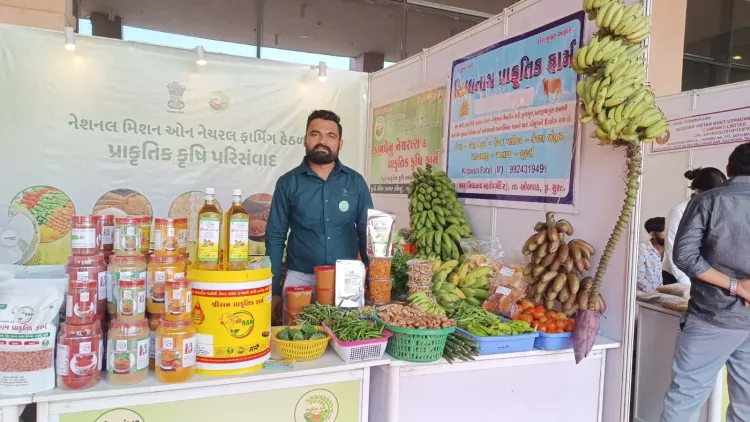
His orchard spans three-and-a-half bighas and grows more than 50 banana varieties , including Puvan, Rasthali, Blue Java, and Red Banana.
A single bunch from his farm weighed 73 kg in 2025 , against a conventional average of 20–30 kg .
Patel earns ₹10 lakh to ₹12 lakh annually from banana cultivation, with zero expenditure on chemical fertilisers or pesticides.
Union Agriculture Minister Shivraj Singh Chouhan highlighted Patel's work on social media; farmers and scientists from across India visit his farm.
Patel adds value through banana wafers and banana powder and sells via the state-run natural farming market in Vesu .
Kalpesh Patel, a farmer from Saras village in Olpad taluka, Surat district, has built a thriving chemical-free banana farm that now draws agricultural scientists and farmers from across India. Patel switched to natural farming in 2019 after losing his father, Ramanbhai Patel, to cancer — a disease he attributes, in part, to prolonged exposure to chemical fertilisers and pesticides.
A Personal Loss That Changed Everything
At the time of his father's diagnosis, Patel was employed as a chemical operator at a factory in Surat. Watching his father's decline prompted a sharp reassessment of conventional farming. 'When my father was diagnosed with cancer, I felt we had to free ourselves and the soil from the poison of chemical fertilisers and pesticides. My father used to spray a lot of pesticides in the fields, and the smell of those chemicals would remain on his body. After he passed away, a new turning point came in my life,' Patel said.
He subsequently enrolled in training offered by Gujarat's state Agriculture Department, learning techniques including the preparation of Jeevamrut, a traditional organic soil-enrichment formulation central to natural farming practice.
The Farm: 50 Varieties Across Three-and-a-Half Bighas
Patel inherited around eight bighas of land, of which three-and-a-half bighas are currently under banana cultivation. His orchard hosts more than 50 varieties, including Puvan, Adhapuri, Rasthali, Red Banana, Blue Java, Basrai, Mahalaxmi, and Elaichi bananas — a diversity unusual even by speciality farming standards.
The results have been striking. In 2025, a single banana bunch harvested from his farm weighed 73 kg, far exceeding the 20 kg to 30 kg range typical in conventional banana cultivation. Patel reports that the average bunch weight across his orchard now consistently exceeds 30 kg.
Economics: Up to ₹12 Lakh a Year, Zero Chemical Input Cost
'For the last seven years, I have been practising natural farming and have also adopted the jungle model. The cost of chemical fertilisers and pesticides, worth ₹15,000 to ₹20,000 per bigha, has stopped completely. As the quality of the soil improved, production also increased. Every year, I earn around ₹10 lakh to ₹12 lakh from banana cultivation on three-and-a-half bighas,' Patel said.
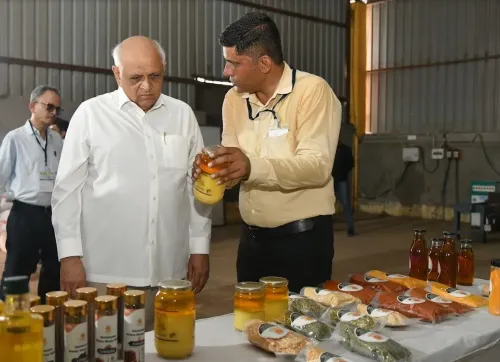
Beyond fresh fruit, Patel processes unsold bananas into banana wafers and banana powder, adding value and reducing post-harvest losses. He sells his produce at the natural farming market established in Vesu, a state government initiative supporting chemical-free agriculture, and now dispatches orders to buyers in several states directly from Saras village.
National Recognition and Visitor Interest
Patel's methods have attracted attention well beyond Gujarat. Farmers and agricultural experts from different parts of the country regularly visit Saras village to observe and study his cultivation techniques firsthand. Union Agriculture Minister Shivraj Singh Chouhan interacted with Patel and shared his story on social media, amplifying his profile nationally.
Patel says his guiding principle in marketing remains 'my produce and my price' — a stance that reflects a broader shift among natural farmers seeking to bypass intermediaries and retain more of the value chain. With soil health improving each season, he shows no signs of reverting to chemical inputs.
Point of View
And that small landholdings cannot generate meaningful income. A 73 kg bunch and ₹12 lakh annually from three-and-a-half bighas are numbers that challenge the input-intensive model head-on. What mainstream coverage of natural farming often misses is the value-addition angle — wafers, powder, direct dispatch — which is where the real margin lives. The harder question is whether Patel's results are replicable at scale, or whether they depend on exceptional soil conditions, personal commitment, and the kind of state-market access that most smallholders in India still lack.
NationPress
19 Sept 2026
Frequently Asked Questions
Who is Kalpesh Patel and where is his farm located?
Kalpesh Patel is a farmer from Saras village in Olpad taluka, Surat district, Gujarat, who practises chemical-free banana cultivation across three-and-a-half bighas of land. He began natural farming in 2019 after his father's death from cancer, which he attributed partly to prolonged pesticide exposure.
How many banana varieties does Kalpesh Patel grow?
Patel cultivates more than 50 banana varieties on his farm, including Puvan, Adhapuri, Rasthali, Red Banana, Blue Java, Basrai, Mahalaxmi, and Elaichi bananas. The diversity is considered unusually high even among speciality farmers.
What yields has Kalpesh Patel achieved through natural farming?
In 2025, a single banana bunch from his farm weighed 73 kg — well above the conventional range of 20–30 kg. Patel says the average bunch weight across his orchard now consistently exceeds 30 kg.
How much does Kalpesh Patel earn from his banana farm?
Patel earns approximately ₹10 lakh to ₹12 lakh annually from banana cultivation on three-and-a-half bighas, with no expenditure on chemical fertilisers or pesticides. He supplements income through processed products such as banana wafers and banana powder.
What is Jeevamrut and how does Patel use it?
Jeevamrut is a traditional organic formulation used in natural farming to enrich soil biology and improve crop health. Patel learned to prepare it through training provided by Gujarat's state Agriculture Department and uses it as a core input on his farm in place of chemical fertilisers.