Dang strawberry farming: Natural farming drives ₹8 lakh/hectare earnings in Gujarat
Synopsis
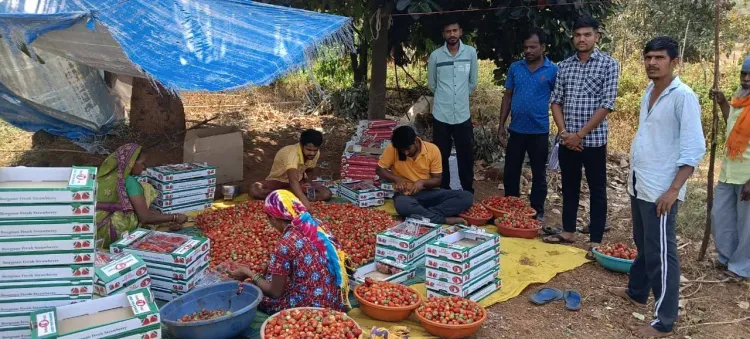
A tribal district once dependent on subsistence crops and migrant labour has quietly become Gujarat's strawberry capital. Dang's designation as India's first natural farming district has catalysed a farming transformation — output is set to hit 233 metric tonnes in 2025-26, and farmers are earning up to ₹8 lakh per hectare, with markets now stretching from local haats to Ahmedabad and Surat.
Key Takeaways
Dang district is Gujarat's top strawberry-producing region, with cultivation area rising from 20 hectares (2022-23) to 33 hectares (2025-26).
Production is projected to reach 233 metric tonnes in 2025-26 , up from 140 metric tonnes in 2022-23.
Farmers earn ₹7–8 lakh per hectare annually, a significant jump over returns from traditional crops like paddy and nagli.
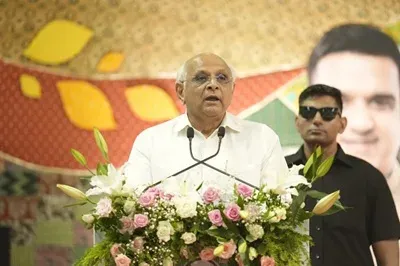
Dang was declared India's first natural farming district under Chief Minister Bhupendra Patel , driving chemical-free cultivation.
Subsidies of 55–75 per cent are available on saplings and cultivation inputs; nine strawberry varieties are currently grown.
Markets have expanded from local outlets in Saputara and Ahwa to major cities including Ahmedabad , Surat , and Bharuch .
Dang district has established itself as Gujarat's foremost strawberry-producing region, with cultivation area growing from 20 hectares in 2022-23 to approximately 33 hectares in 2025-26 — a rise attributed to the state's natural farming push and favourable agro-climatic conditions. Farmers in the tribal district are now reportedly earning between ₹7 lakh and ₹8 lakh per hectare annually from the crop, according to official figures.
Production Growth at a Glance
Strawberry output in Dang stood at 140 metric tonnes in 2022-23, climbing to 196 metric tonnes in 2024-25. Production is projected to reach 233 metric tonnes in 2025-26, reflecting consistent year-on-year expansion. Officials attribute the upward trajectory to rising market demand, improved cultivation techniques, and the district's natural farming orientation.
Natural Farming as the Catalyst
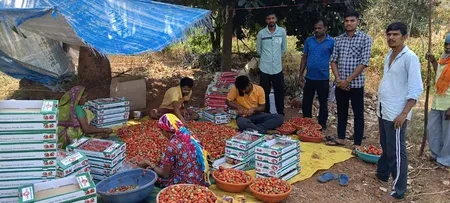
Under the leadership of Chief Minister Bhupendra Patel, Dang was declared India's first natural farming district, prompting widespread adoption of chemical-free cultivation methods among local farmers, according to officials. The state government's horticulture department has conducted training camps and field visits to encourage both natural farming and modern horticultural practices. Farmers are receiving subsidies of 55 to 75 per cent on strawberry saplings and related cultivation expenses, with additional assistance covering mulching material, plastic covers, crates, packing material, and farm equipment including mini tractors, rotavators, cultivators, and trolleys.
Ideal Conditions and Varieties
Dang's cool climate and organic-rich sandy and loamy soil make it well-suited for strawberry cultivation. The crop thrives in well-drained soil with a pH level between 5.5 and 7.0, requires 8 to 12 hours of sunlight daily, and grows best at daytime temperatures of 22–25 degrees Celsius and night temperatures of 7–13 degrees Celsius. Farmers are currently growing nine varieties — Winter Dawn, Early Winter, Camarosa, Sweet Charlie, Nabila, Nabadi, Selva, Belrubi, and Pajero. Among these, Winter Dawn has emerged as the most favoured for its strong yield between December and February-March.
Where Cultivation Has Taken Root
Large-scale strawberry farming has spread across multiple villages in Ahwa taluka, including Bhurapani, Borigavtha, Galkund, Kotamdar, Malegaon, Dabhas, Sonuniya, and Vanar. In Waghai taluka, cultivation has expanded in Kanchanpada, Ghodvahal, Murambi, and nearby villages. Strawberries from Dang, initially sold in local markets at Saputara and Ahwa, are now being supplied to larger markets in Ahmedabad, Surat, and Bharuch.
Social and Economic Impact
The shift to strawberry cultivation has brought a notable socio-economic change to Dang. Many farmers who previously depended on wage labour in industrial areas and farms in neighbouring Maharashtra have returned to work their own land. Traditional crops such as paddy, nagli, urad, and varai offered limited returns, but strawberry farming has substantially raised household incomes. The expansion has also generated seasonal employment for local residents, broadening its economic footprint beyond individual farm households.
Point of View
But the real driver appears to be the income differential: ₹7–8 lakh per hectare versus near-subsistence returns from paddy and nagli is a compelling case that does not require government persuasion. The risk, as with most mono-crop success stories, is market concentration — strawberries from Dang are still heavily dependent on a handful of urban markets, and a price correction in Ahmedabad or Surat could quickly erode the gains that have drawn migrant workers back home.
NationPress
22 Sept 2026
Frequently Asked Questions
How much are farmers earning from strawberry cultivation in Dang, Gujarat?
Farmers in Dang district are earning between ₹7 lakh and ₹8 lakh per hectare annually from strawberry cultivation, according to official figures. This is significantly higher than returns from traditional crops such as paddy, nagli, urad, and varai.
What is Dang's status as a natural farming district?
Dang was declared India's first natural farming district under Chief Minister Bhupendra Patel, encouraging widespread adoption of chemical-free cultivation methods. The designation has been a key driver of the shift toward strawberry farming in the tribal district.
How has strawberry production in Dang grown over the years?
Production rose from 140 metric tonnes in 2022-23 to 196 metric tonnes in 2024-25, and is projected to reach 233 metric tonnes in 2025-26. The cultivation area has also expanded from 20 hectares to around 33 hectares over the same period.
Which strawberry varieties are grown in Dang district?
Farmers in Dang cultivate nine varieties: Winter Dawn, Early Winter, Camarosa, Sweet Charlie, Nabila, Nabadi, Selva, Belrubi, and Pajero. Winter Dawn is the most preferred, known for its strong yield between December and February-March.
What government support is available for strawberry farmers in Dang?
The state government offers subsidies of 55 to 75 per cent on strawberry saplings and cultivation expenses. Assistance also covers mulching material, plastic covers, crates, packing material, and farm equipment such as mini tractors, rotavators, and cultivators.