Gujarat milk output up 12.5 million tonnes in 20 years, now 4th largest producer
Synopsis
Gujarat has quietly built one of the world's most intensive dairy ecosystems — 12.5 million additional tonnes of milk in two decades, a 9.3% annual growth rate, and now an AI assistant serving 36 lakh farmers. The state's 'White Revolution 2.0' is less a slogan and more a convergence of veterinary infrastructure, reproductive technology, and digital extension services that is measurably outpacing the national average.
Key Takeaways
Gujarat added 12.5 million tonnes to annual milk output over 20 years , reaching 19 million tonnes — 7.78% of India's total.
The state is now India's fourth-largest milk producer , growing at an average of 9.3% per year — nearly double the national rate of 5.5% .
Per capita milk availability in Gujarat is 730 grams per day , against a national average of 485 grams per day .
Amul launched its AI platform 'Sarlaben' in February 2025 to support over 36 lakh farmer milk producers.
Over ₹2,691.29 crore in loan interest support has been approved under the Animal Husbandry Infrastructure Development Fund for dairy projects across the state.
India remains the world's largest milk producer since 1998 , contributing nearly 25% of global output at 247 million tonnes annually.
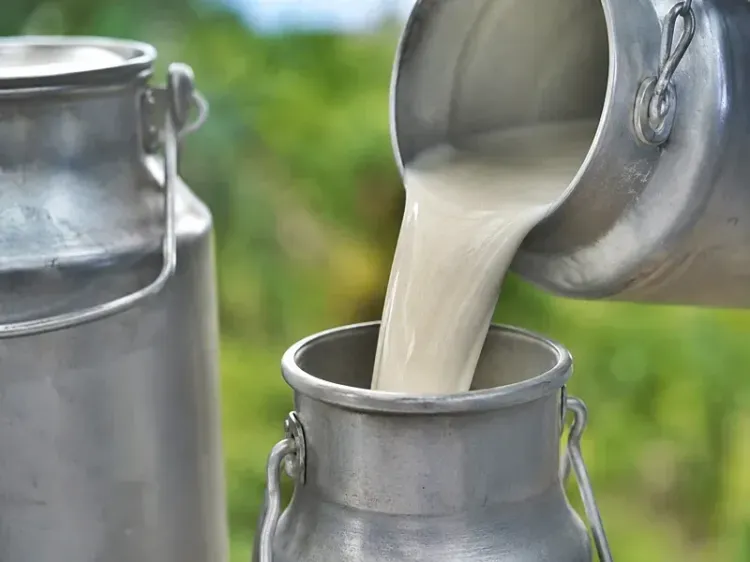
Gujarat has added 12.5 million tonnes to its annual milk output over the past two decades, crossing a total of 19 million tonnes per year and cementing its position as India's fourth-largest milk-producing state. The figures, released ahead of World Milk Day on 1 June, place Gujarat at the centre of what officials are calling 'White Revolution 2.0' — a technology- and infrastructure-driven push to deepen dairy productivity across the state.
Gujarat's Dairy Growth in Numbers
Gujarat now contributes 7.78 per cent of India's total milk output and has sustained an average annual growth rate of 9.3 per cent over the past 20 years — nearly double the national pace. Per capita milk availability in the state has risen 48 per cent over the last decade to 730 grams per person per day, significantly above the national average of 485 grams per day. India as a whole has seen milk production grow by around 69 per cent over the past decade, at an annual rate of 5.5 per cent, with total output now at approximately 247 million tonnes — nearly 25 per cent of global supply.
India's Dairy Dominance on the World Stage
India has held the position of the world's largest milk producer since 1998, and the dairy sector contributes close to 5 per cent of the country's Gross Domestic Product (GDP). This makes dairying not just a nutritional concern but a significant economic engine — one that directly supports rural livelihoods for tens of millions of households. Gujarat's outsized growth within this national story reflects sustained policy prioritisation over two decades.
Veterinary Infrastructure and Breeding Technology
Gujarat's livestock population of nearly 2.75 crore animals is supported by a network of 1,137 veterinary hospitals, 564 primary animal treatment centres, 587 mobile veterinary clinics, 34 multi-purpose veterinary hospitals, and 21 animal disease investigation units. A total of 4,710 registered veterinarians are deployed across the state for healthcare and disease management.
The state government has scaled up reproductive technologies to improve cattle breeds. Livestock owners are being supplied sexed semen doses at subsidised rates, a technology that reportedly carries a success rate of more than 90 per cent for female calf births. Subsidies are also available for farmers adopting in-vitro fertilisation for animal breeding — a relatively advanced intervention for a state-level programme.
Amul AI and the Digital Dairy Push
In February 2025, Amul launched its artificial intelligence platform 'Amul AI', introducing a digital assistant named 'Sarlaben' to provide round-the-clock support to more than 36 lakh farmer milk producers. The platform covers guidance on animal health, nutrition, breed improvement, and government welfare schemes — marking a notable shift in how dairy extension services are delivered at scale.
Infrastructure Investment and Funding Flows
Under the National Programme for Dairy Development, ₹239.73 crore has been allocated over the past five years for the installation of 1,606 bulk milk coolers, 3,233 automatic milk collection systems, and 1,212 milk adulteration detection machines. Under the Animal Husbandry Infrastructure Development Fund, interest support has been approved for loans worth ₹2,691.29 crore against projects valued at ₹3,425.57 crore by cooperative unions and private dairy operators.
Dairy cooperatives have received ₹573.77 crore in interest assistance on working capital loans over five years. In the Saurashtra and Kutch regions specifically, ₹23.09 crore has been allocated over three years for projects worth ₹78.06 crore across district milk producers' unions in Junagadh, Jamnagar, Surendranagar, Morbi, and Porbandar. As India approaches the next phase of its dairy ambitions, Gujarat's model of combining veterinary depth, reproductive technology, and digital tools may offer a replicable template for other high-potential states.
Point of View
But the more significant story is structural: a 9.3% annual growth rate sustained over two decades does not happen by accident — it reflects consistent state investment in veterinary infrastructure, breeding technology, and cooperative finance that most Indian states have not replicated. The introduction of AI-driven farmer support through Amul's 'Sarlaben' is a genuine inflection point, but its real test will be adoption depth among smallholder farmers with limited digital literacy. India's overall 5.5% annual dairy growth is strong by global standards, yet per capita availability at 485 grams still trails nutritional targets; Gujarat's 730-gram figure shows what is possible when policy and investment align over the long run.
NationPress
24 Sept 2026
Frequently Asked Questions
How much has Gujarat's milk production grown in the last 20 years?
Gujarat has recorded a 12.5 million-tonne increase in annual milk production over the past two decades, taking total output to over 19 million tonnes per year. The state has maintained an average annual growth rate of 9.3% during this period, making it India's fourth-largest milk producer.
What is 'White Revolution 2.0' in Gujarat?
'White Revolution 2.0' is the term used by Gujarat officials to describe the state's current phase of dairy sector expansion, driven by technology, veterinary infrastructure, reproductive science, and digital tools. It builds on the original White Revolution — Operation Flood — which transformed India into the world's largest milk producer from the 1970s onwards.
What is Amul AI and who does it serve?
Amul AI is an artificial intelligence platform launched by Amul in February 2025, featuring a digital assistant named 'Sarlaben'. It provides round-the-clock guidance to more than 36 lakh farmer milk producers on animal health, nutrition, breed improvement, and government welfare schemes.
How does Gujarat's per capita milk availability compare to the national average?
Gujarat's per capita milk availability stands at 730 grams per person per day, which is substantially higher than India's national average of 485 grams per day. Both figures represent significant increases over the past decade — Gujarat is up 48% and India is up 52% over ten years.
What is India's global standing in milk production?
India has been the world's largest milk producer since 1998 and currently produces approximately 247 million tonnes annually, accounting for nearly 25% of global milk output. The dairy sector contributes close to 5% of India's GDP and supports the livelihoods of millions of rural households.