Gujarat dairy network deposits ₹200 crore daily into women's accounts: Amit Shah
Synopsis
Gujarat's dairy cooperative network is transferring ₹200 crore every single day into the bank accounts of 36 lakh women livestock rearers — a figure Amit Shah says would stun any industrialist. At Madhur Dairy's new Gandhinagar plant, Shah framed the cooperative model not just as rural economics but as the most scalable women's empowerment programme in India, backed now by an AI assistant designed for village women.
Key Takeaways
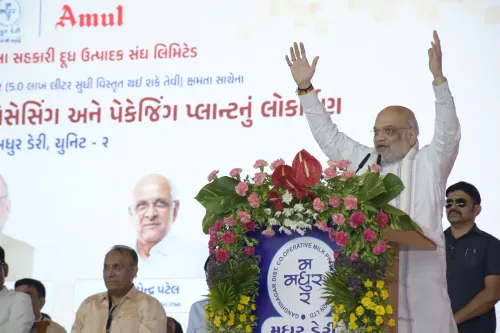
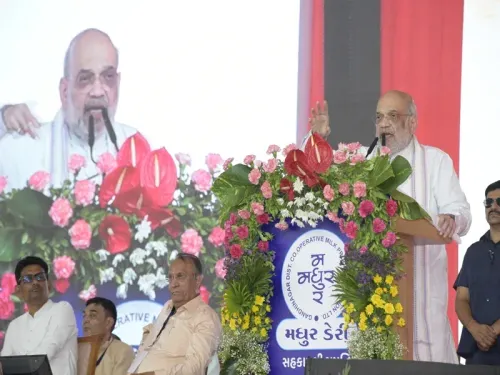
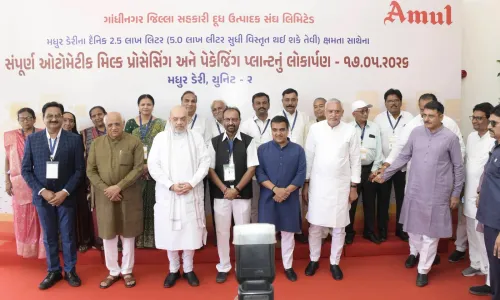
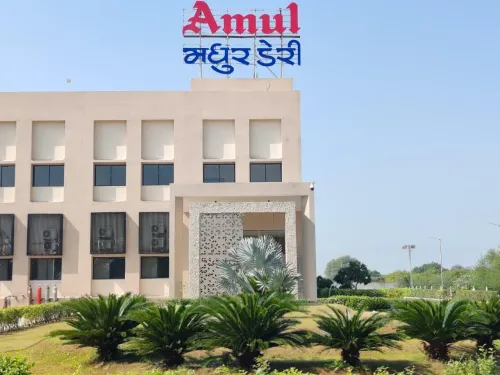
Amit Shah inaugurated Madhur Dairy's new milk processing plant at Dashela, Gandhinagar on 17 May .
Gujarat's dairy cooperatives transfer nearly ₹200 crore daily into the bank accounts of women livestock rearers.
Around 36 lakh women in Gujarat are involved in milk production, collectively producing nearly 3 crore litres per day.
Payments are made on a weekly cycle , directly to women's bank accounts through the cooperative structure.
AI digital assistant 'Sarlaben' , launched by PM Modi , is designed to support women in agriculture and livestock rearing in rural areas.
The event was attended by CM Bhupendra Patel , Deputy CM Harsh Sanghavi , and Assembly Speaker Shankar Chaudhary .
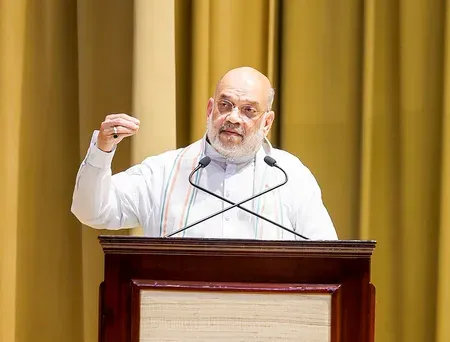
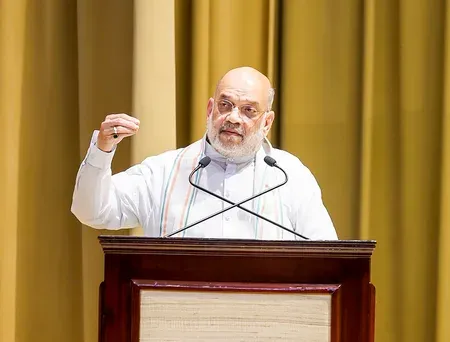
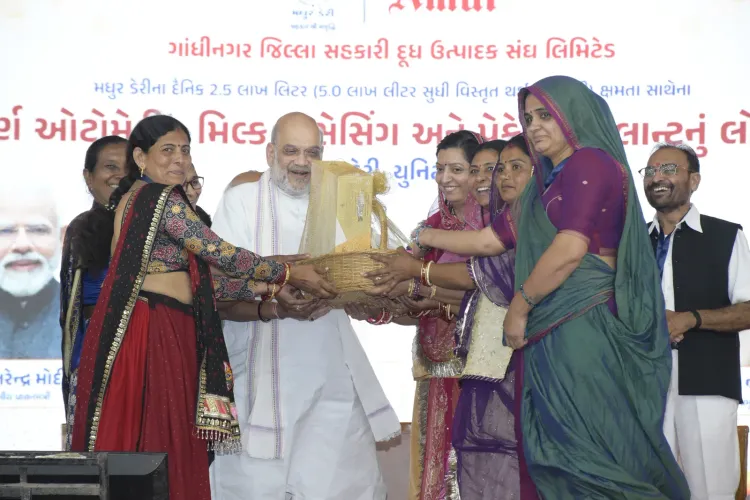
Union Home and Cooperation Minister Amit Shah on Sunday, 17 May said that Gujarat's dairy cooperative network was transferring nearly ₹200 crore every day directly into the bank accounts of women livestock rearers, calling the sector 'one of the largest drivers of women's economic empowerment in rural India.' Shah made the remarks at the inauguration of Madhur Dairy's new milk processing plant at Dashela in Gandhinagar district.
Scale of Women's Participation
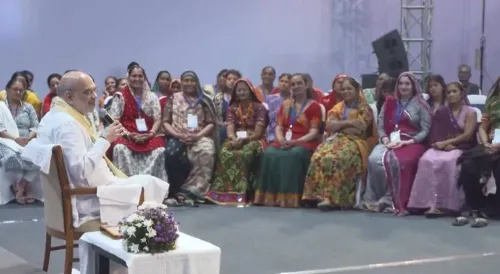
Shah said approximately 36 lakh women in Gujarat are connected with milk production and cooperative dairy activities. 'Thirty-six lakh women in Gujarat produce nearly three crore litres of milk every day and almost ₹200 crore is deposited daily into their accounts,' he said during his address. The minister described this as a structural transformation of the economic position of women in rural households.
How the Cooperative Model Empowers Women
Shah emphasised that the cooperative structure ensures profits flow directly to the women doing the work. 'Because of the cooperative sector, this profit directly reaches the bank account of the woman who milks the cows and buffaloes,' he said. Payments are made on a weekly cycle — 'salaries are deposited every seventh day' — which Shah said he had personally witnessed generating 'an atmosphere of happiness' in village homes near Mansa, his birthplace.
Recalling the social change he observed before and after dairy cooperatives became active in villages, Shah said: 'There was a time when women worked hard but did not have financial independence. Today, because of the dairy sector, women have become the heads of their households.'
Technology Push: AI Assistant 'Sarlaben'
Shah also highlighted the role of technology in modernising the dairy sector, drawing attention to the recently launched AI digital assistant 'Sarlaben' — introduced by Prime Minister Narendra Modi during an AI summit. The platform is designed to support women engaged in agriculture and livestock rearing, particularly in rural areas. 'It has been designed in such a simple way that even women in small villages can use it easily,' Shah noted.
Who Attended the Event
The inauguration was attended by Gujarat Chief Minister Bhupendra Patel, Assembly Speaker Shankar Chaudhary, Deputy Chief Minister Harsh Sanghavi, along with cooperative sector representatives, dairy officials, and farmers. The gathering underscored the political weight the ruling Bharatiya Janata Party (BJP) places on the cooperative dairy model as a vehicle for rural welfare and women's financial inclusion.
Broader Significance
Gujarat's dairy cooperative ecosystem — anchored by the Amul model pioneered decades ago — has long been cited as a replicable template for rural income generation. The daily ₹200 crore transfer figure, if sustained, would amount to over ₹72,000 crore annually flowing to women in the livestock sector, a scale Shah said would 'widen the eyes' of any large industrialist. This comes amid a broader national push to deepen women's financial inclusion through direct benefit transfers and cooperative structures.
Point of View
But it warrants scrutiny: it is drawn from a ministerial address, not an audited cooperative disclosure, and no independent verification was cited. Gujarat's Amul-anchored cooperative model is genuinely transformative, but the political framing — delivered by a senior BJP minister at a party-aligned event — means the numbers serve a narrative purpose as much as an informational one. The more substantive question is whether this income translates into asset ownership and decision-making power for rural women, or remains primarily transactional. The introduction of 'Sarlaben' is worth watching: AI-assisted advisory for low-literacy, rural women could be meaningful if adoption is genuine, or cosmetic if it remains a launch-event talking point.
NationPress
26 Sept 2026
Frequently Asked Questions
How much money does Gujarat's dairy cooperative network transfer to women daily?
According to Union Minister Amit Shah, Gujarat's dairy cooperative network transfers nearly ₹200 crore every day directly into the bank accounts of women livestock rearers. He made this claim at the inauguration of Madhur Dairy's new plant in Gandhinagar on 17 May.
How many women are involved in Gujarat's dairy cooperative sector?
Around 36 lakh women in Gujarat are connected with milk production and cooperative dairy activities, according to Amit Shah. Together, they produce nearly three crore litres of milk per day.
What is 'Sarlaben' and how does it help women farmers?
'Sarlaben' is an AI digital assistant launched by Prime Minister Narendra Modi during an AI summit, designed to support women engaged in agriculture and livestock rearing. It is built to be simple enough for women in small villages to use without technical expertise.
How are dairy cooperative payments made to women in Gujarat?
Payments are deposited directly into women's bank accounts on a weekly cycle — every seventh day — through the cooperative structure, ensuring profits reach the women who do the milking rather than intermediaries.
Who attended the Madhur Dairy plant inauguration in Gandhinagar?
The event was attended by Gujarat Chief Minister Bhupendra Patel, Assembly Speaker Shankar Chaudhary, Deputy Chief Minister Harsh Sanghavi, along with cooperative sector representatives, dairy officials, and farmers.