Madhur Dairy plant: 75% profits to go directly to livestock rearers, says Amit Shah
Synopsis
Home Minister Amit Shah's 75% profit-sharing pledge at Madhur Dairy's new ₹128 crore plant in Gandhinagar puts a hard number on cooperative dairy reform — and signals a deliberate push to make women livestock rearers the direct financial beneficiaries of Gujarat's dairy expansion, not just symbolic recipients.
Key Takeaways
Union Home Minister Amit Shah inaugurated Madhur Dairy's new milk processing plant at Dashela village, Gandhinagar on 17 May 2025 .
The plant was built at an estimated cost of ₹128 crore on 15 acres of land.
75 per cent of profits, after expenses, will be transferred directly into the bank accounts of livestock rearers.
Initial processing capacity is 2.5 lakh litres per day , expandable to five lakh litres per day .
Madhur Dairy has grown from 4 milk societies and 6,400 litres/day in 1971 to an annual turnover of ₹628 crore today.
Women livestock rearers were specifically identified as the primary beneficiaries of the new profit-sharing model.
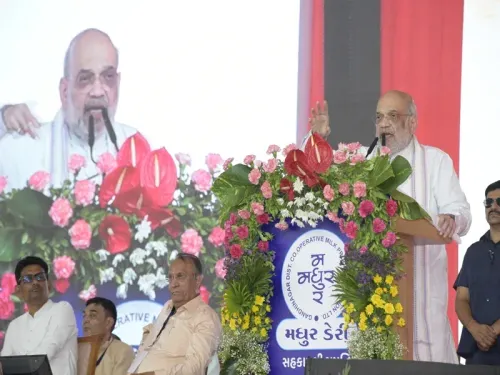
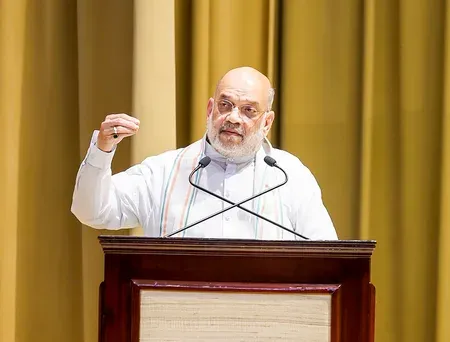
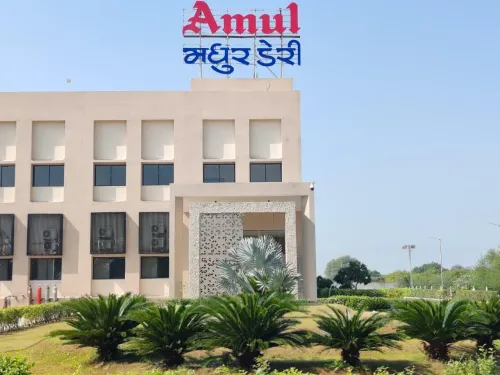
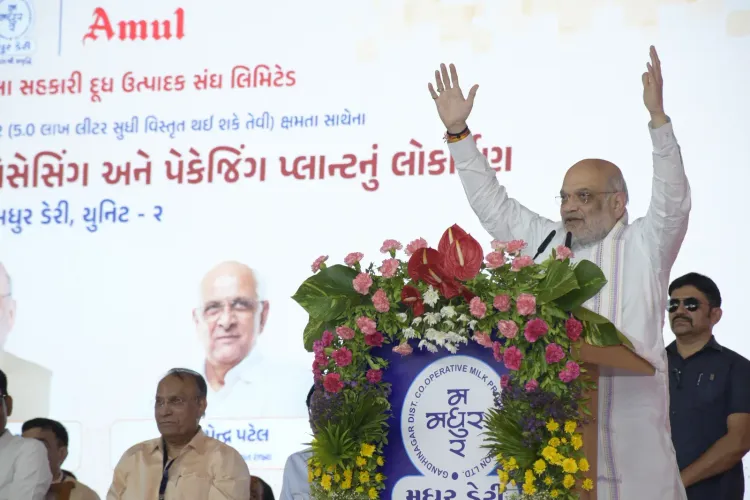
Union Home and Cooperation Minister Amit Shah on Sunday, 17 May announced that 75 per cent of profits from Madhur Dairy's newly inaugurated milk processing plant at Dashela village in Gandhinagar district would be transferred directly into the bank accounts of livestock rearers, after deducting operational expenses. The declaration came at the inauguration of a fully automatic milk processing and packaging facility built at an estimated cost of ₹128 crore on 15 acres of land.
What the New Plant Offers
The Dashela facility has been designed with an initial processing capacity of 2.5 lakh litres of milk per day, with provision to scale up to five lakh litres per day in future phases. The plant is fully automated and covers packaging alongside processing, positioning it as one of the more modern cooperative dairy installations in Gujarat.
Shah said the project had been deliberately structured so that cooperative sector earnings flow back to producers. 'After deducting expenses, 75 per cent of the profit will be directly transferred into all your bank accounts,' he said, addressing dairy farmers and livestock rearers at the event.
Women Livestock Rearers Identified as Primary Beneficiaries
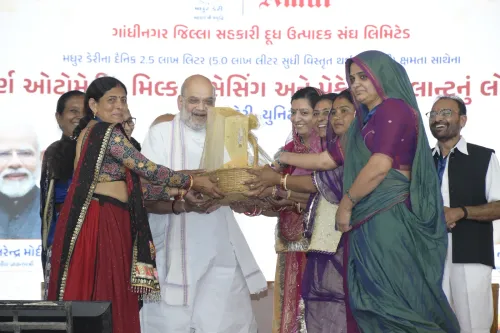
Shah emphasised that while consumers of milk, curd, buttermilk, and ghee would benefit from the expanded supply, the largest gains were intended for women associated with the cooperative dairy network. 'The biggest benefit will go to the livestock rearer mothers and sisters sitting in front of me,' he said.
He described the plant as a new beginning for milk producers in Gandhinagar district and said the dairy sector had become a strong economic support system for rural families. He also framed Madhur Dairy's growth as evidence of the broader success of Gujarat's cooperative movement.
Madhur Dairy: From Modest Origins to ₹628 Crore Turnover
According to figures shared at the event, Madhur Dairy began operations in 1971 with just four milk societies collecting approximately 6,400 litres of milk daily. Today, the dairy collects around 2.76 lakh litres per day and reports an annual turnover of approximately ₹628 crore.
Shah noted that the cooperative structure had ensured direct financial participation of milk producers in the dairy economy, and had particularly strengthened women's economic participation in villages — a point that carries political weight as the ruling Bharatiya Janata Party (BJP) continues to spotlight rural women's welfare ahead of upcoming electoral cycles.
State Leadership at the Inauguration
Chief Minister Bhupendra Patel described the programme as a new stage in Gandhinagar's development through the dairy sector. 'Madhur Dairy had grown from a small network of cooperative milk societies into a major institution serving both producers and consumers across the district,' he said.
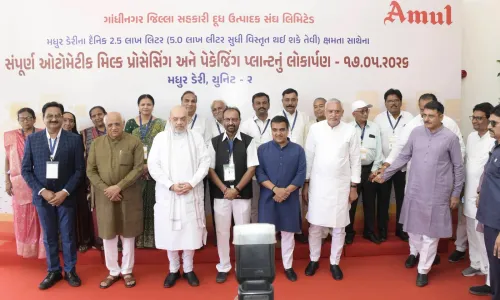
The inauguration was also attended by Gujarat Legislative Assembly Speaker Shankar Chaudhary, Deputy Chief Minister Harsh Sanghavi, State Cooperation Minister Jitu Vaghani, State BJP President Jagdish Vishwakarma, Madhur Dairy Chairman Shankarsinh Rana, cooperative leaders, MLAs, dairy board members, livestock rearers, and farmers.
With the new plant operational, Madhur Dairy is positioned to nearly double its processing capacity — a development that will be closely watched by cooperative dairy networks across the state as a potential model for profit-sharing at scale.
Point of View
Auditable pledge — which makes it more politically consequential than a generic welfare announcement. The real question is the mechanism: direct bank transfers suggest a DBT-style architecture, but cooperative dairy accounts are notoriously complex, and 'after deducting expenses' is a phrase that has historically left room for interpretation. Madhur Dairy's ₹628 crore turnover and near-tripling of daily milk collection since 1971 show genuine cooperative strength in Gujarat — but scaling profit-sharing to match expanded capacity will require transparent cost accounting that cooperative boards have not always prioritised. Shah's framing around women rearers is also a pointed political signal, positioning the cooperative model as a vehicle for rural women's economic agency at a time when that narrative has national electoral currency.
NationPress
24 Sept 2026
Frequently Asked Questions
What did Amit Shah announce at Madhur Dairy's new plant inauguration?
Home Minister Amit Shah announced that 75 per cent of profits generated by Madhur Dairy's new milk processing plant in Gandhinagar would be transferred directly into the bank accounts of livestock rearers after operational expenses are deducted. The pledge was made at the inauguration of the ₹128 crore facility at Dashela village on 17 May 2025.
What is the capacity of Madhur Dairy's new milk processing plant?
The newly inaugurated plant at Dashela village, Gandhinagar, is designed to process 2.5 lakh litres of milk per day initially. It has been built with expansion capacity to handle up to five lakh litres per day in future phases.
How much did the Madhur Dairy plant cost and where is it located?
The fully automatic milk processing and packaging plant was built at an estimated cost of ₹128 crore on 15 acres of land at Dashela village in Gandhinagar district, Gujarat.
How has Madhur Dairy grown since it was founded?
Madhur Dairy began operations in 1971 with four milk societies collecting around 6,400 litres of milk daily. It now collects approximately 2.76 lakh litres per day and has an annual turnover of around ₹628 crore, reflecting over five decades of cooperative growth in Gujarat.
Who are the primary beneficiaries of the new Madhur Dairy plant?
Home Minister Shah specifically identified women livestock rearers associated with the cooperative dairy network as the primary beneficiaries. Beyond direct profit transfers, consumers of milk, curd, buttermilk, and ghee are also expected to benefit from the expanded processing capacity.