CM Yogi Highlights Mahoba's Warriors, Saints and Water Heritage
Synopsis
Chief Minister Yogi Adityanath highlighted Mahoba's rich legacy on 21 June 2026, citing the birthplace of warrior heroes Alha-Udal, Guru Gorakhnath's extended meditation at the site and the Chandel dynasty's tradition of digging tanks for public water welfare across Bundelkhand.
Key Takeaways
CM Yogi Adityanath publicly invoked Mahoba's historical and spiritual significance on 21 June 2026 .
The statement references Alha and Udal , celebrated 12th-century warrior heroes of the Chandel kingdom, as symbols of the region's valour.
Guru Gorakhnath is cited as having performed extended meditation ( sadhana ) at Mahoba, reinforcing the site's Nath-tradition spiritual identity.
The Chandel dynasty is credited with constructing tanks across the region as an early model of community water conservation and public welfare.
Bundelkhand faces recurring drought, making the historic tank network a live policy reference for water management.
The remarks continue a pattern of the UP government linking regional medieval heritage to present-day governance themes since 2017 .
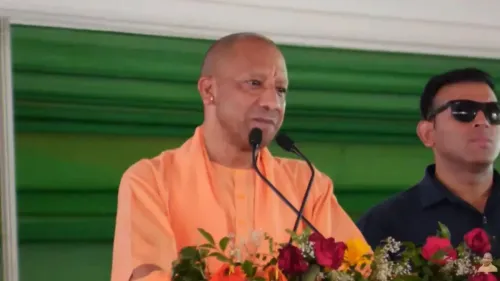
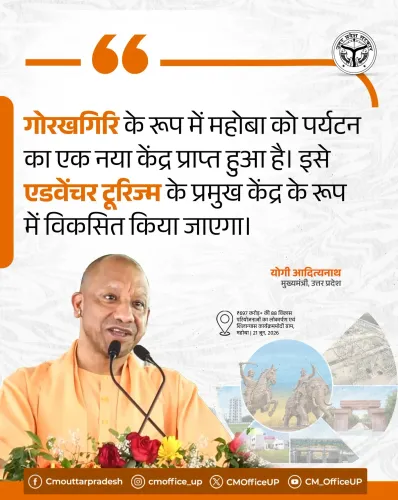
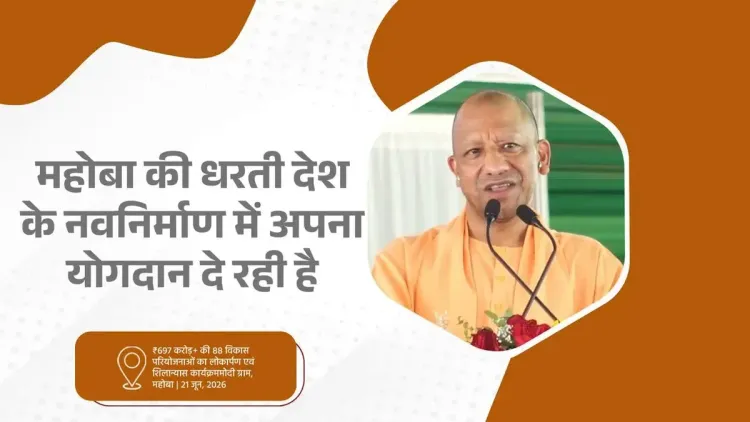
The Chief Minister's Office of Uttar Pradesh shared remarks by Chief Minister Yogi Adityanath on Sunday, 21 June 2026, invoking the cultural and historical legacy of Mahoba, the storied district of the Bundelkhand region, citing its warrior heroes, spiritual significance and centuries-old water-conservation tradition.
Speaking of Mahoba's heritage, CM Yogi said: 'Mahoba ki paavan bhoomi par Alha-Udal jaise veearon ka janm hua' ('On the sacred land of Mahoba, warriors like Alha-Udal were born'). He also noted that Guru Gorakhnath had meditated at this site for an extended period, and that the Chandel kings had dug tanks across the region to advance public welfare through water conservation.
Context
Mahoba is a district in the heart of Bundelkhand, historically renowned for its medieval forts, temples and an extensive network of man-made water bodies. The district is inseparably linked with Alha and Udal, 12th-century warrior heroes who defended the Chandel kingdom and whose exploits are celebrated in Bundeli folk ballads sung across central India to this day.
Guru Gorakhnath, the revered Nath yogi saint, is associated with meditation sites spread across Uttar Pradesh. His spiritual lineage holds particular significance for CM Yogi Adityanath, who heads the Gorakhnath Math in Gorakhpur, making references to Gorakhnath-linked heritage a recurring element of the Chief Minister's public communication.
Policy Backdrop
The Chandel dynasty, which ruled Bundelkhand between roughly the 9th and 13th centuries, is credited with constructing a remarkable system of tanks and reservoirs that served both irrigation and drinking-water needs across the arid plateau. This hydraulic legacy is widely cited by historians and water-policy researchers as an early model of community-oriented conservation.
Since 2017, the Uttar Pradesh government has consistently promoted Gorakhnath-linked pilgrimage sites and Bundelkhand's cultural heritage as part of a broader tourism and regional development push. Bundelkhand has historically faced recurrent drought conditions, making the revival of traditional water-harvesting structures a live policy concern alongside state-funded irrigation schemes.
Stakeholders and Impact
Residents of Mahoba and the wider Bundelkhand belt stand at the centre of any heritage-linked policy action. The region's farming communities depend heavily on surface water availability, and the historic tank network — many structures now in disrepair — represents a potential resource if restored.
The heritage tourism sector also has a direct stake: positioning Mahoba as a destination tied to warrior folklore, Nath-tradition spirituality and medieval engineering could draw visitors and generate local livelihoods. Cultural organisations associated with the Alha-Udal ballad tradition have long sought greater state recognition and support for the art form.
What's Next
The remarks signal continued state attention to Bundelkhand's cultural and historical identity. Observers will watch for follow-through in the form of announcements on renovation of Chandel-era tanks in Mahoba, cultural events celebrating the Alha-Udal tradition, or expanded pilgrimage infrastructure around sites associated with Guru Gorakhnath.
By weaving together warrior heritage, spiritual legacy and indigenous water management in a single statement, CM Yogi reinforces a governance narrative that frames historical public-welfare practices as precedents for present-day policy — a pattern likely to intensify as the state approaches future electoral cycles in the Bundelkhand constituency.
Point of View
Nath spirituality and Chandel water engineering — is consistent with a deliberate political-cultural strategy that has defined his tenure since 2017: anchoring present governance in the region's pre-Mughal, indigenous past. By spotlighting the Chandel tanks in drought-prone Bundelkhand, he implicitly frames historical public welfare as a template, lending cultural legitimacy to ongoing irrigation and water-harvesting initiatives. The explicit mention of Guru Gorakhnath deepens the personal resonance, given the Chief Minister's own identity as head of the Gorakhnath Math. Taken together, the statement is as much a political positioning exercise for Bundelkhand's electorate as it is a cultural tribute.
NationPress
20 Sept 2026
Frequently Asked Questions
Who are Alha and Udal of Mahoba?
Alha and Udal were 12th-century warrior heroes from Mahoba in Bundelkhand who served the Chandel king Parmardidev. Their exploits are celebrated in Bundeli folk ballads called 'Alha' or 'Alha-Khand', which are still sung across central India.
What is the connection between Guru Gorakhnath and Mahoba?
According to tradition, Guru Gorakhnath, the revered Nath yogi saint, performed extended meditation at Mahoba. CM Yogi Adityanath, who heads the Gorakhnath Math in Gorakhpur, frequently highlights Gorakhnath-linked sites across Uttar Pradesh.
What water conservation work did the Chandel dynasty do in Bundelkhand?
The Chandel rulers, who governed Bundelkhand roughly between the 9th and 13th centuries, constructed an extensive network of tanks and reservoirs across the region to provide irrigation and drinking water, an early example of organised community water management.
Why does CM Yogi often speak about Bundelkhand's history?
Bundelkhand is a politically significant region in Uttar Pradesh that has historically faced drought and underdevelopment. CM Yogi Adityanath regularly references its medieval heritage to connect cultural pride with governance priorities such as water conservation and tourism development.
What could follow from CM Yogi's remarks on Mahoba?
The statement may precede state announcements on renovation of historic Chandel-era tanks in Mahoba, cultural events celebrating the Alha-Udal ballad tradition, or expanded pilgrimage infrastructure at sites associated with Guru Gorakhnath in the Bundelkhand region.