CM Yogi Says Double Engine Govt Stopped SP's 'Dacoity'
Synopsis
Uttar Pradesh Chief Minister Yogi Adityanath attacked the Samajwadi Party on 26 June 2026, claiming the BJP's 'double engine' government has halted the SP's alleged 'dacoity.' The statement sharpens BJP's anti-corruption narrative ahead of the 2027 UP assembly elections.
Key Takeaways
CM Yogi Adityanath posted on 26 June 2026 accusing the Samajwadi Party of dacoity — using the term as a political metaphor for corruption and resource plunder.
The 'double engine government' slogan refers to BJP holding power simultaneously at the Centre and in Uttar Pradesh , a formulation in use since 2014 .
BJP has governed Uttar Pradesh since 2017 , when it defeated the Samajwadi Party led by Akhilesh Yadav .
Anti-corruption messaging against the SP is a recurring feature of BJP-UP political communication, intensifying ahead of electoral cycles.
Uttar Pradesh assembly elections are due by 2027 , making governance-versus-corruption contrasts a central campaign theme.
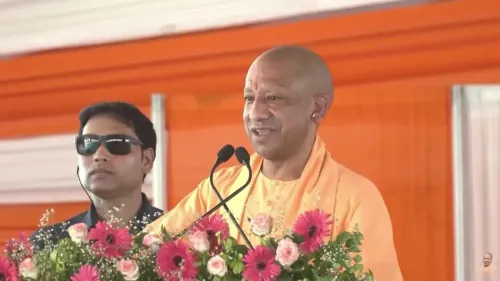
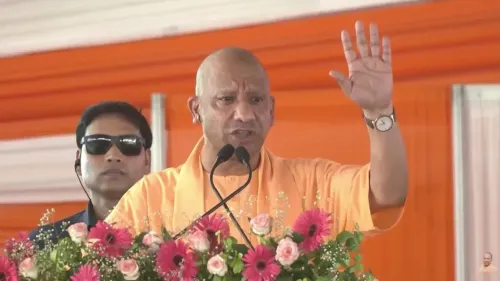
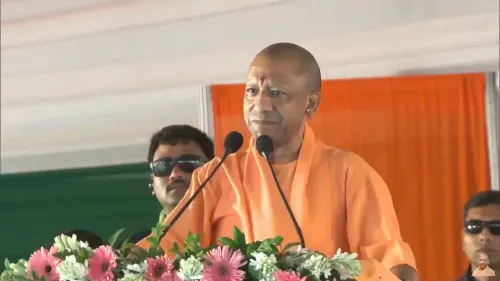
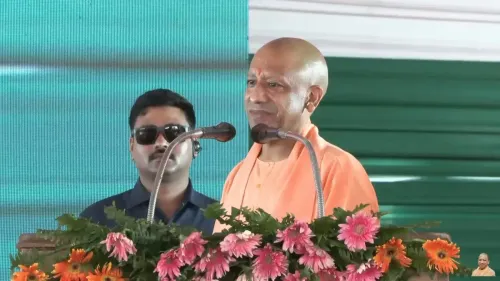
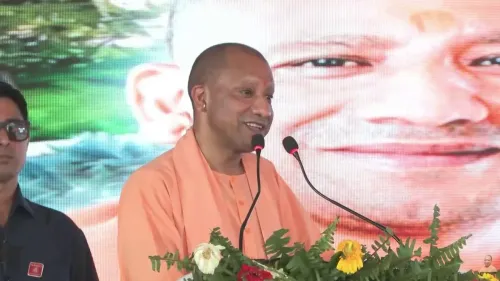
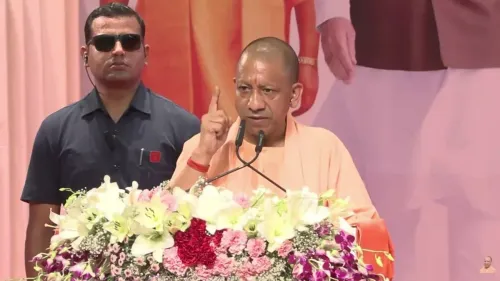
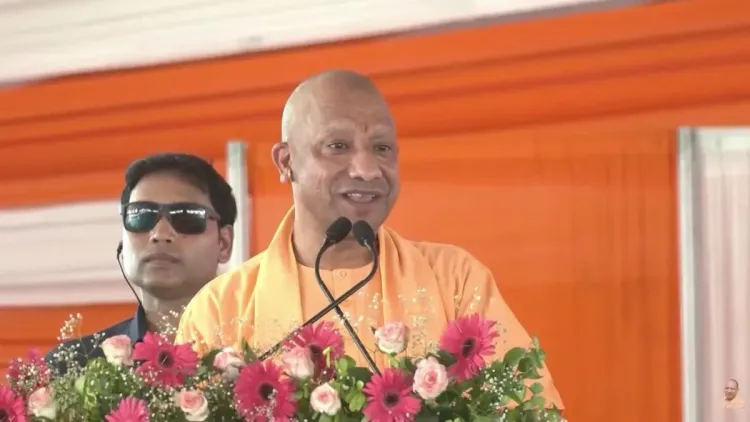
Uttar Pradesh Chief Minister Yogi Adityanath on Friday, 26 June 2026, sharply attacked the Samajwadi Party, asserting that the BJP's 'double engine' government had put a stop to what he described as the Samajwadis' dacoity — a Hindi term for armed robbery, used here as a political metaphor for large-scale corruption and resource plunder.
Context
In the post, Yogi Adityanath wrote: 'Double engine ki sarkar ne Samajwadiyon ki dacoity ko roka hai' — 'The double engine government has stopped the dacoity of the Samajwadis.' The statement is a direct broadside against the Samajwadi Party, which governed Uttar Pradesh from 2012 to 2017 under Akhilesh Yadav. The BJP has long accused that administration of corruption, resource misallocation, and lawlessness.
The 'double engine government' formulation refers to the simultaneous presence of BJP at both the Centre and in the state — a slogan the party has deployed since 2014 to argue that policy coordination between New Delhi and Lucknow delivers faster, more accountable governance.
Policy Backdrop
BJP swept to power in Uttar Pradesh in 2017, ending the Samajwadi Party's five-year tenure. Since then, the ruling party has consistently framed its governance record as a corrective to what it characterises as the preceding era's misrule. Anti-corruption messaging — ranging from property seizures linked to organised crime to welfare scheme delivery — has been a central pillar of Yogi Adityanath's political identity in the state.
The use of the word dacoity in political discourse is not new to Uttar Pradesh; it has been deployed by BJP leaders to draw a visceral contrast between past and present governance, invoking imagery of law-and-order failure as much as financial impropriety.
Stakeholders and Impact
The primary audience for this messaging is the Uttar Pradesh electorate — India's largest state by population — where perceptions of law, order, and equitable welfare delivery carry decisive electoral weight. Samajwadi Party voters and the broader opposition are the implied targets of the critique, while BJP supporters are being reminded of the party's core governance pitch.
Citizens who have been beneficiaries of central and state welfare schemes — in areas such as housing, electricity, and direct benefit transfers — are positioned by the BJP narrative as evidence that the 'double engine' model has redirected resources that were allegedly siphoned off earlier. The Samajwadi Party has consistently denied such characterisations.
What's Next
Uttar Pradesh assembly elections are constitutionally due by 2027, and political messaging of this kind is expected to intensify as the cycle approaches. Yogi Adityanath's post signals that anti-corruption contrasts with the Samajwadi Party will remain a live campaign theme for the BJP. Any follow-up government announcements — on investigations, asset recoveries, or welfare milestones — could be used to give concrete weight to the claims made in such political statements.
The broader pattern suggests that governance-versus-corruption framing will define much of the pre-election discourse in Uttar Pradesh, with both parties sharpening their narratives ahead of what is widely seen as a bellwether state contest.
Point of View
The timing reflects a deliberate effort to prime the electorate on law-and-order and anti-corruption themes well before the campaign season formally opens. The choice of the word 'dacoity' — visceral, rural, and legally charged — is calibrated to resonate in a state where law-and-order anxieties have historically driven voting behaviour. This kind of pre-cycle messaging typically signals that the ruling party is beginning to consolidate its core narrative rather than responding to any single event.
NationPress
26 Jun 2026
Frequently Asked Questions
What did CM Yogi Adityanath say about the Samajwadi Party on 26 June 2026?
CM Yogi Adityanath posted on X that the BJP's 'double engine' government has stopped the Samajwadi Party's 'dacoity' — using the term as a political metaphor for corruption and large-scale misappropriation of resources during SP's rule in Uttar Pradesh.
What does 'double engine government' mean in BJP's political messaging?
'Double engine government' is a BJP slogan referring to the party holding power simultaneously at the Centre and in a state, arguing that this alignment enables faster policy delivery and better coordination on welfare and development schemes.
When did BJP come to power in Uttar Pradesh and replace the Samajwadi Party?
BJP came to power in Uttar Pradesh in 2017 , defeating the Samajwadi Party led by Akhilesh Yadav, which had governed the state from 2012 to 2017.
When are the next Uttar Pradesh assembly elections?
Uttar Pradesh assembly elections are constitutionally due by 2027 . Political messaging around governance and anti-corruption is expected to intensify as the election cycle approaches.
Why does BJP frequently use corruption allegations against the Samajwadi Party?
BJP has made anti-corruption contrasts with the Samajwadi Party's 2012-2017 tenure a central part of its political identity in Uttar Pradesh, framing its own governance as a corrective to alleged misrule — a narrative that intensifies ahead of state election cycles.