CM Yogi Strengthens UP-Yamanashi Partnership
Synopsis
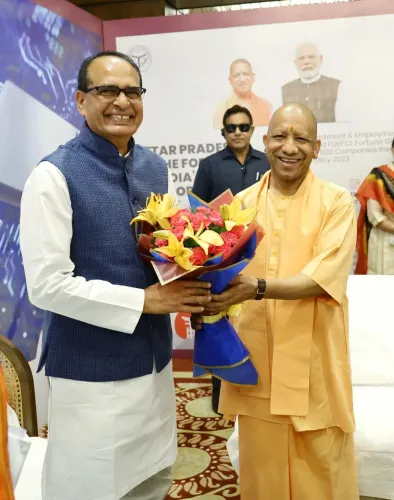
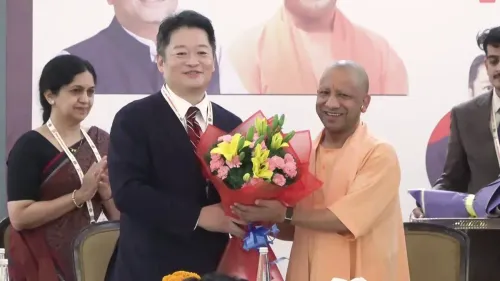
Chief Minister Yogi Adityanath met Yamanashi Prefecture Governor Kotaro Nagasaki on 19 August 2026, reaffirming a partnership between India's most populous state and the Japanese prefecture built on technology, culture, investment and shared vision.
Key Takeaways
CM Yogi Adityanath and Yamanashi Governor Kotaro Nagasaki met on 19 August 2026 to strengthen bilateral ties.
The partnership rests on five stated pillars: trust, technology, culture, investment and shared vision.
Uttar Pradesh has been actively courting Japanese investment through roadshows since 2018 .
India-Japan relations were elevated to a Special Strategic and Global Partnership in 2014 , enabling sub-national cooperation of this kind.
Yamanashi Prefecture encompasses Mount Fuji and has interests in technology, tourism and cultural exchange.
Potential follow-up outcomes include MoUs on technology transfer, tourism circuits or investment facilitation.
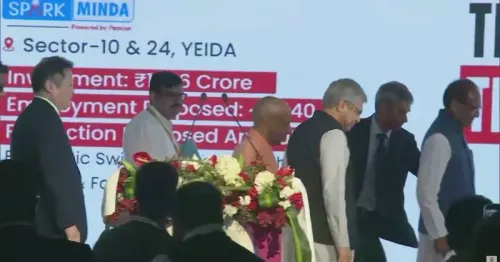
India's most populous state is reaching across the Pacific. Chief Minister Yogi Adityanath of Uttar Pradesh met with Yamanashi Prefecture Governor Kotaro Nagasaki on Wednesday, 19 August 2026, reaffirming a bilateral partnership the Chief Minister's Office described as rooted in 'trust, technology, culture, investment and shared vision.'
What brought Lucknow and Yamanashi to the same table
Uttar Pradesh and Yamanashi Prefecture — the Japanese region that cradles Mount Fuji — represent an unlikely but deliberate pairing. Yamanashi brings precision technology, tourism expertise and a tradition of craftsmanship; UP brings scale, a young workforce and an administration that has been courting Japanese capital since at least 2018. The meeting on Wednesday was framed not as a fresh start but as a deepening of ties already in motion.
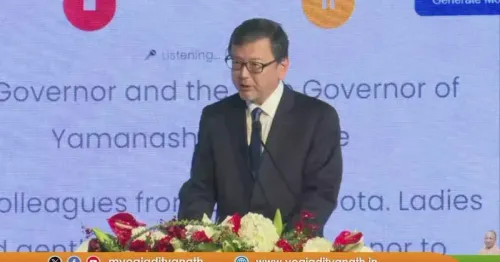
Speaking at the gathering, CM Yogi Adityanath extended 'heartfelt greetings' to Governor Nagasaki — hārdik śubhkāmnāen — and positioned the partnership on five explicit pillars: trust, technology, culture, investment and a shared vision. The language was deliberate. These are the same levers India and Japan have pulled at the national level since their relationship was elevated to a Special Strategic and Global Partnership in 2014, and UP is now trying to translate that macro alignment into sub-national dividends.
UP's paradiplomacy push and the Japan connection
Indian states have increasingly moved beyond waiting for New Delhi to broker foreign relationships. Uttar Pradesh, under Adityanath, has hosted multiple investment roadshows targeting Japanese firms, pitching the state's infrastructure upgrades, logistics corridors and a large domestic consumer base. Yamanashi, for its part, has interests that align neatly — technology transfer, tourism-circuit development and cultural exchange programmes that can generate both goodwill and business.
These engagements rarely produce binding treaties. What they build is something harder to quantify but equally important: familiarity between administrators, a pipeline of project conversations, and the kind of institutional trust that precedes memoranda of understanding. Whether this meeting produces a formal MoU on technology or tourism remains to be seen — but the groundwork laid on 19 August signals that both sides are treating the relationship as a long-term investment.
For UP, every such engagement is also a signal sent domestically: that a state once defined by law-and-order headlines is now confident enough to sit across the table from foreign governors and talk business. That reframing, more than any single deal, may be the most consequential output of the day.
Point of View
Each such bilateral meeting serves a dual purpose: attracting real capital and technology, while projecting an image of a reformed, globally credible Uttar Pradesh. The choice of Yamanashi — a prefecture known for precision industry and tourism rather than heavy manufacturing — suggests UP is diversifying beyond the standard pitch for factory investment. Watch for any MoU that follows; that is when intent becomes infrastructure.
NationPress
19 Aug 2026
Frequently Asked Questions
What is the UP-Yamanashi partnership about?
The partnership between Uttar Pradesh and Yamanashi Prefecture focuses on five pillars — trust, technology, culture, investment and shared vision — with the aim of attracting Japanese expertise and capital to India's most populous state.
Who is Kotaro Nagasaki?
Kotaro Nagasaki is the Governor of Yamanashi Prefecture in Japan, the region that encompasses Mount Fuji and has interests in technology, tourism and cultural exchange.
Why is Uttar Pradesh engaging with Japanese prefectures?
Uttar Pradesh has been hosting investment roadshows targeting Japanese firms since 2018 , seeking technology transfer, manufacturing partnerships and tourism collaboration under the broader India-Japan Special Strategic and Global Partnership framework established in 2014 .
What could come out of the CM Yogi-Yamanashi meeting?
Potential outcomes include memoranda of understanding on technology transfer, tourism circuit development or investment facilitation between Uttar Pradesh and Yamanashi Prefecture , though no formal agreements have been announced yet.
When did India and Japan become Special Strategic Partners?
India and Japan upgraded their relationship to a Special Strategic and Global Partnership in 2014 , which opened the door for sub-national engagements like the one between Uttar Pradesh and Yamanashi Prefecture .